


What Is Play? Understanding Play and Playfulness
Somewhere between school and salary, so many of us stopped playing. Nobody announced it, and there was no last day. But the prevalence of play gradually faded. One year we were racing friends to the school gate, and a few years later, we are here racing a deadline. Our days have started running on loop: dinner, a few messages to answer, phone calls to attend, doomscrolling, sleep, and then work. And suddenly something small breaks through. It could be a song or a spontaneous dance, or your child handing you a crayon and 20 minutes to vanish while you doodle. For those moments, you feel light and a little surprised as well. That feeling is play. Play is an activity that you choose because doing it feels good. You don't expect results, and no one is waiting for you to finish it. Playfulness is the spirit behind it and the playfulness meaning is very simple.
It is a willingness to be light, curious, and a little silly, even when the task in front of you is something mundane and ordinary. You can be playful while cooking, running errands, or even walking to the bus stop. If play is the activity, playfulness is the attitude.
What Science Says: How Does Play Affect the Brain?
Our brain does some of its best work when it thinks no one is watching. When we play, we feel safe enough to try things. A relaxed brain explores, whereas a tense brain protects itself. Play tips us towards exploring. So, to answer what science says about play, the response is steady and very encouraging.
Play and Learning
Jean Piaget, the Swiss psychologist, noticed that children build their understanding of the world through play. David Kolb's work on experiential learning points the same way. It suggests that we absorb ideas best when we try something, think about what happened, and try again. Play runs on much the same loop.
The research on school-age children adds a meaningful detail to play and childhood development. Kids who approach a problem playfully can sometimes solve logic tasks that normally sit beyond their reach. Recess and free-play breaks are associated with better attention and self-control in the classroom.
Play and Creativity
Have you ever noticed that your best ideas arrive in the shower, not in the meeting?
Enjoying this article?
Get UEF Insights. Writing on loving, learning, and playing, with insights from wisdom traditions and modern science delivered to your inbox.
When you doodle, hum, rearrange the furniture or cook, your mind is free to connect things that don't usually sit together. Many people find that creativity grows in that unhurried space as your mind feels free to connect things that do not sit together. This flexible thinking is a skill that the prefrontal cortex is busy building during play.
Play and Relationships
Two people who laugh together can rarely stay strangers for long.
Shared play builds trust. For example, a card game with cousins, a cricket match in the lane and more. These moments tell us we're safe with each other. Couples, friends and families who play together often say they feel closer.
Play and Wellbeing
A good evening of play has the power to do what a long lecture on self-care cannot.
Play can help lower stress, lift mood and give the mind a place to rest. This is the heart of play and wellbeing.
Playfulness in later life has been associated with stress management, social connection and even mental sharpness as we age. This is the heart of play and wellbeing.
Play does not fix everything but makes room for the lighter parts of being alive. This space gives you the strength to make hard days easier to carry.
What Wisdom Traditions Say About Play
This is what our wisdom traditions have to day about play:
Play in Indian Wisdom Traditions
In Indian culture, there is a beautiful word: lila. It describes the universe itself as divine play, a creation that exists out of joy rather than need.
Just imagine how much that changes things. If the world began in play, then play is not a distraction from the sacred. It's closer to the sacred than any other thing.
Play, Leisure and Flourishing in Greek Thought
The Greeks had their own version of play. Heraclitus described life as a child at play. It is all about moving pieces across a game board; fluid and creative. Plato suggested that a well-lived life includes playing at beautiful things.
Aristotle went further. He saw leisure, the free time we use for reflection and enjoyment, as the very reason we work at all. For the Greeks, this was part of what human flourishing meant.
Play Across Wisdom Traditions
When we see across cultures the same idea keeps appearing. Children's games in village squares, festival dances, storytelling circles, temple fairs. Almost every tradition builds play into its calendar.
The poet and philosopher Friedrich Schiller wrote that we are most fully human when we play. Play is not what we do after life is sorted out. It's part of what makes life worth sorting out.
| Wisdom tradition | What play means | What it can cultivate |
|---|---|---|
| Ancient Greek | Free time and activity pursued for its own worth, especially through learning, art, beauty, and contemplation. | Flourishing, learning, contemplation, and a good life |
| Hindu traditions | Līlā; divine “play” or creative activity suggests action that flows from freedom and abundance rather than necessity. | Devotion, wonder, freedom, and a sense of connection with creation |
| Zen Buddhism | An unforced, fully absorbed way of acting in which striving and self-consciousness fall away. | Presence, spontaneity, freedom, and awareness |
| Confucian traditions | a playful, aesthetic quality of life can emerge through music, ritual, and cultivated participation. | Harmony, moral feeling, relationships, and self-cultivation |
| Sufi/Islamic traditions | Play may be viewed cautiously when it becomes a distraction, while poetry, music, listening, and dance can become forms of absorbed spiritual expression. | Discernment, devotion, embodied expression, and connection with God |
How Play Connects Love and Learning: UEF’s Love, Learn, Play Framework
UEF's philosophy of love, learn, play says that these are our three deepest longings. Love is how we connect, learning is how we stay curious and grow in wisdom; play is how we end up finding joy, creativity, and freedom from the burden of outcome.
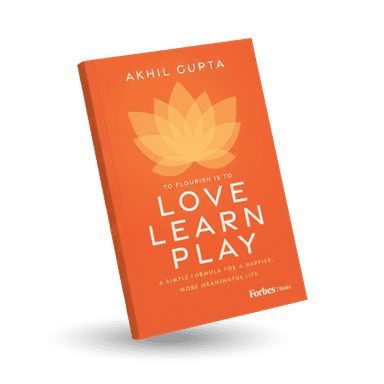
Love • Learn • Play
The formula for a meaningful life.
Love without play can turn heavy, and learning without play can turn dry. Therefore, play is what keeps both of them warm and alive. UEF also describes play as something which is intrinsically motivated. This means that it is done for its own sake, and that is exactly what makes play so powerful. In a life full of goals, play is one of the few things that we do simply because we want to.
Why Is Play Important for Adults?
Most adults quietly retire from play. Work is serious and home is full of chores.
Now, try to think of the people whose company you enjoy most. They are the ones who laugh easily, get curious about small things, and are always willing to enjoy themselves. That's playfulness, and it tends to make people warmer, more patient, and easier to be around. Many adults have also noticed that play helps them step out of a constant problem-solving mindset.
It supports clearer thinking, softens their moods, and kindles bonds with their loved ones. That's why the importance of play does not just end at childhood. So, if you've been asking why is play important when life is already so full, just remember: a full life and a lived life are not the same things.
How to Bring More Play Into Everyday Life
To cultivate play in your life, you don't need a free weekend, just a free minute.
- Sing in the kitchen. Off-key is fine, in fact, better.
- Take the long way home. Enjoy the long drive or let your feet decide where to turn
- Keep a puzzle or a sketchbook within reach. Five minutes of play also counts.
- Say yes to a game invite. The next time someone suggests carrom, cards or antakshari, don't make an excuse.
- Play with the children with no agenda in mind.
You can try these things for a week and see what shifts. This is what living consciously can look like. It is not about grand gestures, but noticing a moment and choosing to stay in it a little longer.
Conclusion
The power of play is easy to overlook because it looks ordinary. But these small, playful moments have the power to hold up a life. They connect us to other people, keep us curious, and remind us we are more than to-do lists. So tonight, just do one little thing because you feel like it's fun. And, that’s the beginning of your journey of living life to the fullest.