

Introduction
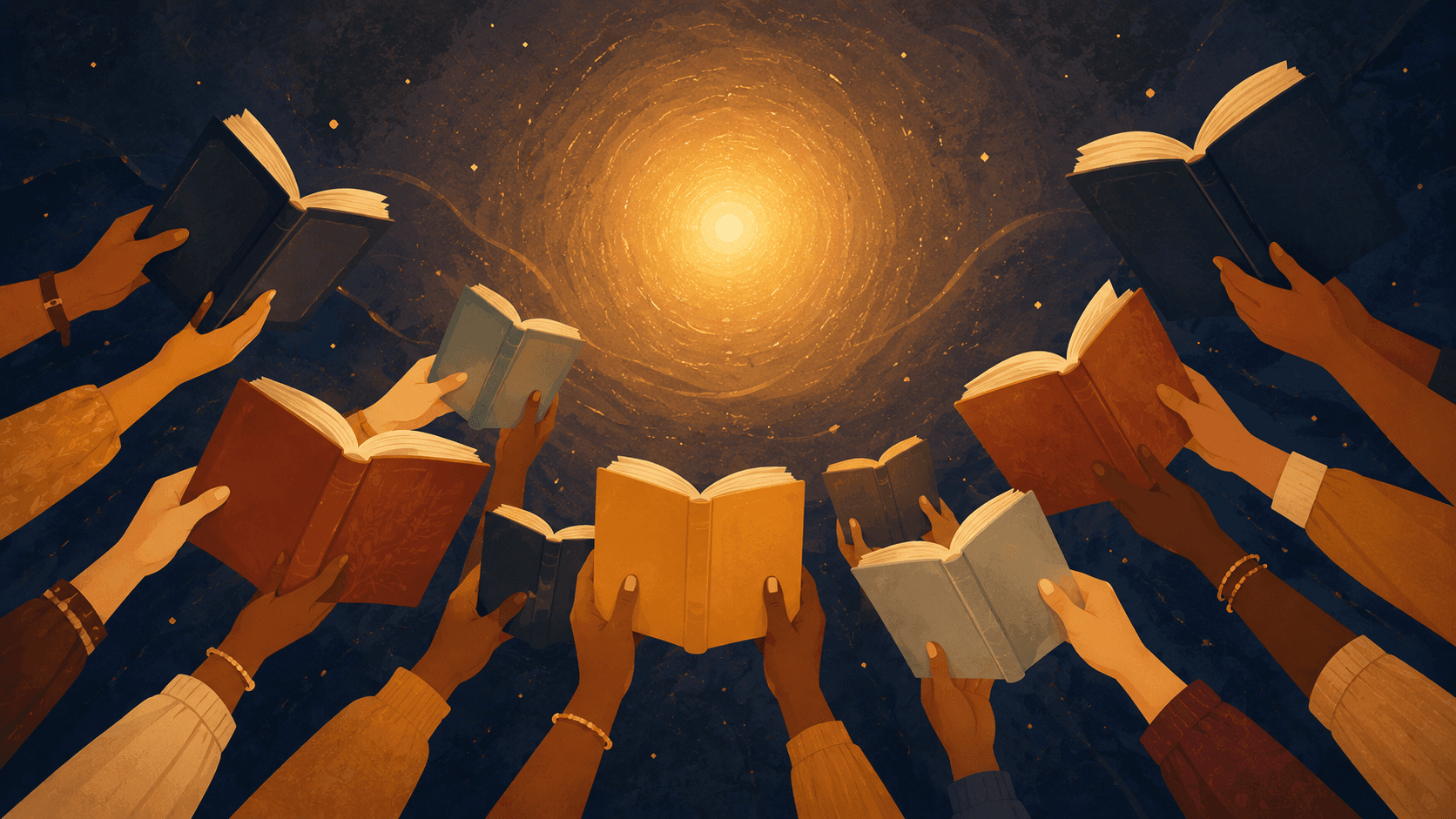
These are the best books on religion and world religions for anyone looking to understand different faiths, explore interfaith perspectives, or find wisdom that transcends any single tradition. Books on world religion give you a quiet pull towards understanding and often towards what is inner peace and how to find it.
It's normal for people to wonder why they read books about religion at all. Well, we live in a world that moves fast and expects answers instantly. Spirituality and religion are meant to slow you down. It asks you to sit with questions, feel them, and live them.
Books on world religion are all about exploring your curiosity. They give you a quiet pull towards understanding why humans across time and geography have always looked up at the sky and wondered about the same questions: Why are we here? What does it mean to live well? What comes after? The best books about religion do not just give answers but also make your questions more profound. They reveal whether it's the fire symbolism or the idea of letting go through the law of detachment; everything is trying to point towards something beyond words.
For me, it’s not just about faith; it’s about understanding humanity. I hope you will find them enlightening and helpful.
The Major Holy Books of Different Religions
Sacred texts can help readers understand ways of faith, ethics, and human life in different traditions. The Bible is the heart of Christianity, and the Quran is the holy scripture of Islam . The Bhagavad Gita discusses duty and action and spiritual wisdom within the Hindu tradition. The Torah is the foundational scripture of Judaism. The Dhammapada is the Buddha’s teachings on conduct, awareness, and liberation. The Guru Granth Sahib contains hymns and teachings that form the core of Sikhism. No single title covers all religions books comprehensively, but reading across traditions gives the fullest picture of what humanity has believed and why. Studying the sacred texts alongside books on different religions can enhance one's religious literacy and reveal what do all religions have in common.
33 Best Books on Religion and World Religions
Discover these 33 books that explore how religion shapes belief, culture, identity, and the search for a meaningful life. These are the books I return to most often when exploring religion through a lens of curiosity, not certainty.
1. The World’s Religions by Huston Smith
A timeless book on world religions that gently takes you by the hand through the major traditions with clarity and respect. Smith shows the essence of each faith through its core values, helping readers understand religious differences instead of judging them.
Best for: Beginners seeking a foundational understanding.
2. Not in God’s Name By Jonathan Sacks
A powerful reflection on the misuse of religion and how its true essence calls for peace. Sacks called on believers to recognize the dignity of those they might consider religious outsiders and thus to extend love beyond the borders of a faith.
Best for: Readers questioning extremism and seeking deeper truth.
3. Bridges Across Humanity By Akhilesh Krishna Gupta
This is not a book of religions but a book of meditation on unity. Using notions such as the cosmic tree, it recalls the idea that all spiritual paths spring from the same root. And it's a deep question. If the essence is the same, why do we divide?
Best for: Those seeking harmony across religions and within themselves.
4. The World as I See It by Albert Einstein
Not a religious book in the usual sense, but a thoughtful insight into Einstein's view on morality, peace, and the mystery of existence. In Einstein’s reflections we see how learning can combine reason and wonder and deepen our responsibility to others.
Best for: Those who want to learn about the relationship between science and spirituality.
5. The Religion of the Future By Roberto Unger
A bold vision of faith that evolves with humanity. This book on religion is a book of freedom, of connection. Unger puts religion at the center of human flourishing, asking how faith can broaden, not narrow, human possibility.
Best for: People who step outside the box of belief systems.
6. The Great Spiritual Migration By Brian D. McLaren
According to McLaren, faith is less about a label and more about the way in which we treat people. This book offers love as a way of relating to people, shifting the purpose of faith from defending belief to building compassionate relationships.
Best for: Those who appreciate compassionate spirituality.
7. The Meaning and End of Religion By Wilfred Cantwell Smith
Challenges the very definition of religion as fixed. Smith’s definition of personal faith and organized tradition allows readers to think of religion as a lived experience rather than a fixed label.
Enjoying this article?
Get UEF Insights. Writing on loving, learning, and playing, with insights from wisdom traditions and modern science delivered to your inbox.
Best for: Deep-thinking readers looking at deeper frameworks.
8. Indra’s Net By Rajiv Malhotra
A deep philosophical exploration of the unity and interdependence of Hinduism. The book urges the reader to understand Hindu thought in its own philosophical terms before making comparisons with other traditions.
Best for: Serious readers interested in Indian philosophy.
9. The Lonely Man of Faith by Joseph B. Soloveitchik
Explores the quiet conflict between modern life and spiritual yearning. Soloveitchik’s tension between achievement and spiritual longing asks what a flourishing life requires beyond worldly success.
Best for: People who mix faith and modern life.
10. Big Gods By Ara Norenzayan
This book asks whether belief systems based on big moral gods really helped humans to flourish. Interesting take on how belief influenced human cooperation. The book poses an important question about human flourishing: Did shared belief help humans cooperate and build larger moral communities?
Best for: Those interested in the psychology and sociology of religion.
11. The Evolution of God By Robert Wright
A sweeping history of religion book about how our idea of God evolved.
For Wright, understanding the history of religion is a kind of religious literacy, and he explains why beliefs need to be understood in the societies that produced them.
Best for: Curious people who want to explore faith through history.
12. Philosophy of Religion by Linda Zagzebski
A clear, systematic presentation of central issues of belief. The discussion opens up space for thoughtful learning across differences, without requiring every reader to start off with the same convictions.
Best for: First-timers with books on religious philosophy.
13. The Heart of Christianity By Marcus J. Borg
A gentle re-examination of Christianity that emphasizes transformation rather than rule-following. Borg links love with an internal conversion that redefines the relationship of human beings to their communities and to those outside of their faith.
Best for: Readers looking for meaning beyond doctrine.
14. Understanding the Times By Jeff Myers
Helpful to see how major worldviews differ on truth, morality, and human purpose. The reader is able to better distinguish between understanding another worldview versus interpreting it through the beliefs of one tradition when the book is understood from the evangelical perspective.
Good for: Readers who want to compare multiple ideologies.
15. Religion in Sociological Perspective by Roberts & Yamane
Shows how religion shapes identity, communities, institutions, and everyday social life. Its social approach asks when religious communities create a sense of belonging and growth and when do they hinder human flourishing.
Best for: Students and analytical thinkers.
16. The Reason for God by Timothy Keller
Counter doubts with empathy and logic. Keller takes skeptical questions seriously and sees disagreement as an opportunity to learn, not as a challenge to be silenced.
Best for: Readers questioning their faith.
17. Islam Without Extremes by Mustafa Akyol
Akyol looks at the history and tenets of Islam and makes the case for a version of the faith that embraces freedom, reason, and tolerance. This book considers the divisions within Islam and offers the reader an opportunity to view the faith as a pluralistic tradition rather than a single, unchanging perspective.
Best for: Readers who are interested in modern Islamic thought.
18. Killing Jesus By Bill O’Reilly
A historical account of the life and crucifixion of Jesus of Nazareth, with attention given to the political and social aspects of the period. Putting Jesus in his political and social context helps readers see the impact of historical context on religious narratives.
Best for: People who read about the history of religion.
19. Overcoming Religious Illiteracy by Diane L. Moore
Moore argues for the need for religious literacy in education, highlighting the significance of comprehending the role of religion in human experience and world affairs. Moore shows how ignorance of religion can perpetuate stereotypes and impede fruitful dialog between communities.
Best for Educators & Global Thinkers.
20. The Secret Teachings of All Ages by Manly P. Hall
A vast, almost mystical collection of ancient wisdom where symbols like fire signify transformation and awakening.
Best for: Those who like to read about spirituality, philosophy, and the deeper meaning of the world’s traditions.
21. The Varieties of Religious Experience By William James
The Varieties of Religious Experience by William James is a classic book on religion that explores how different people experience religion in deeply personal ways.
He studies the true stories of people who felt close to God or who had spiritual awakenings. James explains these experiences psychologically, while respecting their meaning. The book also offers religion not merely as a matter of rituals and beliefs, but of what it’s like to believe.
Best for: Readers interested in internal transformation.
22. The Future of God by Deepak Chopra
Consider what belief might be like in an age of science, psychology, and personal spirituality. Chopra asks about the survival of spiritual meaning in a thriving life without closing the door on modern knowledge.
Best for: Contemporary spiritual seekers.
23. The Rise and Fall of Adam and Eve by Stephen Greenblatt
A cultural and literary analysis of one of man’s oldest tales. This book demonstrates the importance of religious literacy beyond personal belief; sacred stories shape morality, culture, and ideas about human nature.
Best for: Those who read books on the history of religion.
24. Why Buddhism Is True By Robert Wright
Wright uses evolutionary psychology as a lens through which to view Buddhist philosophy, arguing that it provides practical benefits for comprehending the human mind. If you are looking for books on religion and spirituality, then this is the one for you. The book takes a direct approach to learning, asking the reader to investigate Buddhist ideas through his own attention and experience, instead of accepting them on the basis of authority.
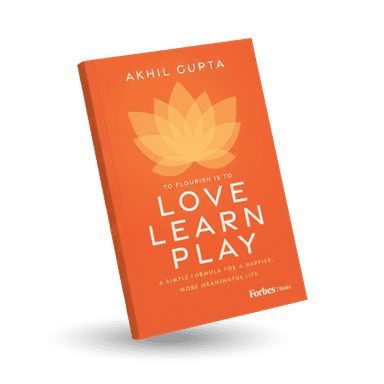
Love • Learn • Play
The formula for a meaningful life.
Best for: Readers who want practical wisdom over dogma.
25. How Should We Live? By Roman Krznaric
Krznaric looks at the historical ideas of how to live a meaningful life, learning from different cultures and philosophies. One of the few books on this list that treats Love, Learn, and Play not as abstract ideals but as historically grounded practices to which humans have returned again and again through the centuries and across cultures.
Best for: Purpose-seeking readers.
26. Comparing Religions by Jeffrey J. Kripal
An introduction to the comparative study of religion that promotes understanding and analysis of the religions of the world.
Best for: Curious people and students.
27. The Hindu View of Life by S. Radhakrishnan
Radhakrishnan elaborates on the basic tenets of Hindu philosophy and its spiritual and ethical character. For Radhakrishnan, inner development is ethical responsibility, and flourishing is a process of personal growth as well as participation in a common moral life . Best for: Newbies exploring the spirituality of India.
28. An Idealist View of Life by S. Radhakrishnan
A philosophical work of idealism that deals with the essence of reality, knowledge, and the self. The dialog between Eastern and Western thought turns learning inward, connecting questions about reality with the values that give shape to human life.
Best for: Philosophical readers rather than casual beginners.
29. Religious Evolution by Robert Bellah
Bellah looks at how religion has changed from its earliest to its most up-to-date forms, assessing its part in human development and society. Bellah embeds religion in the story of human flourishing by looking at how ritual and common meaning have helped communities to grow.
Best for: Readers interested in how religion evolved over the years.
30. Patterns in Comparative Religion By Mircea Eliade
A classic study of the symbols, myths, and rituals found in many religions. Best for: Readers looking for universal patterns. The patterns Eliade finds in the traditions provide a stronger basis for interfaith understanding.
31. The Territories of Science and Religion By Peter Harrison
Harrison looks at the history of science and religion and the idea that there was an inherent conflict between the two.
Best for: Readers interested in the debate between faith and science.
32. Galileo Goes to Jail by Ronald Numbers
An anthology of essays that dismantle popular myths about the history of science-religion relations.
Best for: The critical thinker.
33. Faitheist by Chris Stedman
Memoir of an atheist promoting interfaith dialog and cooperation, stressing the necessity of building bridges between secular and religious communities. A modern and refreshing approach to cooperation between believers and non-believers. Stedman portrays love as the desire to be in real relationships across the lines of belief and non-belief, without requiring doctrinal agreement.
Best for: Those who like dialog and coexistence.
Conclusion
We cannot say that there is one religious holy book in the world that is the best for everyone and has all the truth. Some turn to the Gita, some to the Quran, some to the Bible, and some to the Bhagavatam, the Torah, and the Dhammapada. But if you look closely, all the best books on religion are whispering the same things in different tongues. They ask you to be kind, aware, and present. All books of religion and philosophy are not only to read but also to live. Maybe that’s the real reason to read religious books. The point is not to find a single truth but to be a little more human every book. Our happy quotes are worth reading alongside these.
And if you want to reflect on deeper connections in life, knowing the meaning of soul ties can provide the right perspective. Also, for parents who would like to introduce good values early, our flourishing child program can be a good start. Our lesson on mindfulness across wisdom traditions can help you bring that same quality of attention to your own daily life.
Spirituality is not about learning more; it’s about softening, awakening, and connecting more deeply to yourself and the world around you.
At UEF we try to rethink happiness and mindfulness for you. Our goal is to bring spirituality back into this world through the idea of Love, Learn and Play.