


Humans live under a persistent fear of loss, rejection, and outcomes that might not align with their desires. We tend to chase control, cling to expectations, and tie our peace to results that are not in our hands. This is exactly where suffering begins. But there is another way to live. The law of detachment does not mean that you have to give up on life but live it freely. It teaches us how to participate fully, love deeply, and work sincerely without becoming a prisoner of our expectations or outcomes. If you've ever felt exhausted by emotional highs and lows and wondered what the law of detachment is, this guide will help you understand the law of detachment and how to practice it in a way that brings more peace, clarity, and balance to a flourishing life.
What Is the Law of Detachment?
The law of detachment is the ability to remain deeply involved in life without being emotionally controlled by it. It is not emotional numbness, but conscious awareness. To understand the law of detachment, you can think of it like this.
- At work
You give your best effort to a project, but you don’t tie your worth to the outcome or approval.
- At home
You love your family deeply, but you don’t try to control their choices or emotions.
- During setbacks
You experience disappointment but you don’t let it define your identity or future.
The law of detachment meaning can be summed up in these simple words: you can care without clinging, act without controlling, and love without possessing.
Understanding The Law Of Detachment: Law of Detachment Philosophy
The law of detachment philosophy has echoed across spiritual traditions and ancient wisdom.
- In Buddhism, non-attachment is the path to liberation.
- In the Bhagavad Gita, we are taught to act without attachment to results.
- Stoic philosophy reminds us that suffering comes from attaching ourselves to what we cannot control.
- Taoism encourages flowing with life rather than resisting it.
Even symbolic teachings can reflect this truth, just like the Symbolism of fire, which asks us to burn away illusion, ego, control, and rigid expectations.
True detachment is not about external appearances or withdrawing from life. It is an inner state of freedom that stays steady regardless of circumstances. It's not about wearing specific religious attire, but cultivating inner freedom.
Just like the world tree, you remain rooted in awareness while your life is allowed to expand in all directions.
The detachment meaning here is about freeing ourselves from expectations. The wisdom map from these teachings shows that everything is temporary. The law of detachment is one of the most challenging principles of spiritual growth.
The key points of the law of detachment are:
- Everything is temporary.
- True power lies in surrender. Not control.
- Freedom comes from embracing uncertainty rather than resisting it.
- Happiness exists in the present.
- Love without attachment is the purest form of love
- You are not your thoughts, emotions or possessions
- You can live a flourishing life without being enslaved by it
Once you understand the laws of detachment, you will realise that we are just detached observers and our true essence is beyond all material things.
Benefits of the Law of Detachment
The law of detachment reminds us that we can control only ourselves. We accept things as they are and become truly free. Attachment breeds fear of loss, failure and rejection. Fear limits us and makes our happiness dependent on people, possessions and situations. Here are more reasons why you should practise emotional detachment :
Emotional freedom
When you practise emotional detachment, you are no longer working on what you cannot control.
Stronger relationships
Love blooms when it is free. You will have stronger relationships without the burden of expectations.
Clear thinking
When your focus is on the task rather than the result, you will have more mental clarity and focus
Enjoying this article?
Get UEF Insights. Writing on loving, learning, and playing, with insights from wisdom traditions and modern science delivered to your inbox.
Inner peace
You will also be practising mindfulness. When you stop resisting changes, you find peace.
Law Of Detachment According To the Bhagavat Gita
The Law of Detachment is one of the most profound lessons taught in the Bhagavad Gita. It doesn’t mean giving up on life or being indifferent. Rather, it’s about how you find peace in your action without clinging to the results.
According to the Gita, true detachment is not about escaping the world but engaging with it fully, without letting outcomes control your emotions. When Krishna advises Arjuna to perform his duty without attachment to success or failure, he’s introducing the law of detachment in spirituality.
In essence, this law teaches us that freedom comes when we stop obsessing over what we cannot control. Whether it’s relationships, goals, or material desires, detachment allows you to act from a place of inner balance and trust.
When we look deeper, the law of detachment meaning in relationships becomes even clearer. It reminds us that love should not come from need or dependency. True love grows from freedom, not possession. When we stop holding on too tightly, we allow both ourselves and others to evolve naturally.
In the world of manifestation, too, the law of detachment in manifestation plays a vital role. After setting your intention and doing your best, you must release your desire into the universe without anxiety or desperation. That surrender creates space for miracles to happen.
Steps To Achieve Detachment
Detachment is a journey. Not a destination. The law of detachment reminds us that it is a practice that needs constant effort to get that perspective shift. Here are some practical steps to achieve detachment
1. Understand what detachment is
Detachment is not avoiding your emotions or duties. To define detached in this context, it is about being in it fully without focusing on specific results.
2. Identify your emotions and observe them.
Instead of being controlled by emotions, Be a detached observer of them and understand that they are temporary and do not define you.
3. Let go of control
The law of detachment stresses accepting that you cannot control everything in life. People, situations and outcomes will unfold in their way.
4. Detach from outcomes
Work with dedication on your tasks and duties. Release any form of expectations about how things must turn out to avoid disappointment and stress. The detached meaning here is to focus on the process rather than on outcomes.
5. Practise love without expectations.
Love should be free of any expectations. It is not a transaction and there should be no possession or control but only space for growth.
6. Meditate regularly
Meditation helps the mind to be quiet. As per the laws of detachment, meditation helps to detach from intrusive thoughts and cultivate inner peace by focusing on the present moment.
7. Love yourself
When you love yourself, you will no longer depend on external validation or relationships for happiness.
8. Accept changes
Life is constantly evolving and resisting changes will only cause suffering. Embrace changes as a natural part of growth.
9. Live in the present
The past is gone and the future is uncertain. Living in the present strengthens emotional detachment, reduces anxiety and lets you be peaceful.
10. Trust the flow of life.
When you stop forcing things and allow life to unfold naturally, you will find more freedom and fulfilment easily.
How to Apply the Law of Detachment in Daily Life
You can also practise detachment in different areas of life and live a more fulfilling life.
The Law of Detachment in Relationships
Emotional detachment in relationships means appreciating people for who they are rather than trying to control or change them. Often, detaching from a person you love will be difficult because of all the expectations and possessiveness we have for them. Know that when you stop clinging to expectations, you will have healthier and stronger relationships. Respect and freedom lead to deeper connections than fear and attachment.
Applying detachment at work
Work becomes a major cause of stress when we tie our self-worth to success, recognition or financial rewards and benefits. Practise emotional detachment in work by giving your best effort while letting go of the need to control results. You have to accept the fact that some things are beyond your influence and should focus on what you can improve. This mindset reduces anxiety, enhances productivity and leads to better decision-making.
Applying detachment in personal growth
To have personal growth, we should accept changes rather than resist them. Let go of your past regrets and future worries with emotional detachment. When you stop identifying yourself with past failures or expectations of the future, you become open to new experiences, learning and transformation. Do not chase the idea of success and the need for perfection. Enjoy the process of becoming better every day.
Common Misconceptions About Detachment
Detachment means indifference
Detachment doesn’t mean indifference. You engage completely without being controlled by emotions or outcomes. In fact, you care deeply without being emotionally entangled.
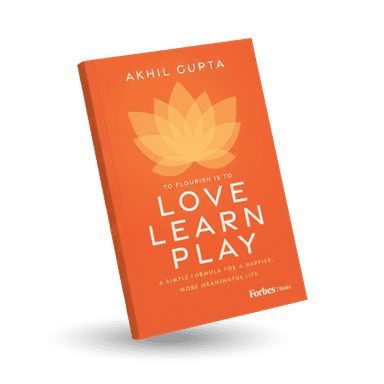
Love • Learn • Play
The formula for a meaningful life.
Detached people lack ambition.
Detachment doesn’t mean losing your drive. It allows you to work on your goals without anxiety making you more focused and resilient.
Detachment is staying aloof and lonely.
Detachment is not about isolation. It is about balancing that helps you build healthier relationships without dependence.
Detachment means giving up on desires.
Detachment lets you have desires without being attached to them. It frees you from the fear of failure and rejection.
Detachment is a form of escapism.
Detachment requires facing reality and not avoiding it. You have to accept the changes and uncertainty without resistance.
Detachment is an achievement.
Detachment is not a destination. It is a process and an ongoing practice. Continuous effort is needed to maintain the perspective and balance of detachment.
Law Of Detachment Quotes
Practising detachment is a religious commonality from all around the world. These detachment quotes convey what the law of detachment is all about.
- You can only lose what you cling to — Buddha (Buddhism)
- Let go or be dragged — Zen Proverb (Zen Buddhism)
- To the mind that is still, the whole universe surrenders — Lao Tzu (Taoism)
- The root of suffering is attachment — Buddha (Buddhism)
- Those who are attached to things will suffer greatly — Lao Tzu (Taoism)
- Resentment is like drinking poison and then hoping it will kill your enemies — Buddhist Proverb (Buddhism)
- The wise man lets go of all results, whether good or bad and is focused on the action alone — Bhagavad Gita (Hinduism)
- He who has no attachments can truly love, for his love is pure and divine — Bhagavad Gita (Hinduism)
- Act without expectation — Lao Tzu (Taoism)
- Renounce and enjoy — Isha Upanishad (Advaita Vedanta)
- Freedom from all attachment is the realization of the self — Adi Shankaracharya (Advaita Vedanta)
- Detachment is not that you should own nothing, but that nothing should own you — Ali Ibn Abi Talib (Islamic philosopher)
- Do your work with the welfare of others always in mind — Bhagavad Gita (Hinduism)
- The nearer a man comes to a calm mind, the closer he is to strength — Marcus Aurelius (Stoicism)
- If you wish to be free, recognize that nothing is yours — Ashtavakra Gita (Hinduism)
- As a solid rock is not shaken by the wind, so the wise are not moved by praise or blame — Buddha (Buddhism)
- All conditioned things are impermanent—when one sees this with wisdom, one turns away from suffering — Dhammapada (Buddhism)
- He who is not attached to pleasure or pain, and is silent, content, and independent, is dear to me — Bhagavad Gita (Hinduism)
- Attach yourself to nothing, so that nothing can take you away — Chuang Tzu (Taoism)
- The world is impermanent. That which is born will die, that which is gathered will be dispersed — Mahaparinibbana Sutta (Buddhism)
- Do not store up for yourselves treasures on earth, where moth and rust destroy, and where thieves break in and steal. But store up for yourselves treasures in heaven — Matthew 6:19-20 (Christianity)
- What good is it for someone to gain the whole world, yet forfeit their soul? — Mark 8:36 (Christianity)
- Indeed, with hardship comes ease — Quran 94:6 (Islam)
- Wealth and children are [but] adornment of the worldly life. But the enduring good deeds are better to your Lord for reward and better for [one’s] hope — Quran 18:46 (Islam)
- Wealth consists not in having great possessions, but in having few wants. — Epictetus (Stoicism)
Conclusion
The truth is that detachment is not about doing less but holding less tightly. Just like the world tree, you have to remain grounded, yet flexible. Just like the cycles described in the four ages of man, every phase of life rises and falls in its own time. When you practice the law of detachment consistently, it stops being just an idea and becomes a natural way of living. This transformative practice gives you emotional freedom and leads you through the path of universal enlightenment. Start with one expectation you can release today, and notice how much lighter life feels.