

Introduction
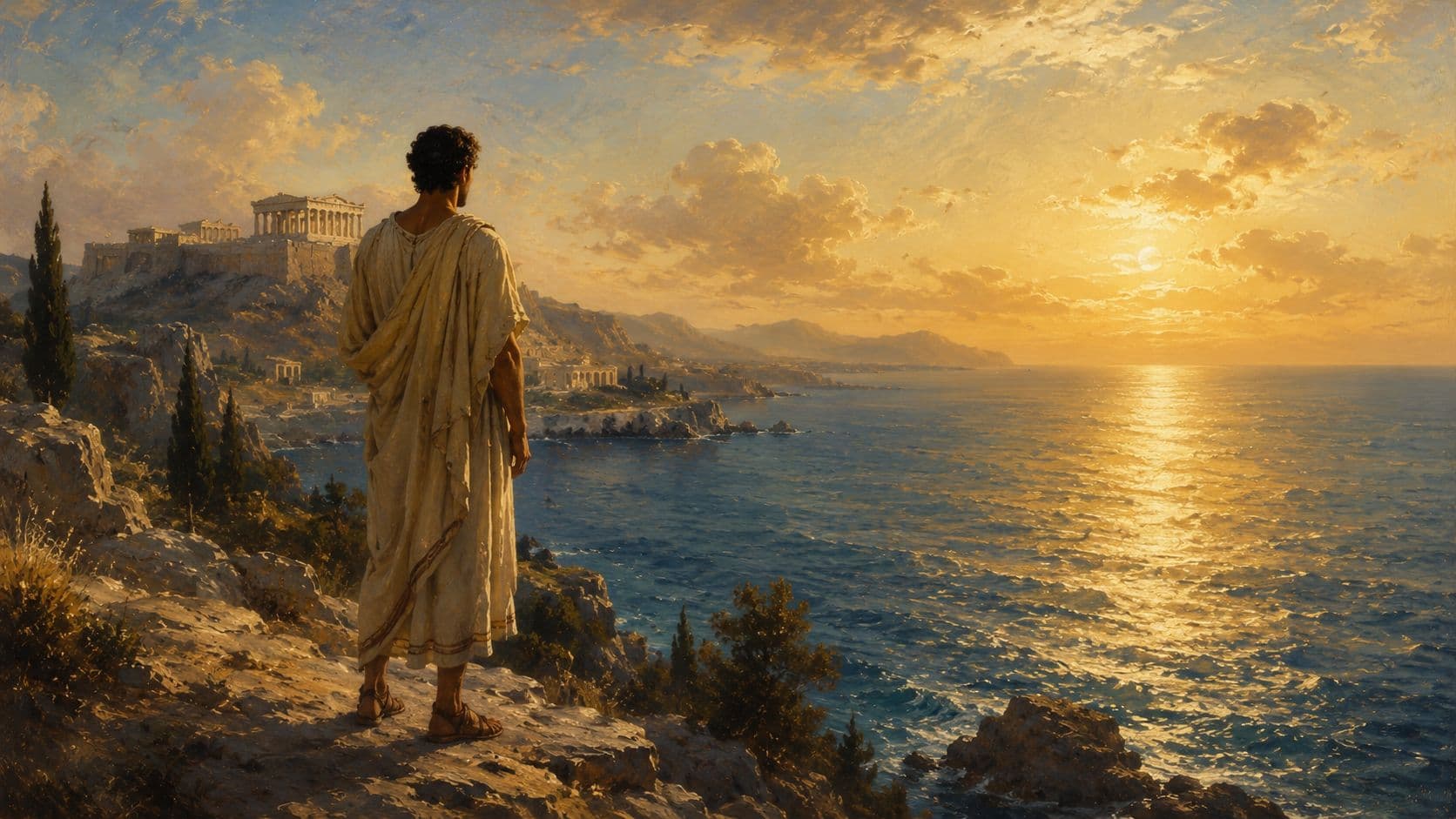
Christopher Nolan’s Odyssey will hit the theaters on July 17, 2026. The audiences are going to storm the theaters to see their favorite hero find his way home. Beneath the cinematic grandeur rests a story that has refused to fade for over 3,000 years. Every generation has managed to discover something new in it because let's be honest, we're all trying to find our way home.
That is the odyssey's meaning at its very core. It's not simply an adventure but a meditation on what it means to flourish. It explores what we long for, what we lose, what shapes us, and who we become before we finally arrive.
The Hero's Journey Beneath the Adventure
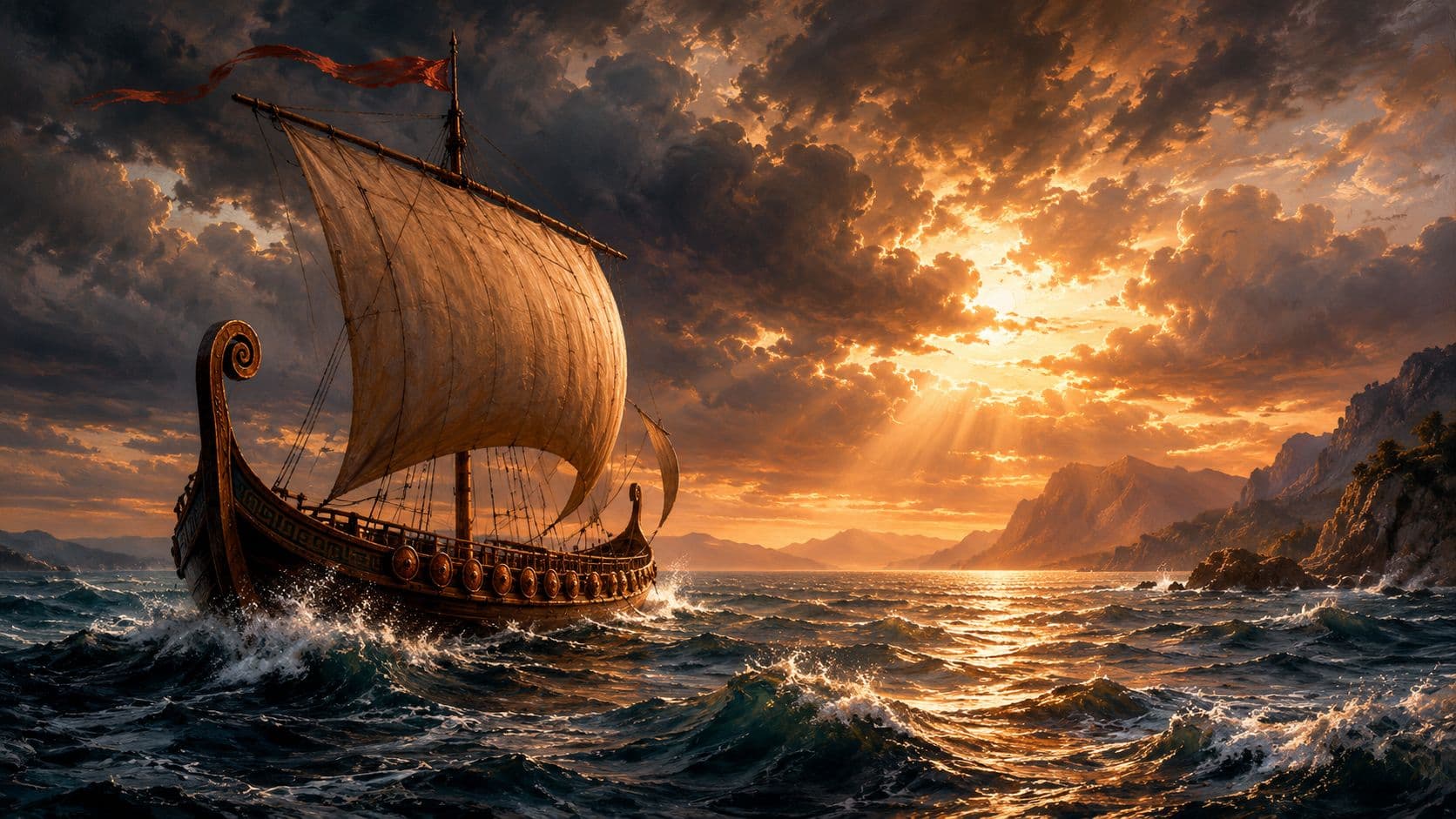
If you want to understand the themes of the Odyssey, let us try to look beyond the monsters and the maps. Homer's epic follows Odysseus after the Trojan War. Odysseus embarks on a 10-year voyage back to Ithaca. On the surface, it might seem like a tale of storms and possible trials, escapes, and long-awaited reunions. But the true destination of Odysseus' journey home is transformation.
Every hardship comes to strip away another illusion, and every delay questions his courage to survive disappointment. These are the enduring Odyssey themes that continue to resonate even today. The journey should not be measured by miles but by wisdom gained. Odysseus returns older, humbler, more patient, and more aware of the limits of his human strength.
That is why the story feels modern. We can travel across continents, build careers, and collect achievements, yet find ourselves searching for who we are. To that end, the Odyssey is one of history's greatest examples of the hero's journey.
Storms, Gods, and the Limits of Control
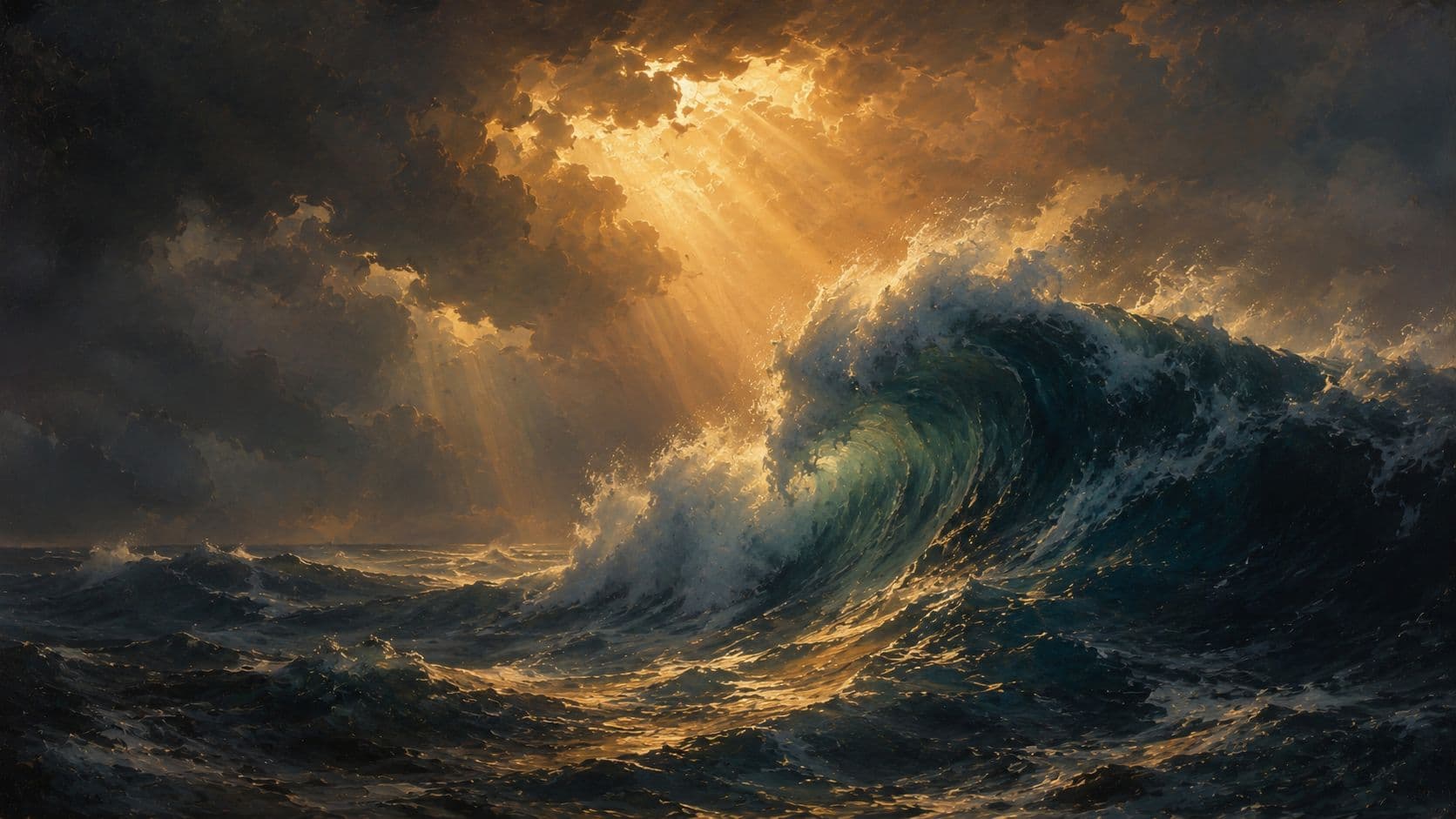
The Odyssey is a very powerful reminder that human beings are not fully in control of their lives. An honest Odysseus character analysis shows us that by every measure he's capable; he's clever enough to build a raft, he tricks the Cyclops, and he persuades a princess to help him return home. But Odysseus is not sovereign. He cannot command the sea, eliminate bad luck, or turn the will of gods who want to test him. Poseidon's anger can scatter a fleet of seasoned warriors.
God’s grudge can add a decade to a man's homecoming. The sea in the Odyssey is a spiritual teacher. It is vast, unpredictable, and utterly indifferent to human plans. It shows us that the forces of the universe will not bend to our intentions.
Enjoying this article?
Get UEF Insights. Writing on loving, learning, and playing, with insights from wisdom traditions and modern science delivered to your inbox.
Jesus calms a storm that has already terrified seasoned fishermen in the Gospel of Mark. Krishna reveals his vast and cosmic form to Arjuna on a battlefield, and Arjuna cannot do anything but tremble before it. In every tradition, the storm overwhelms before it transforms. We can plan, train, prepare, and work, but the Odyssey, like so many wisdom traditions before and after it, insists that there is a second movement too, which is quieter than the first. Belief in a higher power is willingness to bow before what we cannot control.
Love: The Force That Calls Us Home
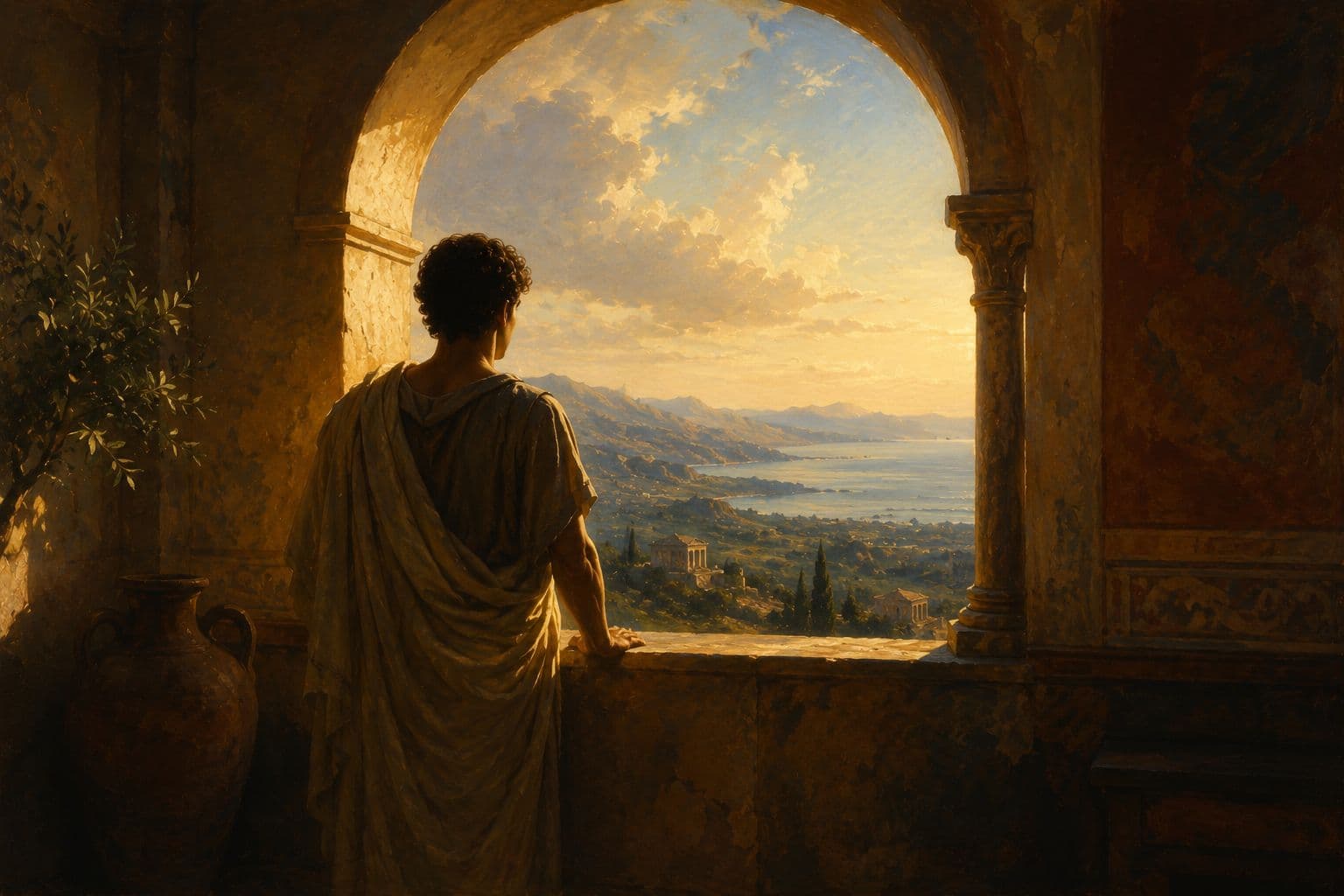
Love is all about connection, compassion, and courage. To that end, the Odyssey might be the oldest case study that we have that depicts what love looks like in practice. Odysseus didn't just want to reach a piece of land he called Ithaca. He wanted to return to Penelope, to his son, and to his aging father. Ithaca mattered to him for the people who were waiting there. Also, Penelope's love was no less heroic than her husband's adventures. For 20 years, she waited and protected herself and her household from suitors who wanted to take her husband's place. She delayed, deceived, and outwitted men far more powerful than her. Penelope's characteristics show patience, intelligence, and a relentless defiance that make her one of literature's most underrated heroines.
Telemachus barely knew his father because Odysseus left for war when Telemachus was still an infant. And so his love took a journey of its own. He left the safety of home to go looking for the man he was meant to become. And in doing so, he began to understand the father he had only known through stories.
Love is the practice of staying connected through uncertainty, distance, disappointment, and change.
Odysseus, Penelope, and Telemachus show us different faces of the same truth: meaningful homecomings are always related to love. We cannot flourish alone.
Learn: The Wisdom of Suffering and Return
Learn is a pillar built on curiosity, growth, and the willingness to be changed by experience. Odysseus made it home not because he was the strongest man at Troy, but because he never gave up his ability to learn. He learned when to speak his name with pride and when to swallow it and stay silent. He learned from his own mistakes. Since he taunted the blind Cyclops, he had to pay for that lapse of judgment for years afterward. Slowly he learned that strength without humility is a form of self-destruction.
Telemachus learning runs on a parallel track. His journey is across fear and not across literal sea monsters. He had to grow from a young man paralyzed by passive longing to someone who was capable of courageous action on his own. This is the real Odysseus life lesson: learning is never confined to school, youth, or any particular season of life. It is a way of being. This is the whole lens of human flourishing: to bring together inner life, outer action, and the wisdom each shapes in the other.
The Hidden Lesson: Ego's Greatest Test
The monsters in the Odyssey are unforgettable, but the most persistent danger may not be coming from any of them. It may be from Odysseus's own ego. Again and again, he is tempted to assert himself, to prove himself, and to make sure that others know his name. His intelligence saves him again and again, but his pride is what nearly destroys him. The most famous incident is when he cannot resist shouting his real name out to the Cyclops he had just blinded, handing Poseidon's son a target and a grudge that is going to follow him home for a decade.

Love • Learn • Play
The formula for a meaningful life.
One of the oldest and hardest lessons is overcoming the ego. Odysseus had to learn slowly and at great cost that identity is not the same thing as reputation. Home is not applause, and wisdom is not domination. The man who once stood on the deck of his ship and proudly declared his name to an army must learn the far harder discipline of hiddenness.
Play: The Imagination That Keeps Us Alive
Play is all about creativity, joy, and the kind of imagination that keeps us alive through uncertainty. Odysseus is imaginative, adaptive, and almost theatrical in how he moves through the world. He tells stories, invents entirely new identities on the spot, and claims false names to survive among strangers. He has the ability to improvise under pressure, build a raft from scratch, and devise the wooden horse before the poem even begins. He can talk his way out of situations that brute strength could never solve.
Even Homer’s poem is playful in its construction. It shifts time around and doubles back in circles. Identities are hidden and revealed at the right time. Surprise sits at the center of every chapter. Play is essential to living. When life turns into a storm, a shipwreck, or a hostile island, play is what helps us adapt without losing our resilience. Cinema, like Nolan's coming adaptation, is a form of play that has light, sound, image, illusion, performance, and wonder. A myth projected onto a screen is an act of imagination that inspires the audience to believe in something larger than themselves.
Conclusion
So why do you think the Odyssey still matters after thousands of years? Because it is a story about the human longing to flourish. That longing has not changed really as much as our technology has. Odysseus wants to come home, and Penelope wants the truth no matter how long it takes. Telemachus wants an identity of his own, and above them all, the gods reveal a world where human action matters enormously and yet where humans are never in control of the outcome.
The Odyssey is foundational because it arrived at certain truths about being human so early and so completely that every subsequent culture has had to keep retelling some version of that same story. When Nolan's film finally arrives, audiences are going to come for the spectacle, the IMAX scale, the shipwrecks, the monsters, and more. But we believe that they will leave with something older and quieter. A reminder that every life in its own way is an Odyssey. This summer, we're celebrating exactly this, the imagination of human flourishing, in our Summer of LLP initiative.