

Introduction
For nine nights, homes, temples, and community halls glow with lamps and fill with prayer, music, and movement. Some people fast or recite devotional texts. Others come together for garba and dandiya. Customs differ between communities, but attention remains centered on the Goddess.
Sharad Navratri 2026 begins on Sunday, October 11. Beneath the public celebration is a rich understanding of power in feminine form. Hindu traditions call this power Shakti.
Psychology uses a different vocabulary. Yet its ideas about archetypes offer another way to consider why figures such as the mother, warrior, protector, and wise woman appear in so many stories and cultures.
Exploring Navratri and the divine feminine together does not mean treating religion and psychology as the same. Instead, it allows us to consider what each may reveal about character, inner balance, and transformation.
What Is Navratri? Nine Nights of Divine Feminine Energy
What is Navratri? The name comes from the Sanskrit words nava, meaning nine, and ratri, meaning night. Several Navratri observances take place throughout the year, but the autumn festival is widely celebrated. It concludes with Vijayadashami or Dussehra.
The Navratri meaning and Navratri significance vary across communities. Some traditions dedicate each night to one of the nine forms of Durga. Others honor Durga, Lakshmi, and Saraswati in three groups associated with protection, prosperity, and knowledge.
Navadurga refers to Shailaputri, Brahmacharini, Chandraghanta, Kushmanda, Skandamata, Katyayani, Kalaratri, Mahagauri, and Siddhidatri. Their stories belong first to Hindu devotion. They can also encourage reflection on different human qualities.
- Shailaputri, Brahmacharini, and Chandraghanta bring grounding, discipline, and courage into view.
- Kushmanda, Skandamata, and Katyayani reflect creative power, maternal care, and resistance.
- Kalaratri, Mahagauri, and Siddhidatri are associated with fierce protection, purification, and spiritual accomplishment
These descriptions do not capture the complete theology of the goddesses. They do, however, show why the sacred feminine cannot be reduced to softness. The sequence includes care and severity, discipline and protection.
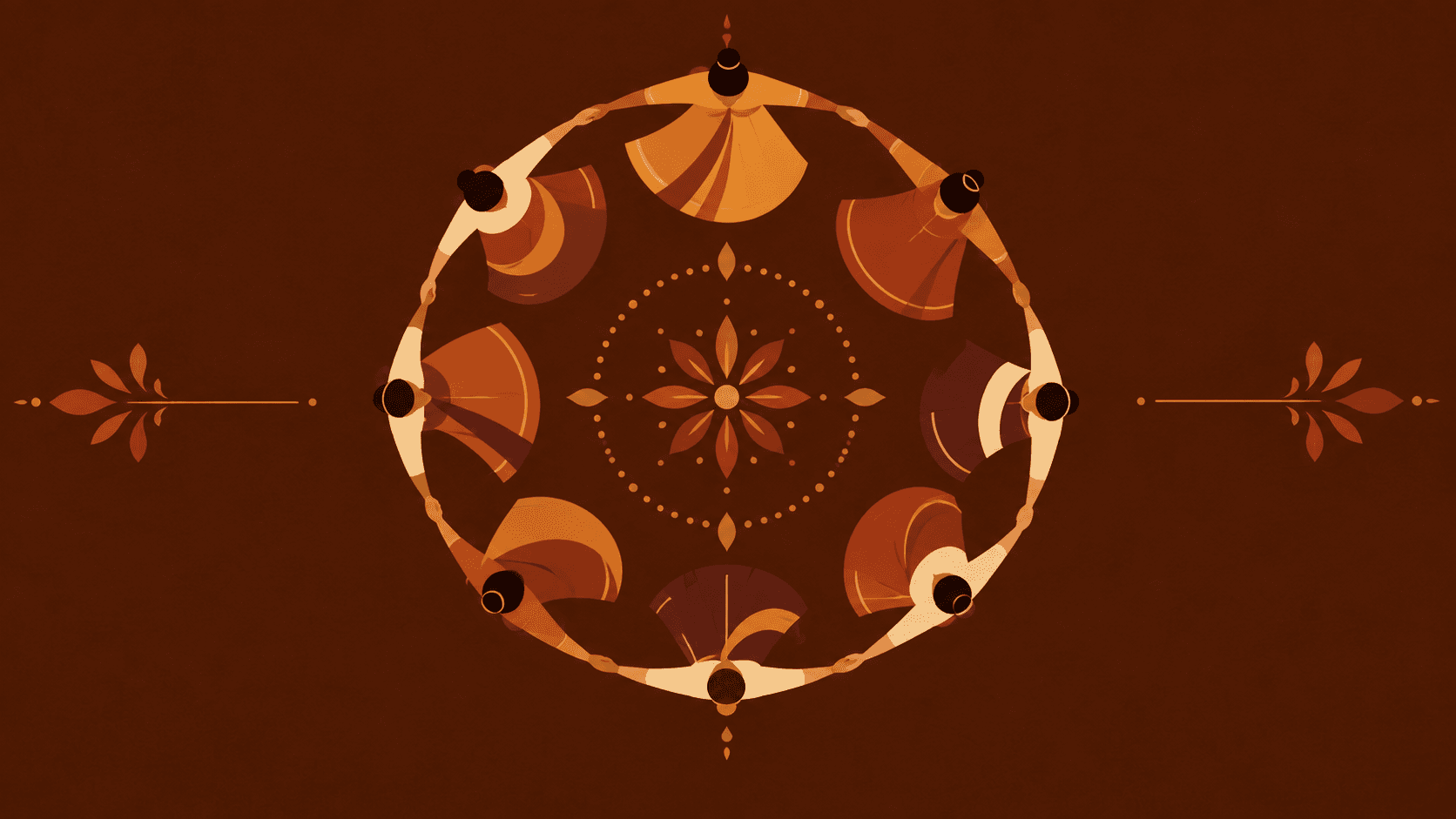
Navratri celebrations may involve fasting, puja, recitation, temple visits, Durga Puja, Golu displays, and community dances. Navratri garba is particularly associated with Gujarat and Gujarati communities. It is a folk dance performed through rhythmic steps in concentric circles, often around a lamp or image of the Goddess. Its circular movement turns devotion into a shared experience.
The lamps, images, and ritual objects used during the Navratri festival also demonstrate how sacred spaces and objects can give visible form to spiritual ideas. Their meaning comes from the stories, beliefs and practices surrounding them.
Shakti Meaning: The Divine Feminine Energy in Hindu Wisdom
The Sanskrit word "shakti" means power, capacity, or energy. In Hindu spirituality, it can describe divine power as well as the goddess who embodies that power. Within Shakta traditions, Devi may be worshipped as the supreme reality from which creation arises.
Enjoying this article?
Get UEF Insights. Writing on loving, learning, and playing, with insights from wisdom traditions and modern science delivered to your inbox.
This distinction helps explain the Shakti meaning and the Devi meaning. "Devi" means "goddess," while "Shakti" points towards "power." Durga expresses Shakti through protection and strength. Her battle with Mahishasura is also understood through themes of courage and the defeat of destructive forces.
The phrase divine feminine meaning can become unclear when removed from its religious setting. Within divine feminine Hinduism, ultimate power can be worshipped in feminine form. This does not mean that Shakti is simply a personality type for women. Nor does it describe the experiences of every Hindu woman.
Devotees may approach Shakti through prayer, ritual, and a belief in a higher power. Other people may understand goddess energy as a symbol of creativity, protection, or change. Both approaches exist, but they should not be confused.
Jungian Archetypes and the Divine Feminine: Where East Meets West
Carl Jung used the term archetype to describe recurring patterns that shape human images and experiences. Jungian archetypes may become visible in dreams, myths, religious traditions, and cultural symbols.
So, what is the anima? In Jung’s original model, the anima described the unconscious feminine aspect of a man’s psyche. The animus described the unconscious masculine aspect of a woman’s psyche. Later Jungian thinkers have interpreted these gender divisions more flexibly.
Seen through this psychological lens, the feminine archetypes associated with Navratri are neither passive nor limited to gentleness. Durga appears as a warrior and protector. Lakshmi evokes abundance, while Saraswati represents knowledge and creative expression.
This is a comparison rather than an equivalence. Shakti belongs to living Hindu traditions. The anima belongs to analytical psychology. A thoughtful discussion of Jung and religion can examine why feminine images recur without claiming that these two ideas are identical.
Mary, Isis, and Sophia, a figure associated with divine wisdom in Gnostic and Eastern Orthodox traditions, also appear in discussions about the feminine across religious and philosophical traditions. However, they do not share one divine feminine meaning across cultures. Mary, for example, is not a goddess in mainstream Christianity. Such comparisons can help us consider what all religions have in common while still respecting the differences between them.
Kundalini Awakening and the Shakti Within: What Navratri Activates
In some Shaiva and Shakta traditions, Shiva represents still consciousness, while Shakti represents dynamic power. The Shiva and Shakti meaning does not suggest that men are naturally still or that women are naturally active. These are symbolic principles rather than rules about gender.
Understood in this way, Shakti and Shiva describe two aspects of one reality. Their union becomes a symbol of complementarity and oneness.
The divine feminine and masculine can therefore be understood as capacities present in human life, regardless of a person’s sex or gender. Balance also involves acting without trying to control every result. UEF explores a related idea through the law of detachment.
What is kundalini? In several Hindu and Tantric traditions, kundalini is understood as a latent spiritual power within the subtle body. It is often pictured as a coiled serpent resting at the base of the spine. Its movement through the chakras is associated with liberation or transformed awareness.
Within these traditions, kundalini and Shakti are closely connected. Kundalini is understood as Shakti within the practitioner. Kundalini yoga may combine posture, breathing practices, mantra and meditation, although its teachings and methods vary. A small controlled study also found reduced perceived stress after three months of practice.
These practices may accompany the search for what is inner peace, but inner peace and kundalini are not the same idea.
Navratri does not automatically cause a kundalini awakening. Some practitioners use the festival as a period of devotion, discipline, and inward attention to Shakti. “Kundalini awakening and Navratri” therefore describes a possible spiritual connection rather than a guaranteed experience.
Love • Learn • Play
The formula for a meaningful life.
Claims about a divine feminine awakening require similar care. An intense experience may carry spiritual meaning for someone, but intensity alone does not prove an awakening. UEF’s discussion of spiritual awakening symptoms also separates meaningful inner change from dramatic labels. Distressing physical or psychological symptoms still require appropriate health support.
Navratri Across the Diaspora: What the Festival Means in the USA
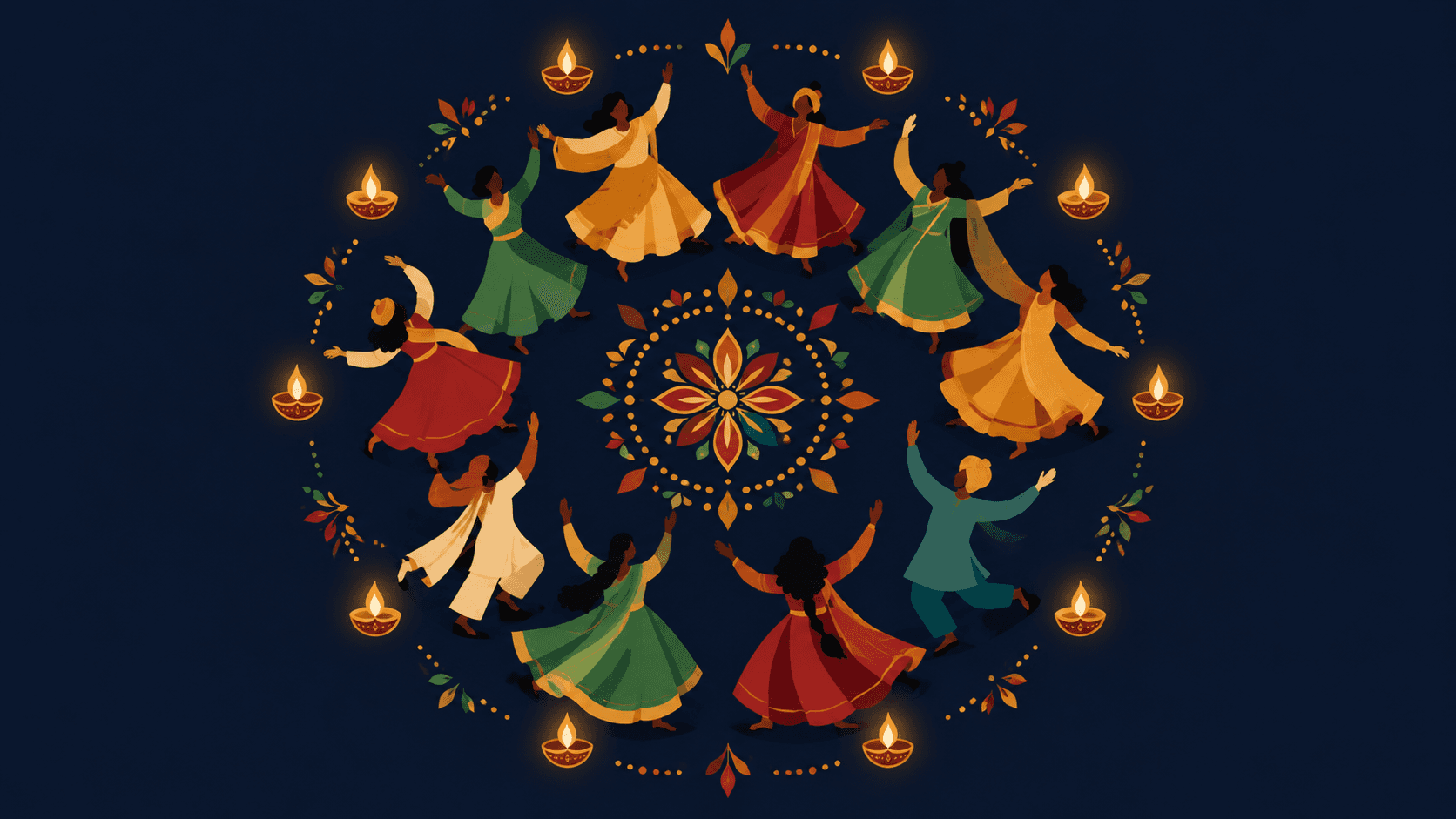
For Hindu communities in the United States, Navratri may be devotional, social, and cultural at the same time. Temples and community organizations hold pujas, garba nights, and performances. Families may observe fasts at home before joining a larger gathering.
A child might learn garba in an American school gym while a grandparent explains the meaning of its songs. Friends from outside the tradition may first encounter Hindu spirituality through hospitality, music, and dance.
In this setting, the festival becomes a bridge between generations and cultures. Celebration, learning, and devotion come together in a way that recalls UEF’s Love, Learn and Play framework.
Navratri Through Love, Learn and Play
Celebration, learning, and devotion come together in a way that recalls UEF’s Love, Learn and Play framework.
Love:
Navratri begins with relationship and devotion to the Goddess, gathering with family and community, hospitality, prayer and shared reverence. Love here is not merely an emotion; it becomes participation and connection.
Learn:
Each form of the Goddess introduces qualities worth contemplating: courage, discipline, creativity, care, wisdom and transformation. Stories, symbols and rituals become ways of transmitting meaning across generations.
Play:
Garba and dandiya remind us that spiritual life is not expressed only through silence or study. Rhythm, colour, music and collective movement can turn celebration into embodied participation.
Together:
Navratri offers an example of how love, learning and play can reinforce one another. A child may learn a story from a grandparent, dance garba with friends and experience belonging to a community, all within the same festival.
Conclusion
There are many images of feminine power in Navratri. The Goddess comes in nine nites to us as disciplined, nurturing, creative, protective, peaceful and fierce. Hindu traditions understand these forms through devotion to the Goddess Shakti. Jungian psychology offers an apart language for thinking about their archetypal resonance.
Navratri remains a Hindu festival, not a psychological exercise. Shakti is also more than a modern symbol of personal empowerment. Even so, the festival can invite people of any gender to reflect on the energies they cultivate and the kind of balance they seek.