
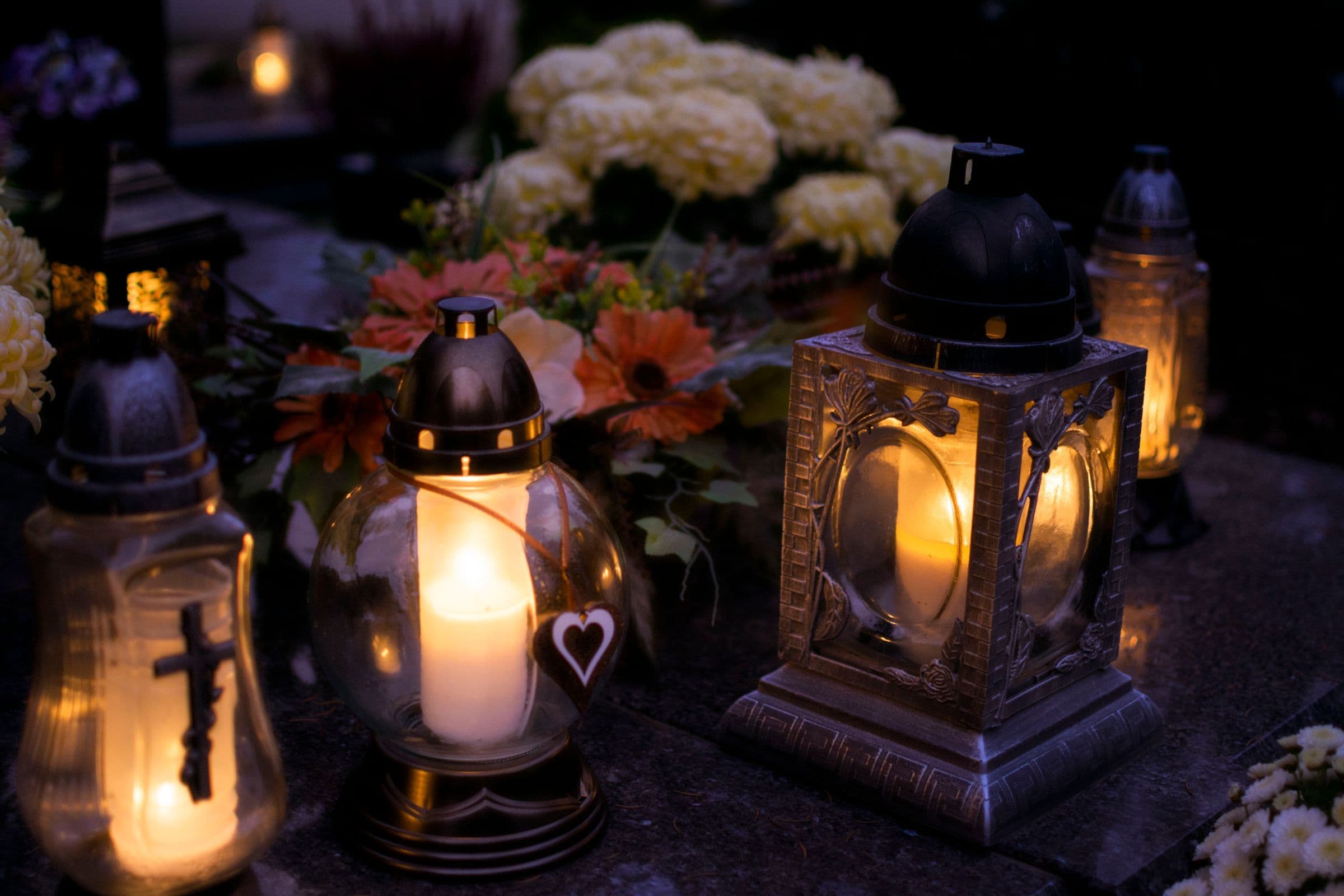

Three days, three different traditions, and a shared invitation to reflect on life, death, and the people we love.
On Halloween, ghosts appear on front porches and children dress as monsters. The next day, Christians honor the saints. On All Souls’ Day, families remember and pray for loved ones who have died.
How did these days come to sit next to one another on the calendar? And what do costumes, candles, and cemetery visits have to do with one another?
Each observance has its own history and meaning. But together, they open a window into a question people have faced across cultures and centuries: How do we live with the mystery of death and remain connected to those who came before us?
Halloween, All Saints’ Day, and All Souls’ Day in 2026
The three days occur in the same order every year. In 2026, they fall on:
- Saturday, October 31: Halloween, or All Hallows’ Eve, the evening before All Saints’ Day.
- Sunday, November 1: All Saints’ Day, when many Western Christians honor the saints.
- Monday, November 2: All Souls’ Day, when many Christians remember and pray for the faithful departed.
Together, these days are often called Allhallowtide. Their observance varies across Christian traditions, and Halloween is also celebrated in many secular ways.
What Is the Origin of Halloween?
The word Halloween comes from All Hallows’ Eve, the eve of All Hallows’ Day, another name for All Saints’ Day. “Hallow” is an old word for a holy person or saint.
Halloween developed over time through Christian observances and local customs, including traditions in Ireland and Scotland. Its history is often connected to Samhain, an older Gaelic seasonal festival, but historians debate the precise relationship. The familiar modern holiday, with costumes and trick-or-treating, took shape through multiple influences rather than a single, simple origin.
Today, a costume might be frightening, funny, or entirely fantastical. A child can become a ghost, a superhero, or a creature they invented that morning.
Through the Triple Helix of Human Flourishing, we can see Halloween as an occasion for play: trying on another identity, sharing a spooky story, or exploring fear in an imaginary setting.
Enjoying this article?
Get UEF Insights. Writing on loving, learning, and playing, with insights from wisdom traditions and modern science delivered to your inbox.
There is connection in it, too. Neighbors open their doors. Friends plan costumes together. Families revisit a favorite movie. As we explore in The Importance of Play, play can bring imagination and shared joy into our lives at any age.
What Is All Saints’ Day?
All Saints’ Day, observed on November 1 in the Western Christian calendar, honors the saints: those recognized for lives of holiness, as well as the faithful known to God.
For those who observe it, the day is an opportunity to remember people whose lives express faith, compassion, courage, and service. Their stories can also invite reflection: What qualities do I admire? How might I put them into practice?
This is a moment of learning. We encounter lives shaped by beliefs and choices, and we consider what they might teach us about our own.
The saints belong to specific Christian traditions, but learning from those who came before is a practice found in many communities. A family story, a teacher’s example, or the memory of someone’s kindness can help us imagine how to live.
What Is All Souls’ Day?
All Souls’ Day, observed on November 2, is a time when many Christians remember and pray for the faithful departed. In Catholic communities, people may attend Mass, light candles, or visit the graves of loved ones.
Here the strand of love is especially clear. A flower placed on a grave, a name spoken in prayer, or a story shared at a family gathering can express a bond that remains meaningful to the living.
In the Philippines, the observances around All Saints’ and All Souls’ Days are widely known as Undas. Many families visit cemeteries, tend graves, pray, and spend time together remembering relatives.
These acts show how rituals can give shape to remembrance. They provide a time and place to express grief, gratitude, and care, often alongside other people who share the loss.
All Saints’ Day vs. All Souls’ Day: What’s the Difference?
The distinction is straightforward:
All Saints’ Day honors the saints. All Souls’ Day focuses on remembering and praying for the faithful departed.
Both involve relationships between the living and those who have died, but they have different emphases. Halloween, meanwhile, is the eve of All Saints’ Day and has developed a range of religious, cultural, and secular customs.
Is Day of the Dead the Same as Halloween?
No. Día de Muertos, or Day of the Dead, is a distinct tradition with Indigenous Mexican and Catholic roots. It takes place around the beginning of November, but its beliefs and practices should not be reduced to a version of Halloween.
Customs vary across communities. Families may create ofrendas with photographs, candles, marigolds, and foods associated with loved ones who have died. For many participants, the observance is a time to welcome the returning spirits of loved ones.
Love • Learn • Play
The formula for a meaningful life.
An ofrenda can hold several strands of the Triple Helix at once. Preparing a favorite dish expresses love. Sharing the story behind a photograph passes on learning. In some celebrations, music, art, and humor bring creativity and joy alongside remembrance.
Grief and joy can coexist. As our article on human flourishing and mental health explores, a meaningful life can hold both.
What These Traditions Reveal About the Living
Other cultures have their own observances of remembrance. Japan’s Buddhist-rooted Obon honors ancestors, while Qingming in China and Chinese communities elsewhere is a springtime occasion when many families tend ancestral graves and make offerings. Their histories and beliefs differ from those of Halloween and the November observances.
Looking across these traditions is an invitation to practice religious literacy: approaching each with curiosity and respect while noticing the human questions they help people explore.
The Triple Helix offers a lens. We love through acts of care and remembrance. We learn from the lives and stories of those who came before us. We play through costumes, stories, art, and celebration where those belong.
The strands appear differently in each tradition. Together, they remind us that how we remember the dead can also shape how we live.
This season, consider someone who mattered to you. What did they teach you? What story would you want to pass on? And what act of love might you carry forward today?