
Philosophical
The Hero's Journey: Joseph Campbell and World Religions

Key Points: The Journey of a Hero
- Mythology, literature, and folklore across cultures share a striking common thread: a protagonist who leaves home, faces great trials, and returns, forever changed. Joseph Campbell named this pattern "The Hero's Journey" in his book, The Hero with a Thousand Faces.
- Moses, Jesus, and Prophet Muhammad followed the classic arc of the hero's journey: drawn into the wilderness by a higher power, tested beyond their endurance, and then transformed into a vessel of divine revelation. These common themes across religions are not coincidences, but recognitions.
- The destination of life is death, but we don't choose our path or our end. What we can shape is the journey in between.
- The hero's journey is not a story about reaching a place but about becoming a person who faced the darkness, found the light, and came back to share it.
What Is Joseph Campbell's Hero's Journey?
Just try to imagine this quintessential scenario: a young person living an ordinary life. Something calls them away. It could be a wish, a tragedy, or a restless feeling that they cannot name. They leave, struggle, and change. And then somehow they find their way back. This has been the shape of almost every great story that has ever been told. And this is exactly what the American scholar Joseph Campbell spent his life studying. In his 1949 book, The Hero with a Thousand Faces, Campbell talked about the myths, religious texts, folk tales, and legends from cultures across the world and noticed something remarkably similar. They were all telling the same story. Different names, different lands, different gods, but the same journey. He called this universal pattern the monomyth, or what we commonly know as the hero's journey.
Campbell mapped the hero's journey stages across three broad movements: first, the departure; second, the initiation; and third, the return. The fact that Joseph Campbell's hero's journey describes life makes it even more enduring. Campbell believed that the hero's journey is important not because it is a narrative technique, but because it mirrors the actual shape of human truth.
We are all, at some given point in our lives, standing at the threshold of something that frightens us, and the story tells us to go ahead anyway and return as a different and more stronger person.
The Hero's Journey in the Bible, Quran, and Religious Texts
Many religious texts contain similar stories of prophets and central religious figures who, driven by a sense of purpose, were willing to go against their own self-interest to embark on the hero’s journey to fulfill their destiny.
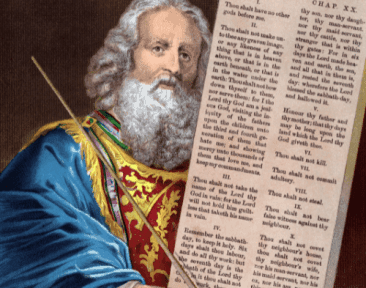
The thirst for answers led Moses, Jesus, and Muhammad into the wilderness of the desert, where their faith was tested and rewarded with awe-inspiring divine revelations. Moses led one of the biggest exoduses in human history, delivering Israelites out of the bondage of the Egyptian Pharaoh to the promised land. Jesus sacrificed himself, paving the way for salvation for others. His resurrection was a symbolic representation of the hero’s ultimate triumph over death and transformation into a higher being offering a message of hope to his followers. The life of Prophet Muhammad also included many of the elements of the classic hero’s journey described by Joseph Campbell. He, too, faced significant opposition spreading the message of Allah but eventually established Islam as a major world religion.
Enjoying this article?
Get UEF Insights. Writing on loving, learning, and playing, with insights from wisdom traditions and modern science delivered to your inbox.
The Hero's Journey in Hindu Mythology and Eastern Religion
Hindu mythology is full of the classic hero’s journey archetypes. Lord Rama willingly went to live in the forest for 14 years to uphold the honor of his father’s vow instead of agreeing to be crowned as the next king. Buddha left his privileged life as a prince, embarking on an ascetic and austere quest to find a way to end all human suffering. He attained enlightenment and taught his disciples the Eightfold Path to attain liberation from the cycle of birth and death.
Bahá’u’lláh, the founder of the Bahá'í Faith, endured significant opposition in his effort to spread the message of the oneness of humanity and unity of religion. Seen as a threat by the leaders of the Ottoman Empire, he was imprisoned and exiled numerous times, but he continued to write books and shape the direction of the Baha’i Faith.
Lessons from the Hero's Journey of Prophets
We all hope that our journeys in life will bring us closer to knowledge, but along the way, we make mistakes and have to confront our own shortcomings. However, we can find comfort in knowing that is true even of the prophets. The Buddha, for instance, settled upon teaching ‘The Middle Way' only after learning from his personal experiences. Similarly, Confucius traveled extensively trying to meet various political and military rulers with a desire to see a unified and more peaceful China. Faced with repeated rejections, he gave up and returned home. But it was only once he returned that the Confucius we know really emerged, the one who taught lessons to his students, which were codified as his famous Analects and formed the backbone of the Chinese Education system for the past several millennia.
The Hero's Journey Within: Why Life Is About the Path
It has become a bit of a cliché to say that ‘life is about the journey, not the destination,’ but it contains a lot of truth. After all, the destination of life is death, which is uncontrollable and unknowable, as is our birth and its circumstances. It is the part in between called life that we can wield some control over.
The narratives of these journeys that we find in the religious scriptures show us that even divine beings and prophets had to face many trials and tribulations. Their stories are meant to give us the guidance necessary for us to navigate our own journeys of self-discovery, but because we are all different and make meaning in different ways, we will benefit more from certain teachings over others.
As we move through our lives with intention, we take ownership of our personal development and realization that comes with it. The hero’s journey is not only about overcoming external obstacles but also about overcoming our inner doubts, fears, and limitations to achieve our ultimate destiny to become the best version of ourselves.
What World Religions Say About the Hero's Journey
Here is how different religions exemplify the hero's journey, an example of real life:
Christianity
“You shall remember all the way which Yahweh your God has led you these forty years in the wilderness, that he might humble you and test you and know what was in your heart, whether you would keep his commandments or not.” - Deuteronomy (8:2), Fifth book of the Old Testament

Love • Learn • Play
The formula for a meaningful life.
Islam
“To each among you have we prescribed a law and an open Way. If God had so willed, He would have made you a single people, but His plan is to test you in what He has given you; so strive as a race in all virtues. The goal of all of you is God; it is He that will show you the truth of the matters in which you dispute.” - Qur’an (5:48), Muslim text
Hinduism
“As one’s own hands and feet act without permission of the head, so do heroes act without permission of their own selves.”- Bhagavata Purana, Hindu Religious text
Buddhism
“It is better to conquer yourself than to win a thousand battles. Then the victory is yours. It cannot be taken from you, not by angels or by demons, heaven or hell. - The Buddha
Daoism
“Normally, if a traveler fails to find home when his journeys are over, everyone will agree that this person has lost his way. However, in the journey of life, many travelers only know how to wander but do not know how to return home. And yet people do not see that these travelers have likewise lost their way.” - Lieh Tzu, Daoist sage
Baha’i
“Briefly, the journey of the soul is necessary. The pathway of life is the road that leads to divine knowledge and attainment. Without training and guidance the soul could never progress beyond the conditions of its lower nature, which is ignorant and defective.” - Abdu’l-Baha, Baha’i leader
Conclusion
The hero's journey is a map of what it means to be a human across every tradition in the Bible, the Quran, the Bhagavad Purana, the Buddhist sutras, and more. The journey of a hero follows the same sacred arc of a calling, a crossing, a trial, and a return bearing light. This monomyth endures because it is the story that is unfolding in each of us right now. Whenever you face a moment of loss, confusion, or change and choose to move through it rather than away from it, you are walking the path of the hero's journey. These common themes across religions are not coincidences, but recognitions. They tell us that underneath the different names, rituals, and languages, all traditions point towards the journey inward, oneness with God, and love of humanity. The hero with a thousand faces is not just a character in a book, but it is you and every person who has ever chosen to grow.