

What Is Play?
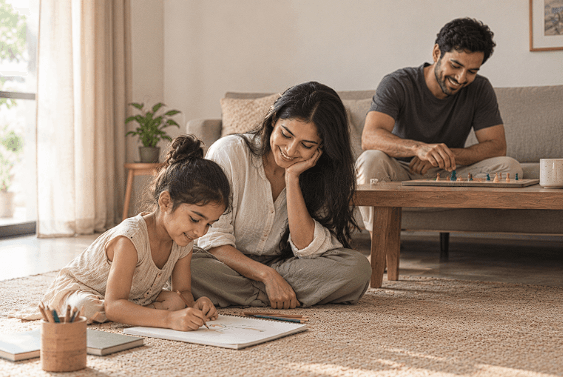
Just think about the last time that you lost track of time. You could have been kneading dough, doodling, or anything else. This was when nobody asked you to do it, and nothing was due. That is play. It is an activity you choose for its own sake. You do it because it feels good to do. There is no target or anyone waiting for the result.
Researchers describe play as something that is intrinsically motivated, which simply means that the reward is the doing. So what exactly does play mean for a grown person with bills to pay and deadlines to meet? It needs permission. It's a small and steady reminder that you permit yourself to enjoy being alive, and therefore it is an important tenet of human flourishing.
Common Types of Play: Examples for Children and Adults
Play comes in many forms. Here are different types of play that you will see most often:
Physical and Movement Play
Your body knows how to play before the mind even remembers. For instance, a child runs for no reason or a tired mother dances in the kitchen while the dal simmers.
Skipping, swimming, cycling, climbing, flying a kite on a windy afternoon. This is play that lives in the muscles and the breath. It can help us feel lighter in our own skin.
Object and Constructive Play
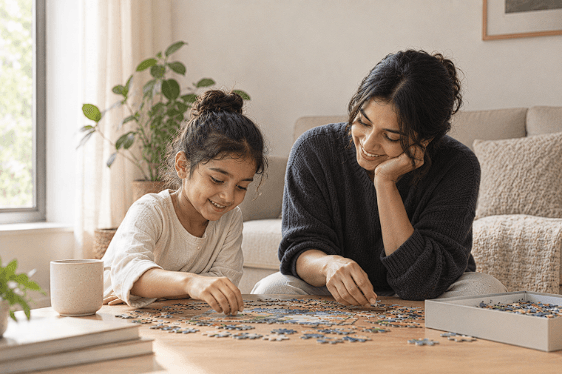
Blocks, clay, Lego, jigsaw puzzles, a half-assembled bookshelf. In object play, we handle things and see what they can become.
Children stack and topple. Adults sort spice jars into a perfect row and feel good. Same instinct, different ways!
Imaginative and Pretend Play
Make-believe is where we get the power to take on the world.
A child turns a steel plate into a steering wheel. A little one feeds her doll with great seriousness. Piaget, a renowned Swiss psychologist, noticed that children use this kind of play to work out how the world fits together.
Adults do it too. We rehearse a hard conversation in the shower. We imagine the house we might build one day. We read novels and live a dozen lives.
Creative Play
Painting, singing off-key, writing poems nobody will read, cooking without a recipe, arranging flowers in a chipped mug.
Creative play does not come with a manual, and that is exactly why it feels so good.
Social Play
Antakshari in a car full of cousins. Card games that run past midnight. Two toddlers sitting side by side with their own toys, slowly edging closer until they are playing together.
Enjoying this article?
Get UEF Insights. Writing on loving, learning, and playing, with insights from wisdom traditions and modern science delivered to your inbox.
Social play is where laughter spreads. It is also where Love, Learn, Play begins to feel less like a philosophy and more like a Sunday afternoon.
Exploratory Play
A baby shakes a rattle again and again to hear what happens. A teenager takes apart an old radio. A grandfather pokes around an unfamiliar market, tasting things.
Exploratory play is about finding out. It keeps the mind supple at any age.
Competitive Play
Carrom, chess, cricket in the lane, a family Scrabble night and more. Competitive play adds rules and a scoreboard, yet it stays play as long as the game matters more than the prize.
What Science Reveals About Different Types of Play
Piaget linked play to how children build understanding. Kolb's work on experiential learning suggests that we absorb ideas best when we try, think, and reflect, which is play in a working outfit.
Other researchers have described how young children move from playing alone, to playing alongside others, to playing together.
The pattern across studies is clear. Play is tied to curiosity, flexible thinking, and stronger bonds with other people. It may help children learn and may help adults feel more connected and creative. Therefore, play is not a break from learning. It is one of the ways learning happens.
What Wisdom Traditions Reveal About Play
In Indian culture, the idea of Lila sees the universe itself as divine play, a creation made out of joy rather than need. The Greek philosopher Heraclitus said time is a child at a game. Plato suggested that a life well lived includes playing at beautiful things. The poet and philosopher Schiller wrote that we are most fully human when we play.
Different centuries and different continents follow the same insight; play is not what we do after life is sorted out. It is part of what makes life worth sorting out.
This is the thread UEF follows too. Its framework says that to flourish is to love, learn, and play, and it treats play as one of our deepest longings rather than a reward for finishing work.
How to Discover the Types of Play You Enjoy
You may have forgotten what play feels like for you, and that is completely normal. These simple techniques can help you find your way back to it.
Look backward
Think about what you could spend hours doing when you were ten. Drawing? Climbing trees? Running a pretend shop? The things that caught your attention back then may still give you that same spark today.
Notice the flow
Pay attention to the moments when you got so absorbed in something that you forgot to check the time. Maybe while cooking, painting, playing a game or simply building something with your hands. That feeling of being completely caught up in an activity can be a clue that you’ve found something you enjoy.
Borrow a friend’s hobby
Say yes to the board game, the trek or the pottery class you’d normally skip. You don’t have to be good at it. Just give yourself a chance to see what it feels like
Try without commitment
Play doesn’t need a plan, a purpose, or a long-term commitment. Give yourself one afternoon, not a rigid timetable
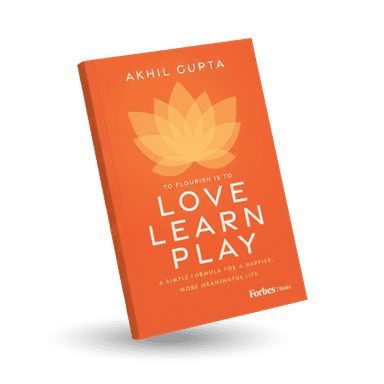
Love • Learn • Play
The formula for a meaningful life.
How to Make Room for Play in Everyday Life
For this, you don't need a free weekend. Just a few honest minutes. Try singing on the way to work, taking the long route home once a week, letting yourself wander wherever you want during the evening walk once in a while, or even keeping a puzzle on the coffee table.
The rule of play in everyday life is not there to fill your calendar. The idea is to soften the edges. A little play between errands can change how your day feels.
If you have children, try joining them for ten minutes without trying to fix anything or teach anything. Just be the bad dinosaur. Believe us, they are going to remember it long after playtime is over.
If you are an adult who feels guilty about playing, we've got an insight for you to hold on to. The importance of play for adults is very real. Through play, you get to stay curious, connected, and become a little more patient with the people you love.
How Different Types of Play Bring Love, Learn, Play Into Everyday Life
When you look at it through UEF’s framework, different types of play are not mutually exclusive. They're like doors into the same house.
- Social play opens love. For example, a shared game can help build connections without anyone trying.
- Exploratory or imaginative play leads to learning because curiosity is where growth begins.
- Creative and physical play brings you the pure joy and freedom from the worry of outcome that form the basis of play.
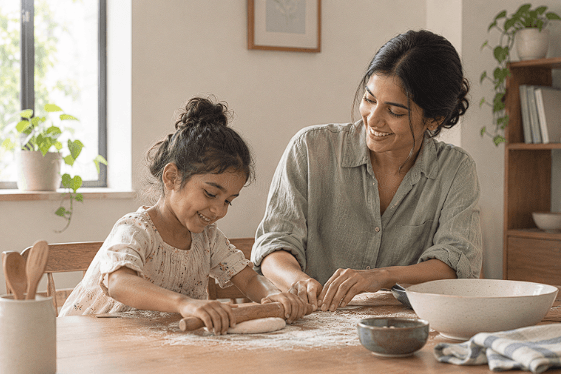
Most activities blend love, learn and play. Imagine a family cooking session. It is physical, creative, social, and exploratory all at once. That is exactly what living consciously looks like. You don't need grand gestures. All you have to do is notice which door you're walking through and choose to stay in it a little longer. When you do this, the importance of play is going to stop being just an idea. It will become a habit. It will become an answer to play and a meaningful life. And eventually, your days won't just remain productive, but also tender, funny, and truly yours.
Conclusion
The power of play is very easy to miss because it looks so ordinary. It could be a game, a doodle, or even a little dance in the hallway. Yet these little moments hold something very big. They remind us that we are more than just schedules and deadlines. They bring us closer to our loved ones, keep us curious, and help us live our life to the fullest. So pick your favorite kind of play, and try it this week. No matter how nicely or badly you do it, make sure that you go about it happily. That is exactly how a flourishing life is set in motion.