
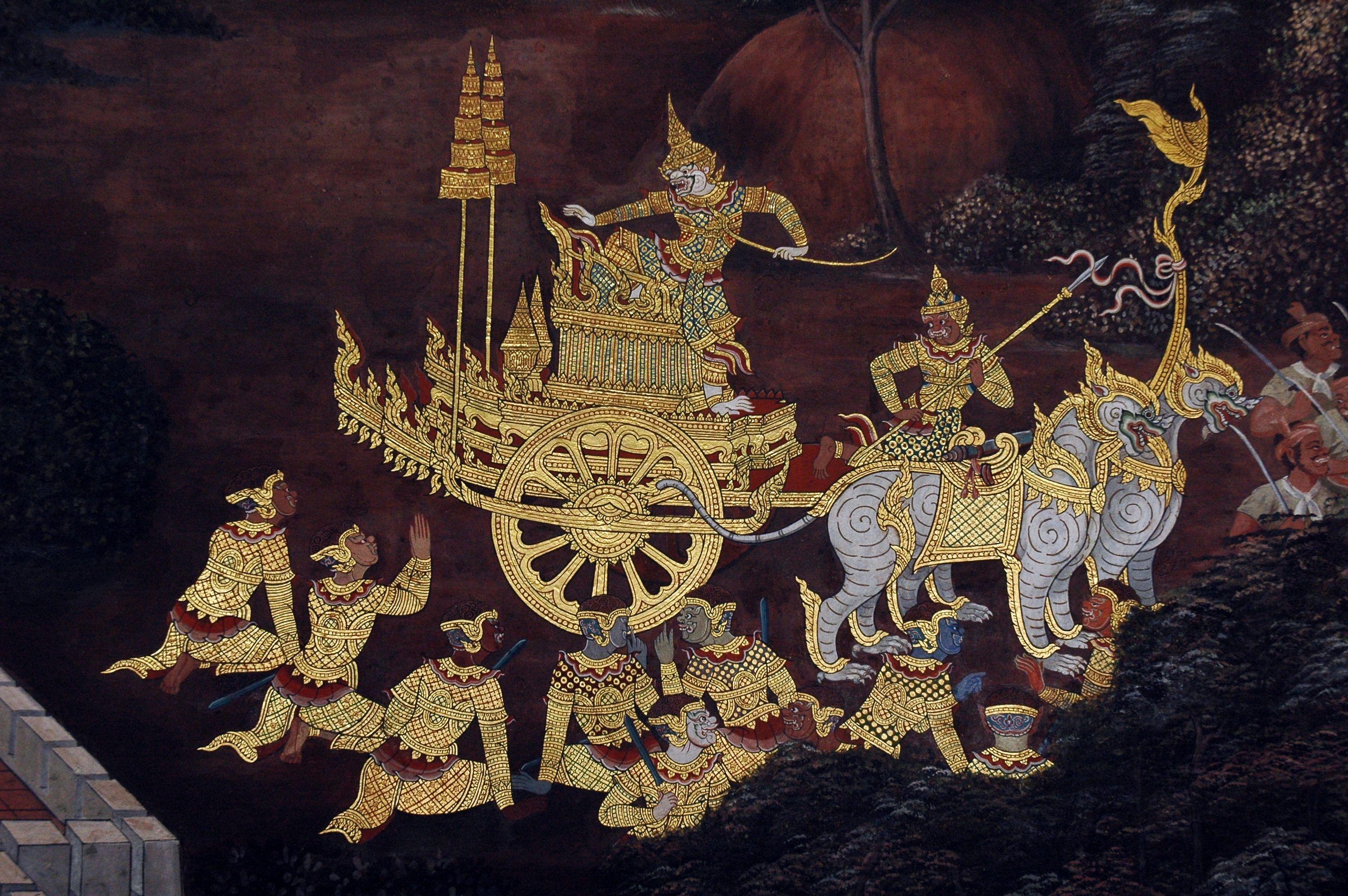

Kids around the world grow up listening to bedtime stories from their parents or grandparents. Growing up in India, we went to bed listening to the Epics of Lord Rama & Ramayana. As a kid, you do not really understand if the characters are fictional or have any religious & cultural significance as it's just a story for you. However, as William Arthur Ward has rightly pointed out, curiosity is the wick in the candle of learning. Every kid who grows up listening to The Ramayana story is fascinated by it and wants to indulge his curiosity by engaging more deeply with the story.
The most intriguing thing about this particular tale is that kids across centuries have heard or experienced their own version of this epic. Not just in India but the whole of the Indian subcontinent and its neighboring countries have experienced Ramayana in some form or the other. We’ve watched cultural dance & art depicting the tale, listened to bedtime stories, and read books about it. The most important highlight is that Ramayana has survived the test of times and is celebrated even after centuries in not just India but beyond its physical borders and has beautifully been absorbed by different cultures because of its universal themes.
The Tale of Ramayana
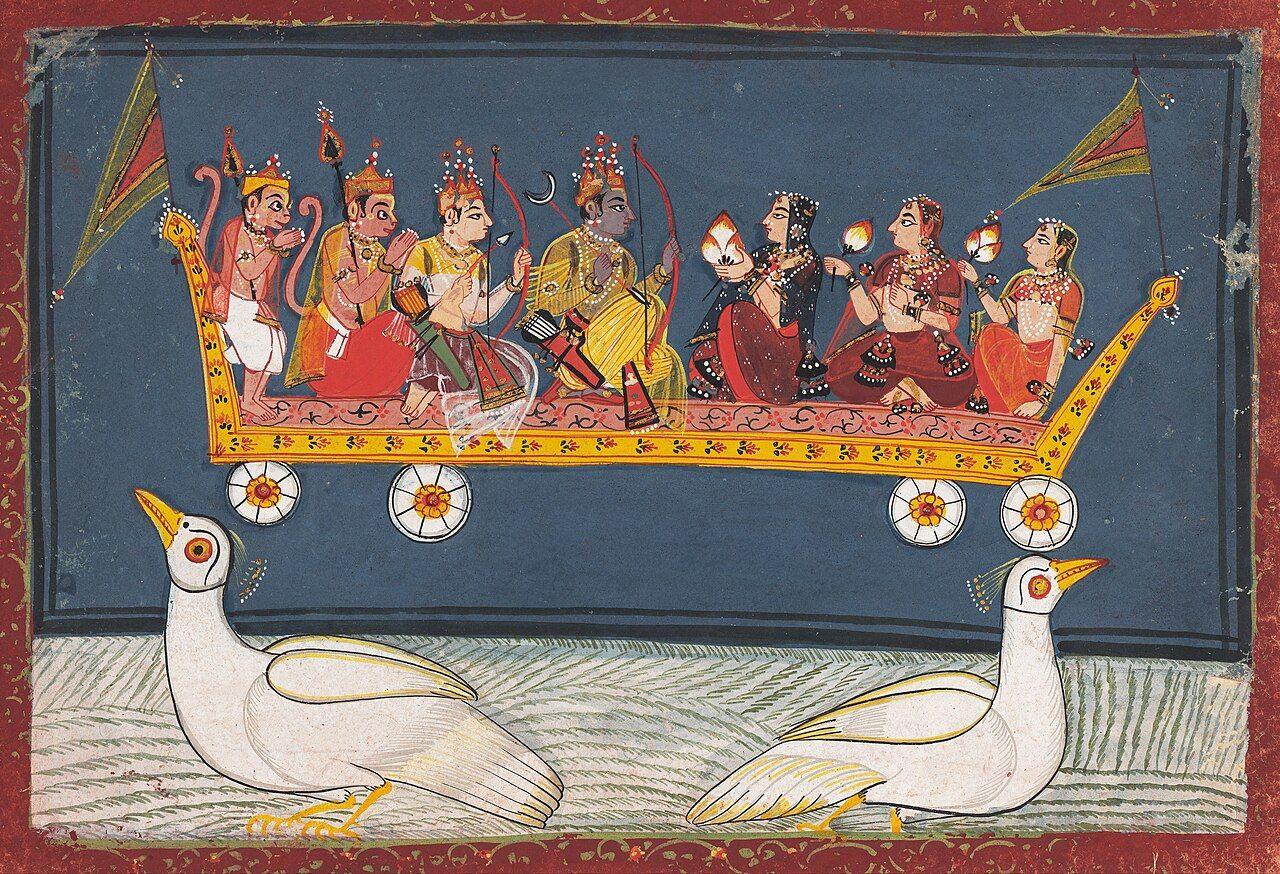
The story revolves around five main characters: Lord Rama, his wife Goddess Sita, Lord Lakshmana, Lord Hanumana, and Ravana, the demon. In the classical version written by Valmiki (roughly between 750 and 500 BCE), the story is based around how Lord Rama was sent to live in a forest for fourteen years to serve his exile while his wife was abducted by Ravana who took her to Lanka (his kingdom) and how Rama along with his brother Lakshmana and his true devotee Hanumana, raised an army to fight Ravana and bring his wife home. However, the later versions were rewritten by different authors of various backgrounds to make the story more relatable and acceptable for their audience.
Enjoying this article?
Get UEF Insights. Writing on loving, learning, and playing, with insights from wisdom traditions and modern science delivered to your inbox.
For example, the most popular adaptation of Valmiki’s Ramayana, Tulsidas’s Ramcharitrmanas, was published between 1574 CE and 1577 CE when India was being ruled by Mughal emperor Akbar. Therefore, to reflect the state of the society, Tulsidas added a line in the depiction where he emphasized that Sita was abducted as she crossed the Lakshmana Rekha (line of protection) drawn by her brother-in-law- something that wasn’t in Valmiki’s version. This tried to signify that women should listen to and be protected by men, and if they don't, something bad might happen to them in an attempt to make it more relevant to the society.
Similarly, the Buddhist versions of Ramayana such as the Dasharatha Jataka (where Rama is portrayed as Bodhisattva or future Buddha) and Jain Versions (where Rama renounces the world and is a believer of Ahimsa and Lakshmana slayed Ravana) to make it more appropriate for their own readers. This signifies that the multiple versions of Ramayana did not necessarily tell the same story but all had similar teachings.
One Epic, Many Cultural Expressions
At the beginning of the Common Era, Indian merchants started travelling east-wards to Malay, Sumatra & Java ports for trade and business. While travelling, they took their texts, cultural practices and oral narratives with them, which would have facilitated the exchange of not just goods but also ideas, religion, and teachings. Moreover, during the same time, the Brahmins priests, Buddhist & Jain monks started travelling using the eastern overland corridor, spreading their religious teaching, practices and literature along the corridor in countries such as Myanmar, Thailand, Cambodia and Laos which enabled the spread of the tale of Ramayana to various countries and cultures. Even though the story of Ramayana was becoming prevalent in South East Asia, every country had its own way of embracing the Epic and making it their own.
The Ramakien: Thailand
In Thailand, the Ramayana is called Ramakien, which means ‘The Glory of Ram’. Thai people associate ‘Lord Rama’ as a symbol of devotion, heroism, and a just ruler. Rama inspired them to such an extent that the current ruler of Thailand considers himself the descendant of Lord Rama, and since time immemorial, all the kings of the Chakri dynasty have been using the title of Rama. Furthermore, Ramayana is embedded in the Thai culture so deeply that it has inspired Thai cultural motifs, designs, and costumes. There are murals, designs, and carvings of Ramakien in Thai shrines and temples. These carvings are not just in small shrines but also in the Temple of Emerald Buddha (Wat Phra Kaew) in Bangkok. The emerald buddha temple showcases 170 carvings inspired by the Epic.

Love • Learn • Play
The formula for a meaningful life.
Thailand’s UNESCO recognised Khon dance - drama is a depiction of the Ramayana using elaborate masks, intricate gestures, and a live orchestra, which elevates the audience’s experience and fascination of this great Epic. Not only is this dance form a tourist attraction and theatrical experience but it is considered so holy & pious that it is also performed in Royal ceremonies.
The Reamker: Cambodia
Similar to Thailand, in Cambodia, the Ramayana is known as the Reamker which again means ‘The Glory of Ram.’ It is so popular in Cambodia because it perfectly resonates the spirit of the country and is an integration of Hinduism and Buddhism which resembles the country’s unique cultural and religious history.
The Reamker, written in the local language of Khmer, is a key text in Cambodian literature and is taught to students in schools & university to instil a sense of compassion and mindfulness in the children. The Epic of Ramayana has also paved way for Cambodian classical dance, which showcases different characters and epics of Reamker using intricate hand gestures known as Mudras. The country further celebrates the Khmer New Year every year by reenacting the scenes of Reamker. Finally, just like the Thai temples, there are detailed and intricate carvings of Ramayana character and scenes in the famous Angkor Wat temple and Banteay Srei highlighting the themes of heroism and moral justice.
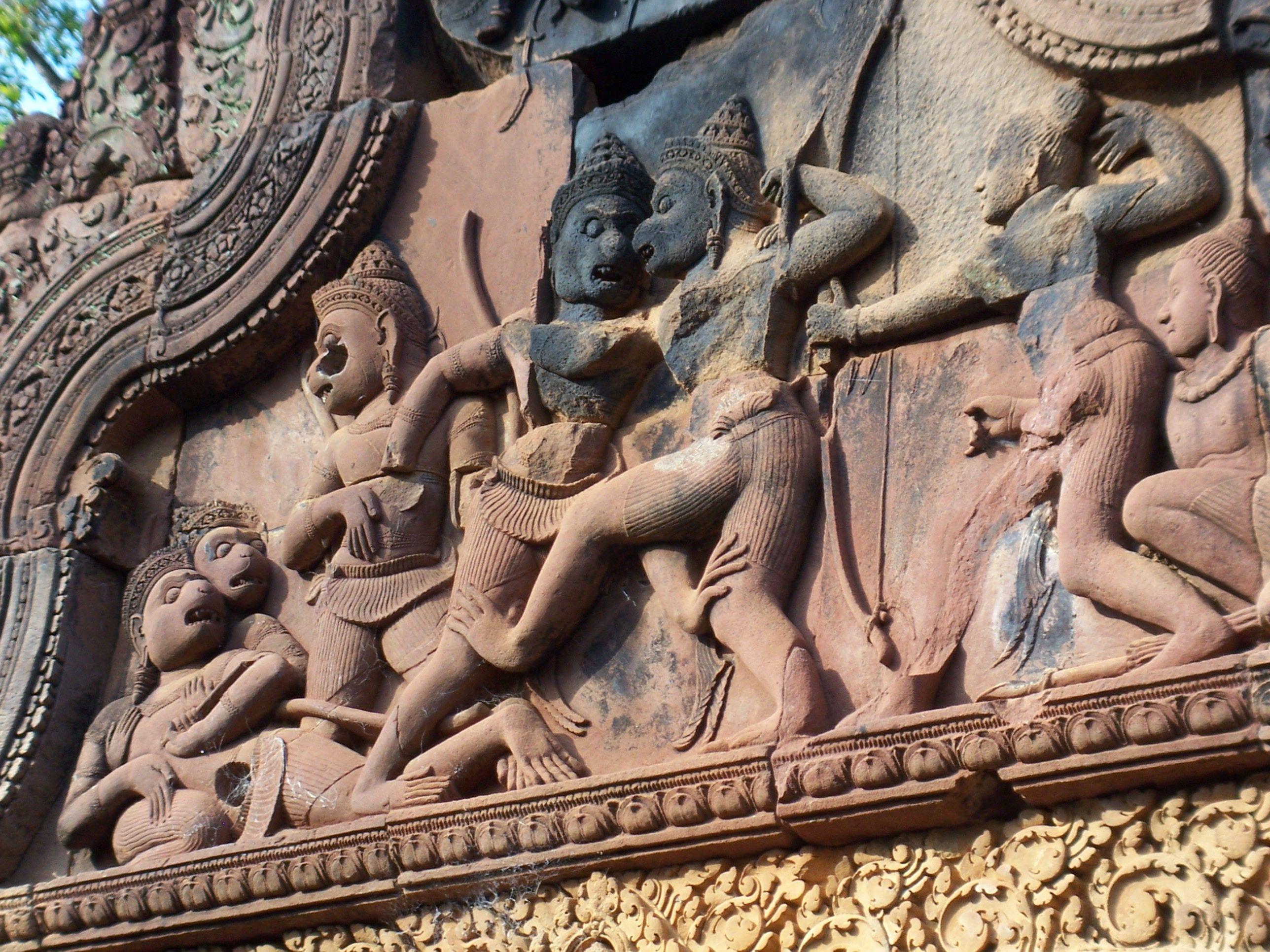
Photo: DoktorMax / Wikimedia Commons (CC BY-SA 3.0).
Why is Ramayana still relevant?
Even though, the world around us is constantly changing, Ramayana is still relevant because it explores such themes and virtues which is still relevant in today’s time irrespective to your cultural background or religious belief. Cambodia celebrates the themes of compassion, mindfulness, and the balance between dharma and karma while Thailand focuses on karma and moral righteousness.
Interestingly, the UEF’s framework is also highlighted in this Epic. The story revolves around how love can take form of different relations such as wife, sibling, parents and friends but all these relationships can be successful only because of loyalty, devotion and sacrifice. It is also clear that this epic tale of love, duty and moral righteousness is still relevant in today’s age because every chapter or episode has some learning to offer and signifies that to be successful or to realise your maximum potential one should keep learning. It emphasises that learning does not necessarily have to be serious. People can also be taught via different kinds & forms of play (games, literature, theatre, art & dance).