


For seventy-five years, Harvard researchers tracked the physical, mental, and emotional health of 700 men. The study encompassed individuals from all walks of life, from disadvantaged youth in inner-city Boston to Harvard College sophomores. Over decades of painstaking data collection, the researchers sought to uncover the hidden variables that create a good, fulfilling life.
The conclusion was remarkably simple, defying every modern cultural obsession with wealth, status, and prestige. It was summarized in five definitive words: "Happiness is love. Full stop." Why is love important in life and places it at the center of human well being.
It was not career accomplishment that predicted health and satisfaction at age eighty. It was not the zip code they lived in, the size of their bank accounts, or even their cholesterol levels. It was the quality and depth of their relationships.
We often read studies like this, nod our heads in agreement, and proceed to live our lives exactly as we did before. We know love is important. We understand its value intellectually. Yet, we struggle to make it the absolute center of our existence, often forgetting that love is a choice not a feeling.
The Problem: The Modern Epidemic of Disconnection
Despite overwhelming scientific consensus that love is essential to human flourishing, we live in an era of profound, unprecedented disconnection. We find ourselves in the midst of a loneliness epidemic that is eroding the very foundation of our society.
In recent years, studies have revealed that younger demographics, including young adults in their early twenties, report the highest levels of loneliness—frequently surpassing the elderly in their feelings of isolation. We are constantly wired together through digital networks, scrolling past thousands of curated snippets of human behavior daily, yet we are starved for genuine connection and unsure how to build a strong emotional connection.
Our modern architecture of living—our sprawling suburbs, our grueling work hours prioritized over community engagement, our deeply individualized entertainment—militates against the consistent, unstructured interactions that relationships require to thrive.
We have treated love as a passive feeling, something that simply happens to us if we are lucky. We believe that if we find the right partner, or possess the right family dynamics, love will naturally flow. But treating love exclusively as an emotion leaves us vulnerable to the chaotic tides of our moods and circumstances. When the feeling wanes, we assume the love has vanished.

Enjoying this article?
Get UEF Insights. Writing on loving, learning, and playing, with insights from wisdom traditions and modern science delivered to your inbox.
The Concepts: Transforming Emotion into Discipline
We must shift our fundamental understanding of love. Love is not merely a feeling; Love is a *practice*. It is a skill that we can cultivate, strengthen, and expand through intentional repetition, much like a musician practicing scales or an athlete building physical strength.
When we view love through the lens of practice, we begin to recognize it not as a fleeting romance, but as an orientation of character and how to practice love. The eminent psychologist Erich Fromm argued that love is not primarily a relationship to a specific person, but rather an attitude that determines how a person relates to the entire world. If an individual only "loves" their immediate family but treats the rest of humanity with cold indifference, Fromm argued, they do not possess love; they merely possess a symbiotic attachment.
Love is an active verb. It is the conscious, daily decision to extend our care, attention, and compassion toward another being. It requires vulnerability, effort, and a continual pushing back against our natural tendencies toward selfishness and self-isolation. This is where the idea that love is a choice not a feeling becomes deeply practical and actionable.
The East-West Synthesis: Eliminating the Barriers
This disciplined approach to love bridges the profound wisdom of both East and West.
The ancient Greeks were deeply aware of the multifaceted nature of love. While English forces us to use the single word "love" to describe our feelings toward our spouses, our pets, and our favorite type of pizza, the Greeks possessed an intricate vocabulary. They distinguished between *Eros* (romantic passion), *Philia* (deep friendship between equals), *Storge* (familial affection), and *Agape* (unconditional, selfless love extended to all). This nuanced vocabulary proved that love is not a single emotion but a set of actions and commitments reinforcing that love is not a feeling it is a practice.
In the East, the 13th-century Sufi mystic poet Rumi articulated the practice of love perfectly. He wrote, "Your task is not to seek for love, but merely to seek and find all the barriers within yourself that you have built against it." This aligns directly with the idea of how to practice love by removing fear, ego, and judgment.
Rumi, alongside millennia of Hindu and Buddhist teaching, understood that love is our natural, default state. We do not need to manufacture it from thin air. We simply need to engage in the rigorous spiritual practice of dismantling the walls we have erected—walls of fear, walls of ego, walls of judgment—that block the love from flowing freely.
Similarly, Albert Einstein warned of our "optical delusion of consciousness"—the false, ego-driven belief that we are isolated individuals separated from the universe. He stated that our task must be to free ourselves from this prison by widening our circle of compassion to embrace all living creatures. Here, a preeminent Western physicist and an ancient Eastern mystic stand in perfect alignment. This expansion is essential when learning how to build a strong emotional connection not just with individuals but with the world around us.
Practical Steps: Love as a Daily Discipline
If love is a skill, how do we practice it? We must incorporate small, deliberate actions into our days to strengthen our capacity for connection.
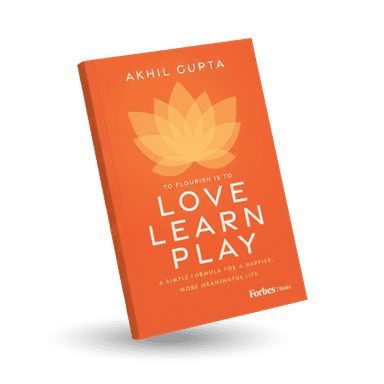
Love • Learn • Play
The formula for a meaningful life.
- The Uninterrupted Minute: Offer one person sixty continuous seconds of your total, undivided presence. Put away the smartphone. Do not formulate your response while they are speaking. Simply absorb their words and their presence. In our distracted age, offering undiluted attention is a radical act of love. This is one of the simplest ways of how to practice love in a distracted world.
- The Quiet Kindness: Perform one helpful act for someone else without announcing it or seeking credit. Handle a difficult chore they were dreading. Leave an anonymous, encouraging note. Quiet acts of service divorce our actions from our egos, allowing pure *agape* to flourish. This strengthens the idea that love is a practice rooted in action rather than recognition.
- Specific Recognition: Tell a friend or colleague exactly what you value about them. Avoid generic praise like, "You're great." Be specific: "The patience you showed during that difficult meeting yesterday completely changed the dynamic of the room." Specific recognition proves that we truly *see* the other person. This is a powerful method for how to build a strong emotional connection.
- Assume Positive Intent: When someone fails you or irritates you, practice the discipline of assuming they acted with positive or neutral intent, rather than maliciousness. This softens our immediate instinct toward defensiveness and opens the door for empathetic connection. This mindset reinforces that love is a choice not a feeling.
Conclusion
Love is the first and most vital element of the Flourishing Equation for a reason. It is the inescapable foundation upon which a meaningful life is built. In the absence of love, all other pursuits—wealth, knowledge, even leisure—become ashes in our hands.
But love will not simply arrive at our doorstep because we wish for it. We must roll up our sleeves and perform the daily, quiet work of loving. We must practice extending ourselves. We must practice tearing down our internal barriers. As we commit to this discipline, we will discover that love, unlike any material resource, is beautifully infinite: the more we give it away, the more of it we possess. In the end, the truth is simple yet powerful love is not a feeling it is a practice. The more consciously we live this truth, the deeper our relationships become and the richer our lives feel.