


Remember when you could sit with a book for hours, completely unaware of what was happening around you? Page after page, you'd be dying to know what could happen next. Now things are a bit different. You pick up a book, you flip through pages, you check your phone, and you find yourself scrolling social media.
You then return to the book and have forgotten what you just read. Does it sound familiar? Of all the things going on around us in this age, working on our ability to focus on a thing has become staggeringly difficult. But there's still the art of deep reading. It's a skill we can gradually learn to enjoy once more.
Why Is Deep Reading Becoming Difficult?
Most of us still read every day. We read text, headlines, e-mail, social media. But opening a book can feel surprisingly strenuous. Why's that?
Consider how you read something on the Internet. You probably scan the headline, pick up a few interesting lines, and move on.
That's fine if you want a quick read. But books often demand a different type of attention.
An author may take pages on one idea. Since we're used to getting information in seconds, sticking to one idea can seem boring.
And eventually we expect books to be as fast as a quick video or social media that will hook us.
What Does It Mean to Read Deeply?
Reading a book is not the same as absorbing it. For example, you have to read fifty pages in a class for an assignment, but an hour later you may not remember much of it at all.
Deep reading is about being present with the author's thoughts and making time to ponder those thoughts.
For example, let's say you are reading a book about happiness. It gets you to think about your life, not just recall what the writer said. Do you agree with their thoughts? Have you had a similar experience?
Even a sentence can get you up, make you stop reading a little.
It's all part of the experience. "Good books don't always give us all the answers." Sometimes it helps us to ask better questions.
How Digital Distractions Affect the Way We Read

We have access to more books, articles, and information than ever before. Yet reading in the digital age comes with a challenge: there's always something else waiting for our attention.
You're reading an interesting chapter when your phone lights up. You check the message, reply, and return to the book. But now you need to reread the last paragraph because you've lost the connection between the ideas.
This is why reading and attention span are closely related. Understanding a book often requires us to follow a thought across several pages.
Enjoying this article?
Get UEF Insights. Writing on loving, learning, and playing, with insights from wisdom traditions and modern science delivered to your inbox.
Technology isn't necessarily the problem. We can read deeply on a phone or tablet, too. What makes reading difficult is the habit of constantly switching between activities.
The Science of Attention, Memory and Reading
Have you ever read a page and not know what you read? You have read every word, but for some reason the meaning doesn't sink in.
The Brain Needs To Focus To Process Information
As we read, our brains reach out to get information from our working memory to connect 1 sentence to another.
If we become distracted, it's more difficult to make those connections.
Then we forget what we've just read. We may have read the words but not really contemplated their meaning.
Remembering What We Read
Studies of learning show that attempting to recall information will help us remember it longer.
When you've finished a chapter, close the book and ask yourself what it was about.
You don't need to remember it in depth. Even just saying one cool idea that you had in your own words to someone can help.
Among the many benefits of reading, this opportunity to think, question, and build understanding is particularly valuable.
How to Read a Book Deeply Again

If you're wondering how to improve reading skills, you don't need an elaborate routine or a target of fifty books a year.
A few small changes can make reading enjoyable again.
1. Start With Just Ten Minutes
Don't force yourself to read for an hour if you're struggling to finish a page.
Begin with ten minutes. Pick something you're genuinely interested in, whether it's a novel, biography, or book about philosophy.
As reading becomes more comfortable, you can gradually spend more time with it.
2. Keep Your Phone Out of Reach
One of the simplest answers to how to focus while reading is to remove the things that interrupt you.
Put your phone in another room or switch off notifications. Find a comfortable spot where you can read without constantly looking up.
You may still get distracted by your own thoughts. That's normal. Just return to the page.
3. Ask Yourself Questions
If you want to know how to improve reading comprehension, try being a little more curious about what you're reading.
Ask yourself:
- What is the author trying to explain?
- Do I agree with this idea?
- Does it remind me of something I've experienced?
- What is one thing I learned from this chapter?
These questions turn reading into a conversation between you and the book.
4. Don't Rush to the Next Page
Sometimes, a single paragraph deserves more attention than an entire chapter. If something interests you, stop and think about it. Read it again if you need to.
Reading for understanding means allowing yourself enough time to make sense of an idea.
5. Read Without Counting Pages
Reading challenges can be enjoyable, but they can also make books feel like another task to complete.
Instead of worrying about how many pages you've finished, notice how much you've understood.
Improving concentration becomes easier when reading feels like something you want to do rather than another responsibility.
What Wisdom Traditions Teach Us About Attention and Learning
Long before smartphones and social media existed, people struggled with wandering thoughts. Philosophers and spiritual teachers have spent centuries exploring how we can become more attentive.
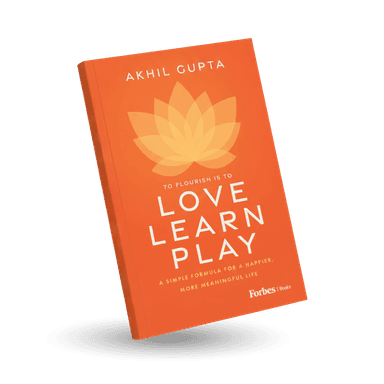
Love • Learn • Play
The formula for a meaningful life.
Buddhism Teaches Us to Return Our Attention
In Buddhist mindfulness practices, people learn to notice when their minds wander and gently bring their attention back.
The idea is not to stop thinking altogether. It's to become more aware of where our thoughts are going.
The same approach can help with reading. When you notice that your mind has drifted, simply return to the words without becoming frustrated.
Socrates Reminds Us to Question What We Learn
The ancient Greek philosopher Socrates is remembered for his use of questions to examine ideas and beliefs.
His approach offers a useful lesson for readers.
We don't have to agree with everything an author writes. Sometimes, questioning an idea or finding a different explanation teaches us more than accepting it immediately.
Reading as a Practice of Conscious Living

We often think of reading as a way to gain knowledge. But it can also teach us something about how we spend our time and attention.
Giving One Thing Our Full Attention
Much of our day is spent doing several things at once. We eat while watching videos, check messages during conversations, and think about tomorrow while finishing today's work.
Reading gives us a chance to do something different. When we sit with a book and give it our attention, we're also practising living consciously.
For a little while, we allow ourselves to focus on one experience without rushing toward the next.
Learning Makes Life More Interesting
UEF's Love, Learn, Play philosophy reminds us that learning is an important part of being human.
Books introduce us to people we may never meet, places we may never visit, and ideas we may never have considered. They encourage curiosity and help us see familiar things differently.
This desire to keep learning is also connected to human flourishing. A meaningful life isn't only about what we achieve. It's also about how we grow through our experiences.
And perhaps one way to live life to the fullest is to remain curious about everything we have yet to understand.
Conclusion
You don't need to read a book a week to improve. You don't even have to like every book you pick up. The point is to allow yourself to slow down and take an interest in something.
Some days you'll read 20 pages. Other days, you'll ponder one paragraph for ten minutes. Both can be fulfilling.
The next time you pick up a book, don't think about when you'll be done. Enjoy the words, challenge the ideas, and follow your thoughts to a conclusion.
After all, the best part of reading isn't always going to be the last page. Sometimes it's what goes on in your head in between.