
Blog
The Intersection of Spirituality and Human Flourishing: Finding Balance in Life
Spirituality without social justice is incomplete. Flourishing requires both inner peace and outward action -- love, service, and ethical living in balance.

Author
Amit is a business leader with over 44 years experience in global FMCG companies UniLever, Pepsico and Mattel, and Telecom ventures of the Reliance and Tata Groups. He is now the Founder and CEO of Emotionally, India's leading Mental and Emotional Healthcare firm. Amit is a founder member of IIMPACT a national NGO providing primary education to underprivileged rural girls across India. Through his association with UEF, Amit is committed to helping young people find a meaningful, and flourishing life full of Love, Learning and Play.
16 pieces
Blog
Spirituality without social justice is incomplete. Flourishing requires both inner peace and outward action -- love, service, and ethical living in balance.
Blog
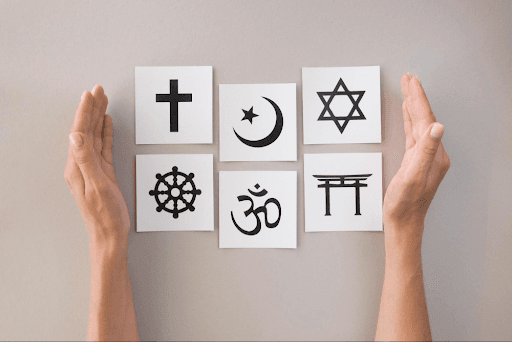
The Golden Rule appears in every major faith. Humanism takes these shared ethical principles and makes them accessible to believers and non-believers alike.
Blog
Psychology and spirituality converge: flourishing requires balancing dualities, practicing rituals, and centering on love. Science confirms it.

Blog
Three pervasive myths -- materialism, constant joy, and radical individualism -- keep happiness out of reach. Religious philosophy exposes each one.
Blog
What do all religions have in common? Explore the shared values of compassion, truth, justice, and non-violence across Christianity, Islam, Hinduism, Buddhism, and Judaism.

Blog
Flourishing is not happiness. It is holistic well-being -- emotional, spiritual, social -- built on purpose, karma, and ethical living across traditions.

Blog
Psychologists and religious traditions agree: after a basic threshold, more possessions mean more anxiety, not more happiness. Here is what works instead.

Blog
Modern life delivers comfort but strips away meaning. The missing dimensions of happiness are love, community, purpose, and karma -- not more possessions.

Blog
Every religion diagnoses the same problem: humans are limited, biased, and prone to suffering. Each offers a different escape route from the same trap.

Blog
Hinduism says "neti neti." Judaism says "Ein Sof." Every faith agrees: ultimate reality exceeds human language. Here is what that means for seekers.
Blog
Job meets God in the whirlwind. Jesus calms the storm. Krishna reveals cosmic fire. Three traditions, one pattern -- discovered without even searching for it.
Blog
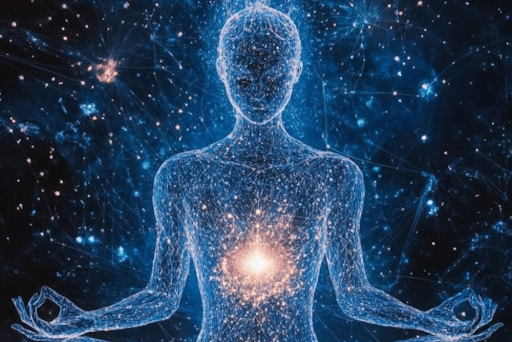
Moksha, nirvana, paradise, the Tao -- every religion maps a path from mortal limitation to divine transcendence. The methods differ; the destination converges.
Blog
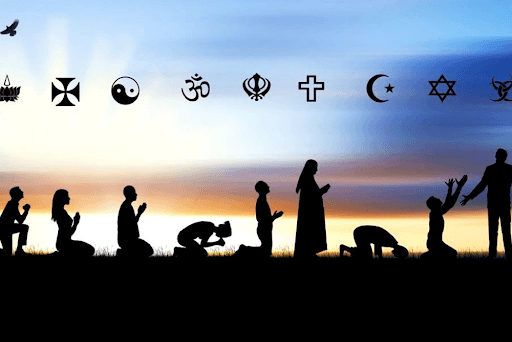
Christianity, Hinduism, Islam, and Buddhism all treat the body as a sacred vessel. The chariot metaphor from the Katha Upanishad appears in every tradition.

Blog
God speaks from the whirlwind. Jesus calms the storm. Krishna reveals cosmic fire. Three traditions, one pattern: the divine overwhelms before it transforms.

Blog
Christianity calls family the "domestic church." Every major tradition agrees: the family unit is where spiritual education begins and beliefs take root.

Blog
Helen Keller overcame blindness and deafness. Every religion says we all face comparable limitations -- spiritual, cognitive, perceptual.