

Introduction
Each one of us wants to live with a sense of purpose. We want our days to feel meaningful, not just busy. The concept of Ikigai is exactly that, and it has already gained attention around the world. Rooted in Japanese philosophy, ikigai is about finding joy, fulfillment, and direction in everyday life. Ikigai is a way of understanding what truly matters to you and how to align your passions, skills, and purpose in a way that feels meaningful.
You may have seen the book “Ikigai” at a bookstore or noticed someone recommending it online and wondered, “What is the meaning of Ikigai?” or searched for the Ikigai purpose to know why so many people connect with it.
Some people even reflect on questions like "What is my Ikigai meaning?" when they feel stuck in their careers, relationships, or daily routines. Read on to learn how to find your ikigai step by step.
What is Ikigai? Meaning and Concept
Everyone wants a meaningful and flourishing life. We all want to wake up with a purpose and feel fulfilled at the end of the day. But how? This is where Ikigai comes in. But what is Ikigai? UEF brings you all you need to know about Ikigi — meaning, concepts and how to find your Ikigai.
Ikigai (ee-key-guy) is a Japanese concept. “Iki” means life, and “gai” means worth. Together, it means life’s worth or reason for being, the reason you get up every morning. In the Cambridge Dictionary, Ikigai means living with purpose, fulfillment, and alignment.
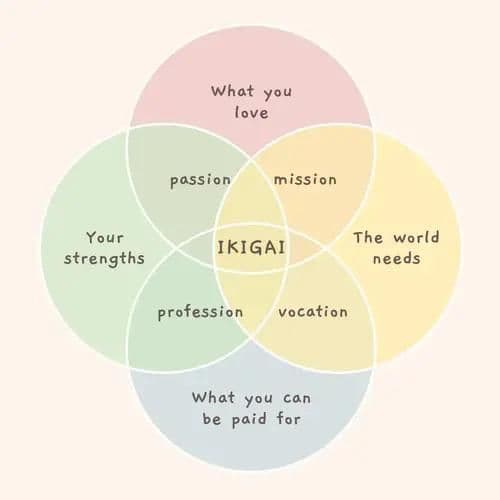
Ikigai is what makes your life meaningful. It is about finding joy and fulfillment in the daily act of living. The ikigai definition has four elements at its core:
- What you love
- What you are good at
- What the world needs
- What you can be paid for
What You Love (Passion)
Note down your passion. What activity brings you joy without expecting any external rewards or recognition? Music? Cooking? Gardening? This passion is your symbolic fire that lights up your spirit. Whatever it is, note it down.
What You Are Good At (Vocation)
What are you good at? Maybe there’s a skill people constantly compliment you on, or something friends and colleagues turn to you for help with. Paying attention to these patterns can help you understand an important part of the ikigai purpose and figure out what aligns with your strengths.
What the World Needs (Mission)
What mission do you feel connected to? It could be a social cause, a community need, or something that can impact the society that you feel connected to.
What You Can Be Paid For (Profession)
Ikigai is about aligning your work with purpose. Find out income paths that match your interests and skills.
Ikigai teaches you to find meaning in everyday living. It connects deeply with ideas like believing in higher power, practicing gratitude, and experiencing universal love in everyday relationships. For many people, discovering their Ikigai also becomes a journey of self-awareness and oneness with god.
Enjoying this article?
Get UEF Insights. Writing on loving, learning, and playing, with insights from wisdom traditions and modern science delivered to your inbox.
How To Find Your Ikigai: A Step-by-Step Guide
Finding your Ikigai is not a one-time activity. It is a continuous process. Many of you may now have this question in mind: How to find my Ikigai? Here is a step-by-step way to start finding your Ikigai.
1. Understand the Four Elements of Ikigai
The first step to finding your Ikigai is to understand its four core elements. Collect your thoughts and break them into four categories.
- What you love doing
- What you are naturally good at
- What the world needs
- What you can earn a living from
2. Self-Reflection & Exploration
The next step is self-exploration and reflection. Sit with your thoughts again and ask yourself questions that can make you understand things more clearly and deepen your spiritual awareness. Ask questions like” What activities make me lose track of time?” or “When do I feel most alive?”. Note down the answers.
3. Find the Overlapping Points
Once your self-reflection and exploration are done, write them across the four areas and observe where they meet. That is where your Ikigai starts forming. It can be many small things or one large goal.
4. Experiment & Take Action
It is not easy to find Ikigai only by thinking. You will need to try different things. Explore hobbies, talk to people, create side-projects, switch roles. You can gain more clarity by doing different things and testing your interests.
5. Live Your Ikigai Daily
Ikigai is not a goal but a daily habit. You need to do it again and again. Make Ikigai a part of your everyday choices. For some, daily rituals, traditional or religious wear, become anchors that help them align with inner values.
Ikigai Methods and Techniques to Try
Here are some techniques and methods to help you refine your Ikigai further and apply it practically.

1. Self-Reflection Exercise
You can keep a journal about moments that you felt were meaningful. This will help you track where your energy naturally flows.
2. The Venn Diagram Method
This is the classic Ikigai technique that helps you visualize the overlapping points. Map out all the four elements and find out patterns.
3. The 5-Why Method
The 5 Whys method is a problem-solving method developed by Sakichi Toyoda. As per him, “by repeating why five times, the nature of the problem as well as its solution becomes clear.” With this ikigai method, keep asking “why,” and you will get closer to the root of your purpose.
4. Experimentation & Feedback
Try new tasks or roles. Ask people for honest feedback about your strong points and how you have made a difference.
5. The 3-Action Rule
Align your actions with your findings. Every week, take 3 actions that align with your Ikigai. It can be learning something new or even helping someone. Do what makes you feel fulfilled.
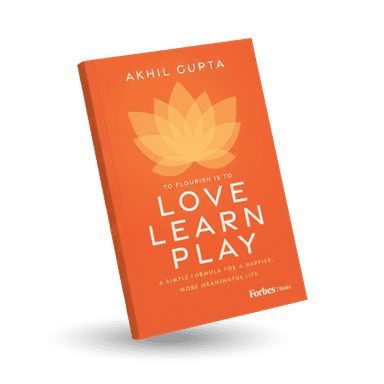
Love • Learn • Play
The formula for a meaningful life.
16. Self-discovery and growth
Growth is a key part of ikigai. Your ikigai and purpose may shift over time. Be open to changes and evolution. Let go of any false narrative that tells you your purpose must stay the same forever.
Books On Ikigai
If you’re curious about Ikigai’s meaning, then you can start with the international bestseller
Ikigai: The Japanese Secret to a Long and Happy Life. – It will help you explore what Ikigai means through the lens of Japanese centenarians and how they live with purpose.
Other great titles include
Ikigai for Leaders and Organisations
The Little Book of Ikigai – Deeper dives into practical tools.
Moreover, they provide examples of how people apply Ikigai in daily life. When you pick these books, they help you understand how to define Ikigai, uncover your personal “reason for being”, and discover real-life Ikigai examples that feel relatable.
Conclusion
Your Ikigai is within you, just waiting to be found. It is the spark that brings meaning to your daily life. The more you reflect on your inner calling, the more you live in clarity and calm. Ikigai is a daily practice. Keep revisiting it and reflecting on it often. Like a cosmic tree, it keeps growing, rooted in purpose. Explore our Ikigai online reading to stay inspired.
If you are someone who wants to help your child grow with a sense of purpose and balance, our flourishing child program is designed for it. A purposeful life begins in childhood.
Ikigai Quotes To Be Inspired By
Are you looking for compact nuggets of wisdom? Well then, here are a few Ikigai quotes to spark your reflection:
- “When you have a clear purpose, no one can stop you.” — Héctor García.
- “A happy man is too satisfied with the present to dwell on the future.” — Héctor García.
These quotes highlight one key part of what Ikigai means: living with intention. In the present, there is an alignment between what you love, what you’re good at, what the world needs, and what you can be paid for.