Art & human flourishing
Art, creative expression, and community.
We embrace art from all corners of the world, and celebrate the beauty and goodness disclosed through art.
Art in our community
Our perspective
What makes great art?
Philosophers are known to ask what art is. While this generates some beautiful debates about beauty it also misses the point. The question is not what is and isn’t art, the question that matters is: what makes great art?
At UEF, we believe the love-learn-play mindset enables artists to flourish personally and professionally.
If you tend to the project with love, learn how to get better at techniques and vision, and embrace a timeless sense of creativity through play then we believe you are in the ultimate mindset for artistic creation.
Care for the work.
Love brings attention to a subject, a material, and the people a work may reach. An artist’s care can be present in the smallest detail: a line revised, a voice listened to, a familiar place seen with fresh affection.
Develop technique and vision.
Learning gives imagination more ways to take form. Practice, observation, and exchange with other artists deepen both craft and judgment. Technique becomes a vocabulary through which an artist can say something more precisely.
Leave room for discovery.
Play allows an artist to follow a possibility before knowing where it leads. Experiment, surprise, and the pleasure of making can loosen a fixed idea and let something unexpected enter the work.

Artistic expression
A way of seeing becomes a shared experience.
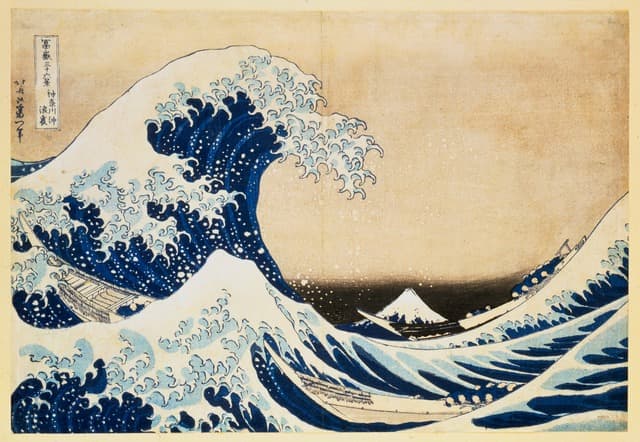
Hokusai’s Great Wave, made around 1830–32, brings boats, a towering wave, and distant Mount Fuji into a single composition. Scale, line, and color make an ordinary material—ink on paper—carry an extraordinary sense of movement.
Artistic expression takes an individual perception and gives it a form others can encounter. A painting, a poem, or a performance can make room for feelings and perspectives that everyday conversation leaves unexplored. This is one reason art matters: it expands what we can share.
Read about Hokusai at The MetArt & community
Beauty belongs in everyday life.
Community art meets people where they are. A mural, a neighborhood performance, or a painted bench can bring creative expression into places people share, beyond the walls of a gallery.
In Savannah, UEF’s work with the Savannah Urbanist Society brings Love, Learn, Play to bus stop benches. The words and colors become part of the street: encountered while waiting, traveling, or spending time with neighbors.
Participatory art takes shared experience further by involving people in how a work is made or unfolds. Both public and participatory art raise questions of belonging: whose stories appear, who has a voice, and who feels welcome in a place.
The Savannah bench story
Expression through movement
Contemporary dance explores imagination and human connection through the body. Dance brings artistic expression into time, space, and relationship.
Discover dance with UEFArt in the conversation
The Paris Philosophy Club brings cultural encounters and museum visits into a shared exploration of ideas. Art offers a meeting place for different interpretations and experiences.
Meet the Paris Philosophy ClubSacred art & religious literacy
When art carries a world of meaning.
Sacred art is made and encountered within religious life. Its meaning may be inseparable from worship, a story, a place, or a community’s practices. Understanding that context helps us appreciate a work beyond its visual form.
In Hindu art, Shiva as Nataraja brings creation, preservation, and destruction into the image of a dance. The drum and flame carry meanings that a viewer may not recognize from the bronze alone. The Met’s account of this image shows how attention to a tradition can deepen attention to its art.
UEF approaches sacred art through religious literacy: learning how communities understand their own symbols and practices. Respecting those differences allows beauty to become a starting point for understanding, without assuming that every tradition says the same thing.
Love • Learn • Play
The formula for a meaningful life.