
Love Learn Play
Harvard spent $20M and 75 years studying happiness. The answer is five words.

Welcome to the fourth installment of our biweekly journey into the Love, Learn, Play (or LLP) framework, in which we’ll explore the full scope of what we mean by Love.
In our previous 108 letters summarizing the insights from our book Bridges Across Humanity https://www.uef.org/religious-literacy/, we saw how every major religion places love at the center of its teachings. In the context of human flourishing, Love is more than a theological concept—it is a physiological, psychological, spiritual, and emotional necessity. It is the "anchor" of the LLP framework because, without connection, the other two pillars (Learn and Play) often feel hollow.
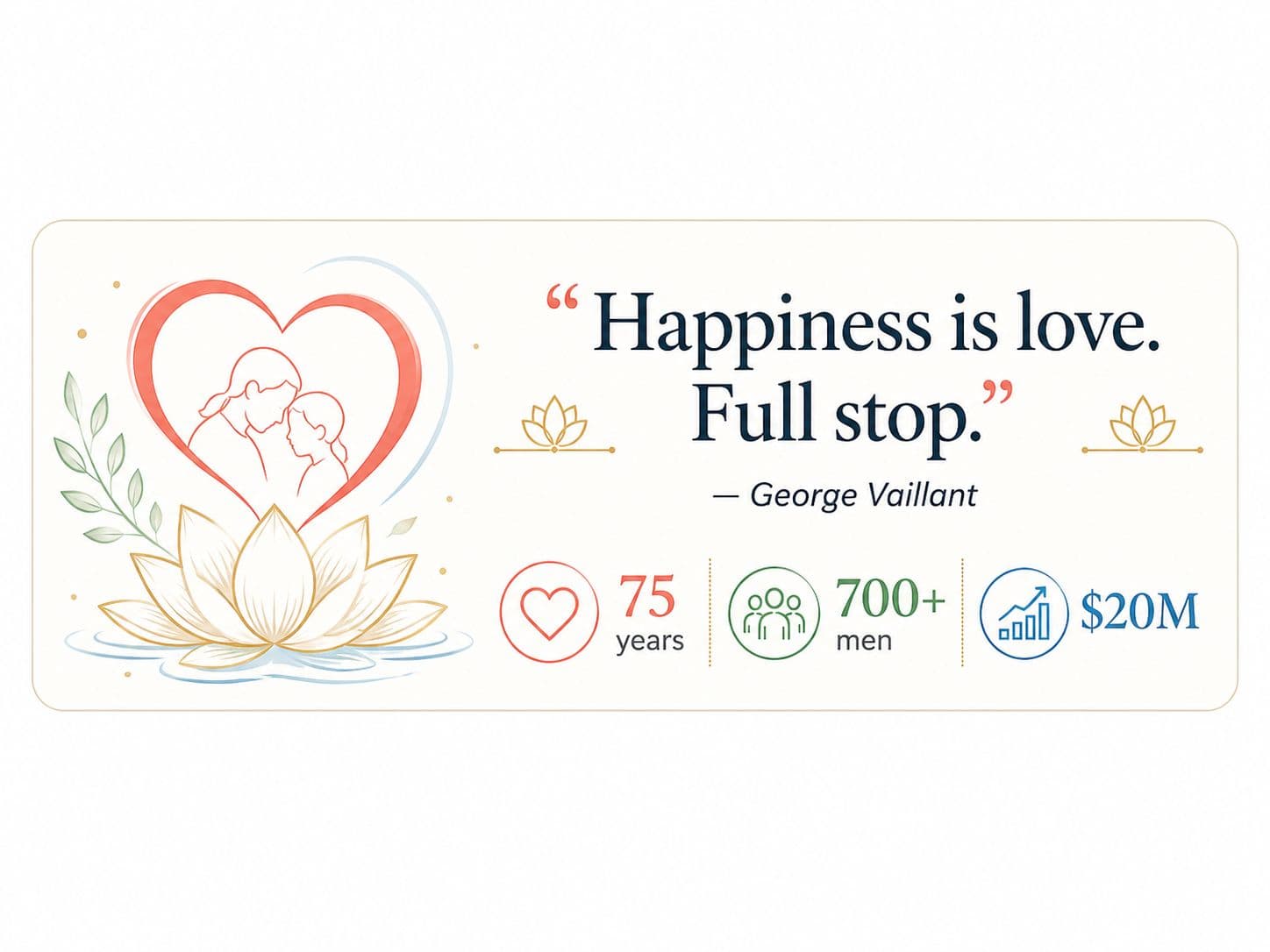
Harvard Study on Happiness: “Happiness is love. Full Stop”
For 75 years, Harvard University tracked over 700 men from their twenties into their nineties. They asked every question imaginable about health, career, relationships, money, achievement, and happiness, spending 20 million dollars in the process.
The researchers followed these men through marriages and divorces, through career triumphs and failures, through wealth and loss, through illness and recovery. They interviewed those closest to the participants, including their wives and children.. Even physiological metrics were tracked, like cortisol levels, cholesterol, and brain function. This team of Harvard researchers left no stone unturned as they sought to understand the predictive factors and visible signs of true human flourishing.
After three-quarters of a century, the groundbreaking study, which had been stewarded by multiple generations of researchers, finally came to an end.Reflecting upon the journey, George Vaillant, the lead researcher who spent more time with the project and its data than any other single individual involved, summed up the findings in five simple words:
"Happiness is love. Full stop."
Not achievement, not money, not health, not even success or recognition. All these things can contribute to Happiness, but for Vaillant, love stood out as the core factor that mattered most.
But do we truly understand what love is?
We're taught that love is all about that romantic Netflix moment when two people lock eyes across a crowded room and the world fades away. We're sold this story by movies, advertisements, and songs. So, we spend our twenties chasing that feeling with desperate intensity, our thirties perfecting it and defending it, and our forties wondering why, even after so many moments of pleasure and ecstasy, we find something missing.
This is because , in chasing romantic love, we were ignoring love’s many other dimensions.
The ancient Greeks understood something we've forgotten.
They didn't have one word for love. They had seven distinct categories, each capturing a different dimension of human connection:
Eros — romantic passion and sexual love (the one we obsess about)
Philia — friendship and deep intellectual connection (the love of equals)
Storge — familial love, the bond between family members (the love we're born into)
Ludus — playful love, affection without commitment (the joy of lightness)
Pragma — practical love expressed through loyalty and duty (showing love by showing up for others)
Philautia — self-love and respect (the love we often deny ourselves)
Agape — unconditional, universal compassion (the highest form)
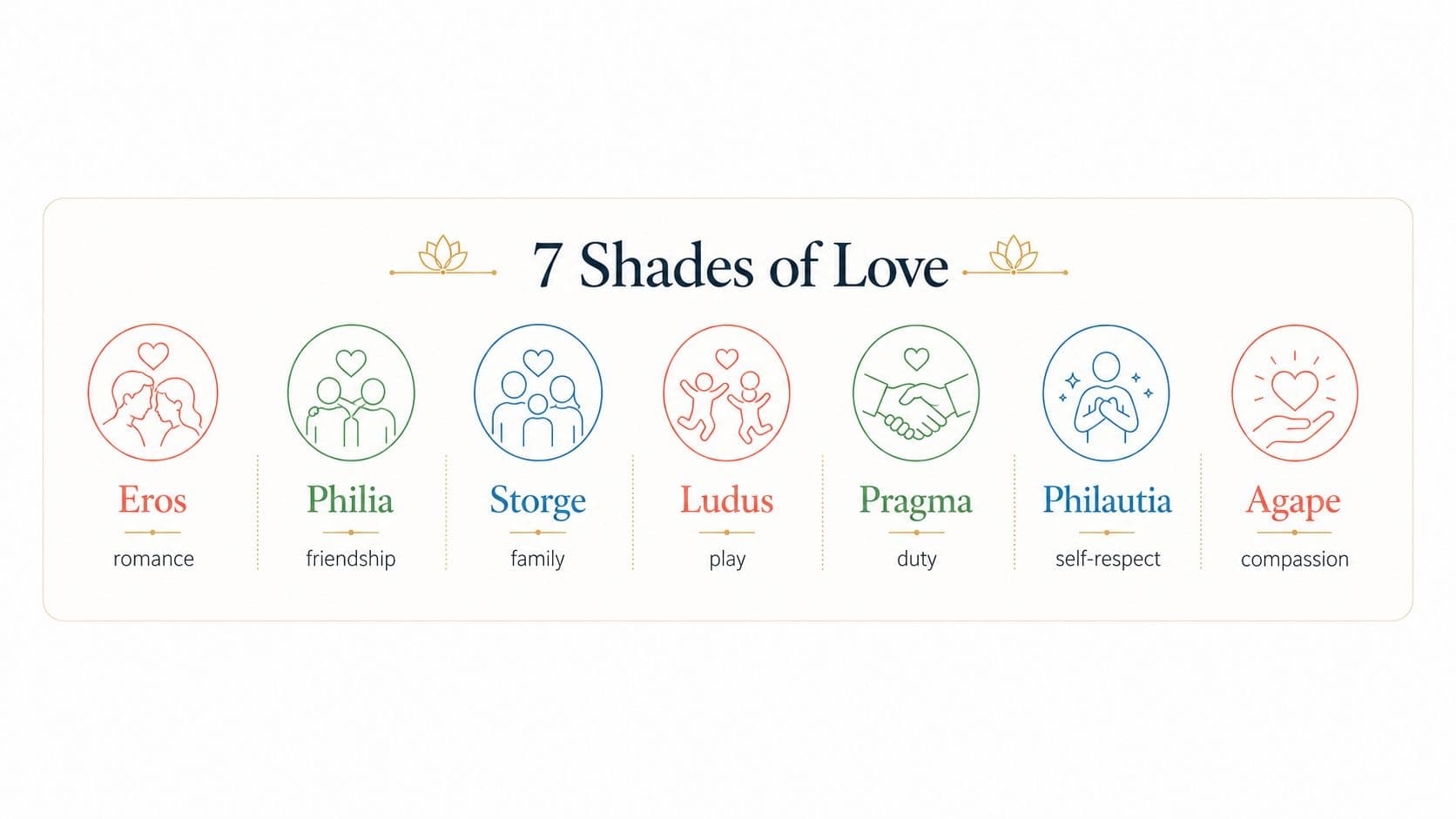
The happiest people in the Harvard Study weren't those with the most perfect romantic relationship. They were the ones who had learned to experience many other forms of love in the form of rich friendships, strong family bonds, and a healthy degree of self-respect. They acted from duty and commitment, played and laughed with others, and, crucially, extended compassion beyond their immediate circle. As Mother Teresa said “We draw the circle of family too narrow. Expanding our circle of love as we expand our awareness is key to living a meaningful life.”
Neuroscientific studies show this clearly. That initial,intoxicating rush of romantic love activates our physiological reward system, flooding the brain with dopamine and oxytocin. It's the spark that brings people together, designed to bond us, not to last at peak intensity forever. If the relationship is healthy, it deepens into other forms of love: tender affection, commitment, and genuine friendship.
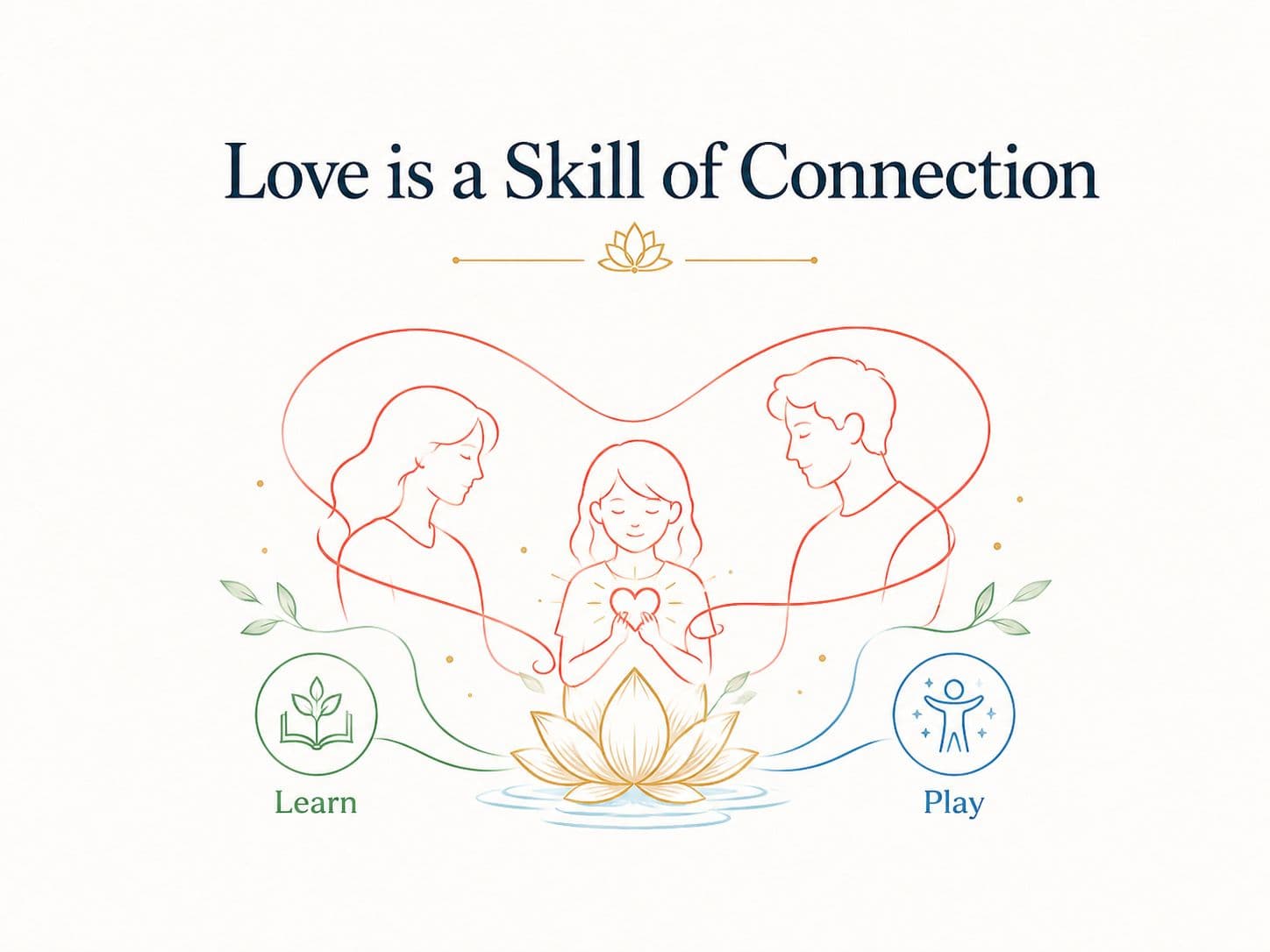
In reality, love is a skill of connection. It is the ability to see another person—and yourself—through a lens of compassion rather than judgment. When we anchor ourselves in Love, we create a "psychological safety net" that allows us to take the risks required to Learn and the freedom necessary for Play.
Consider this from Erich Fromm, the psychologist who spent his life studying love:
"Love is not primarily a relationship to a specific person; it is an attitude, an orientation of character which determines the relatedness of a person to the world as a whole. If a person loves only one other person and is indifferent to the rest of his fellow men, his love is not love but a symbiotic attachment or an enlarged egotism."
If your love is only romantic, if it stops at the edges of your partnership, you haven't actually learned love. You've learned attachment. But love is not possessive, and it is not a prize to be won by force. It is more like a gift to be received, and our capacity to receive it is something that must be cultivated from within, as the poet Rumi reminds us: said it differently:
"Your task is not to seek for love, but merely to seek and find all the barriers within yourself that you have built against it."
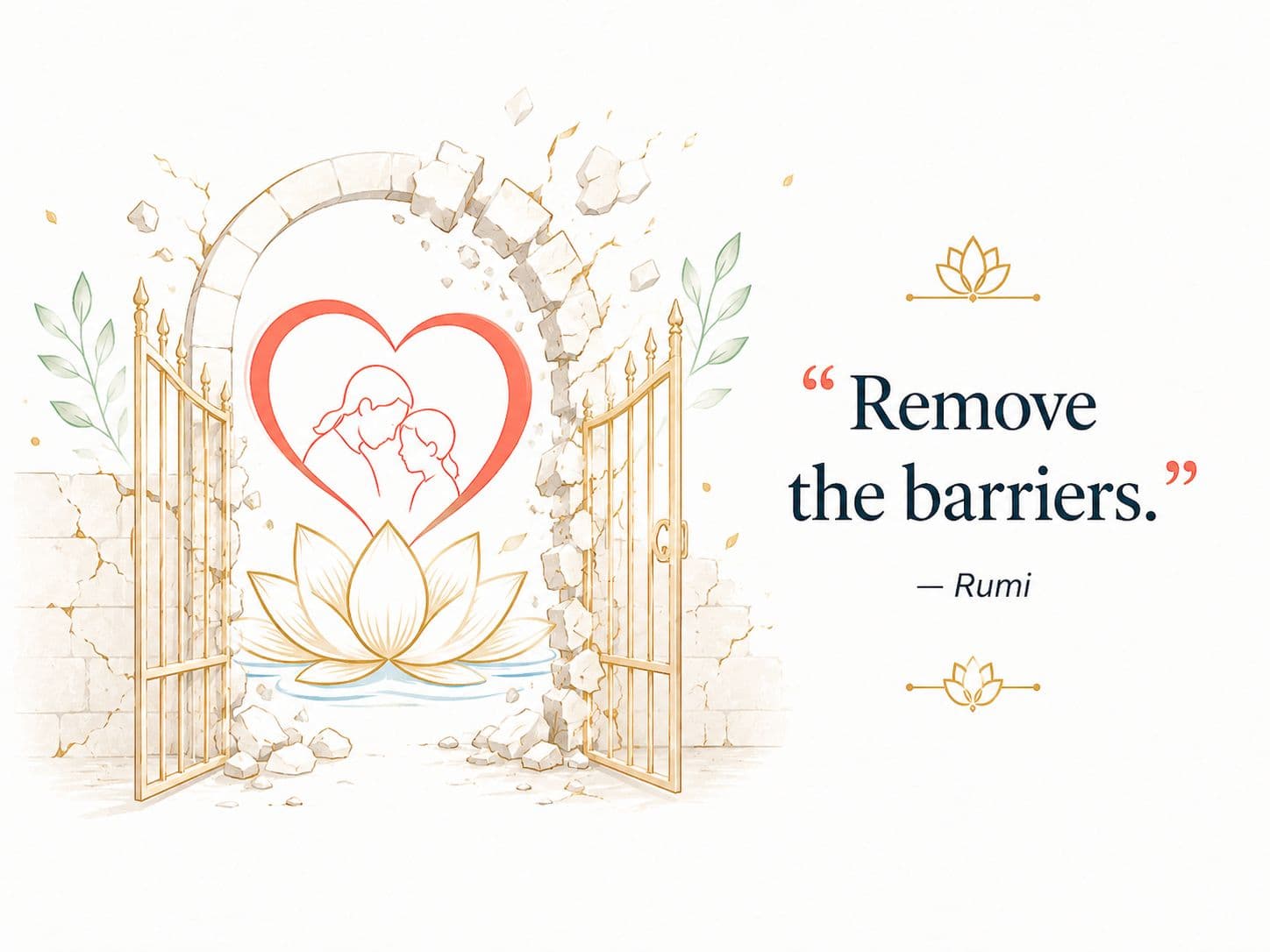
We think love is something to pursue. But the mystics of all traditions teach us something different: love is what we already are. Love is the ground of being. Our job isn't to CREATE love; it's to remove the barriers—the fear, the judgment, the isolation, the selfishness—that prevent us from experiencing the love that's already here.
So what's the invitation?
It's to stop looking for love in one place and start noticing it everywhere.
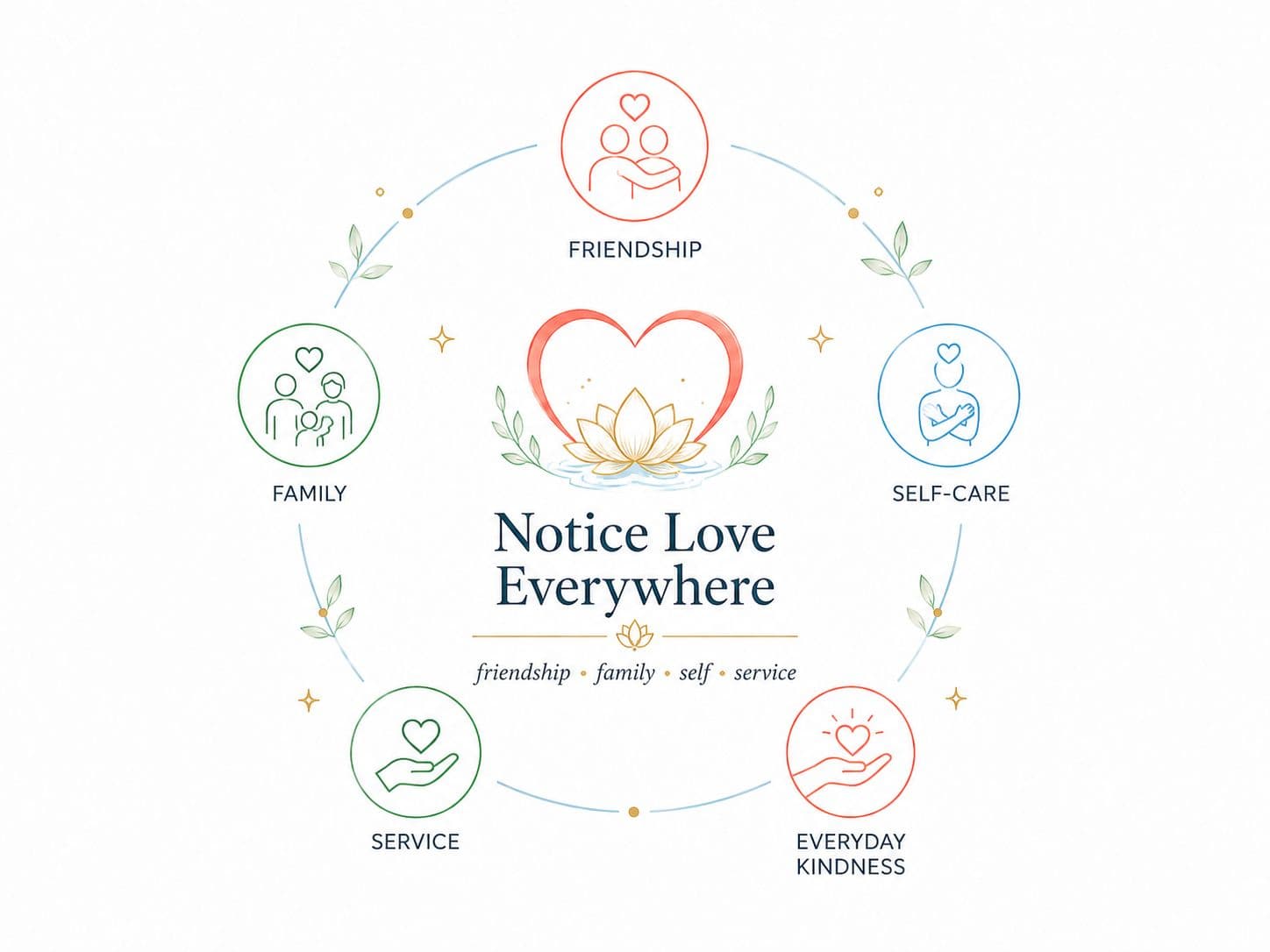
Notice the love in your friendship with someone who's known you for twenty years—that's philia, the love of equals who truly see each other. Notice the love in how your parents still worry about you—that's storge, familial love, asking nothing in return. Notice the love in your own body when you take care of it, when you rest, when you nourish yourself—that's philautia, self-love, which is not vanity but respect.
Notice the love in the barista who remembers your order. Notice it in the stranger who holds the door. Notice it in your own impulse to help someone in need. That's the beginning of agape—universal love, the recognition that we're all in this together.
Romantic love isn't less important; it's just not EVERYTHING.
The Harvard Study's conclusion isn't "find romantic love and be happy." It's "develop rich relationships across all dimensions of human connection, and you'll be happy." Romantic partnership is one part of that. But so is friendship, family, community, and the love you express through your work, your creativity, and your service to others.
This week, I want to ask you something:
Which type of love are you most neglecting?
Is it the friendships that have fallen away because you've been focused only on romantic love? Is it the family relationships that need tending? Is it the self-love, the respect for your own body and mind, that got buried under the pursuit of achievement? Is it your ability to see the humanity in everyone, even people very different from you, and to show the same universal compassion to all?
Sit with those questions. Run through each of them in your head and observe how your body responds.
Here's the truth the Harvard Study revealed: happiness isn't a destination. It's not something you achieve when you hit certain milestones. Happiness is the by-product of a life lived in many forms of love, across all your relationships, expressed every single day.
That's the foundation of everything that follows: learning, playing, growing, creating, serving.
As The Bhagavad Gita, a cherished Hindu Scripture, says:
“Love is the most powerful force in the universe. It is the eternal fire that burns within the heart and connects us all.”
This Week’s Practice: The "Uninterrupted Minute"
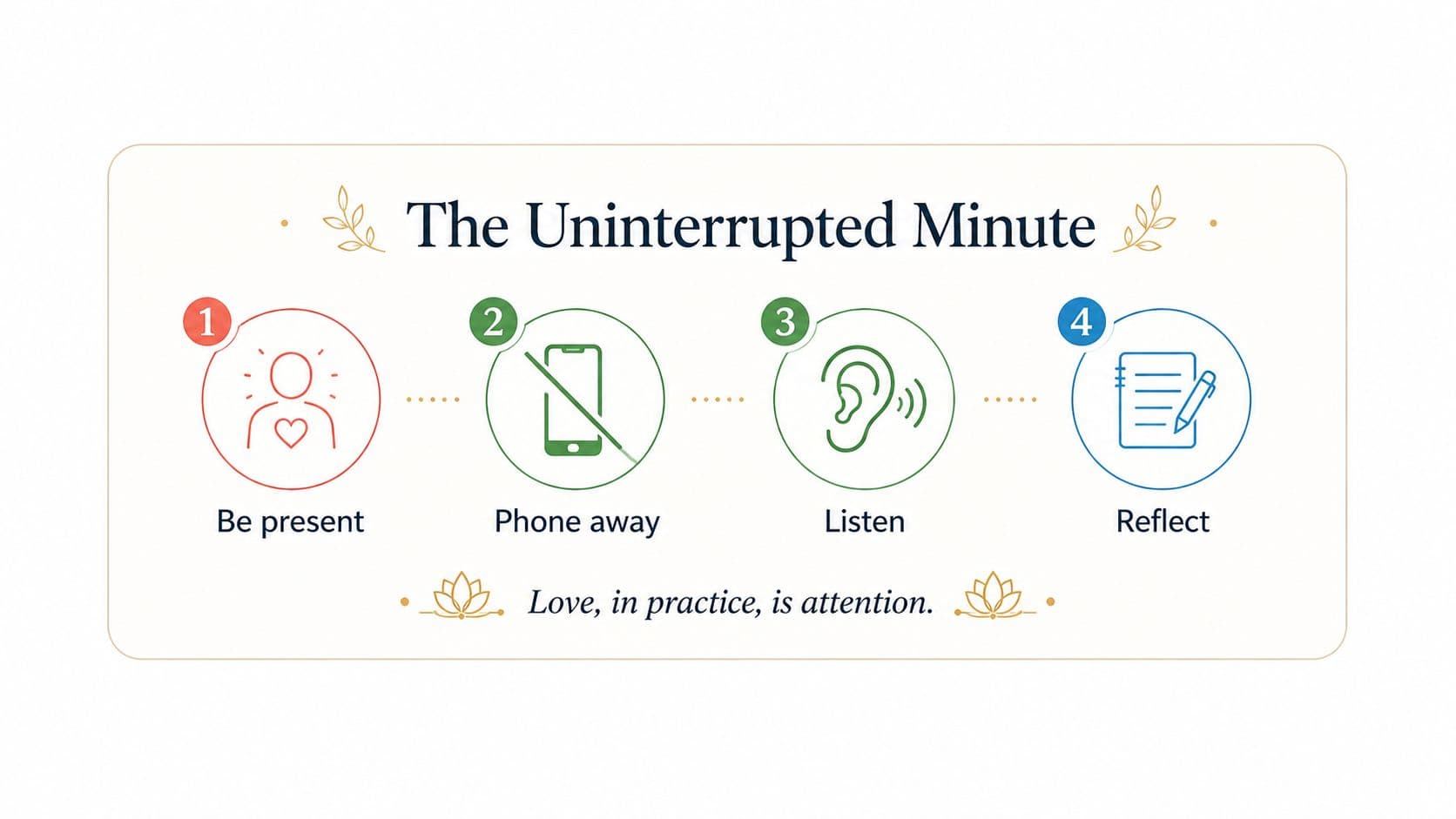
To bring the first pages of Love, Learn, Play to life, I invite you to try one simple exercise this week:
In your next conversation with a spouse, a friend, or even a colleague, give them one minute of your absolute, undivided attention. No phone in sight. No preparing your "rebuttal" or next sentence while they speak. Just listen to understand, not to respond. Later in the evening, perhaps before you sleep, or early the next day, take a few moments to sit with the experience. Ask yourself: How did it feel to let go of the "urge to respond"? Did you notice something about the other person such as a tone of voice, a facial expression, or a hidden emotion that you usually miss because you are focusing too much on your turn?
Why it works: Love, at its most practical level, is simply sustained attention. By giving someone your presence, you are practicing the highest form of connection. Most of us spend our lives waiting for our turn to speak; notice how it feels to simply be the vessel for someone else's story.
If you remember one thing from this letter
Love is not one thing to find, but many things to notice. The happiest lives in the Harvard Study weren't built on perfect romance — they were built on connection in all its forms.
- Happiness is love. Full stop. Seventy-five years of Harvard research, reduced to five words. Not achievement, money, or recognition — relationships.
- The Greeks had seven words for love; we obsess over one. Eros (romance) is the spark, but philia (friendship), storge (family), philautia (self-respect), and agape (universal compassion) are what sustain a flourishing life.
- Love is not something to create — it's something to uncover. As Rumi taught, the task is to remove the barriers we've built against it: fear, judgment, isolation.
- Love is a skill, and its most practical form is attention. Sustained, undivided presence with another person is connection at its highest.
The question to sit with this week: which type of love have you been neglecting?
With warmth,
Akhil
P.S. — In two weeks: The ancient Sanskrit language has 50 words for love. English has one. Here's why that matters—and what we're missing because we don't have the language to describe it.
Recommended For You
In this Aeon essay, Emily Herring revisits Henri Bergson’s idea that laughter helps keep human beings “elastic” — able to adapt, loosen rigid habits, and stay socially alive. It’s a thoughtful companion to Love, Learn, Play because it treats playfulness and humor not as trivial distractions, but as forces that help us remain flexible, free, and fully human. https://aeon.co/essays/for-henri-bergson-laughter-is-what-keeps-us-elastic-and-free
This Women’s Health piece highlights new research suggesting that forgiveness is linked with greater well-being over time — especially psychological and social well-being. The article is based on a large international study from our friends at the Human Flourishing Program at Harvard, reminding us that love is not only something we feel, but something we practice: letting go, repairing where possible, and making room for life to move forward. https://www.womenshealthmag.com/health/a70783598/forgiving-good-for-you-study/
Two of our recent interviews show this week's letter in practice. In our conversation with Michael O'Neal, Parent University we see agape made visible with a community drawing its circle of love wide enough to include every parent who walks through the door. And in our interview with Daniel and Natalie Gundersen, Daniel names love with a second four-letter word: time. His story of choosing presence with his family over the pursuit of more is the Uninterrupted Minute lived out at the scale of a life. Together, they remind us that love is not just something we find but the attention we give.