
The means–ends inversion: how we forget what life is for, and how we remember.
Every one of us starts out whole. Somewhere on the way up, the things we gathered to live well begin to run our lives. This is that story, and the way home.
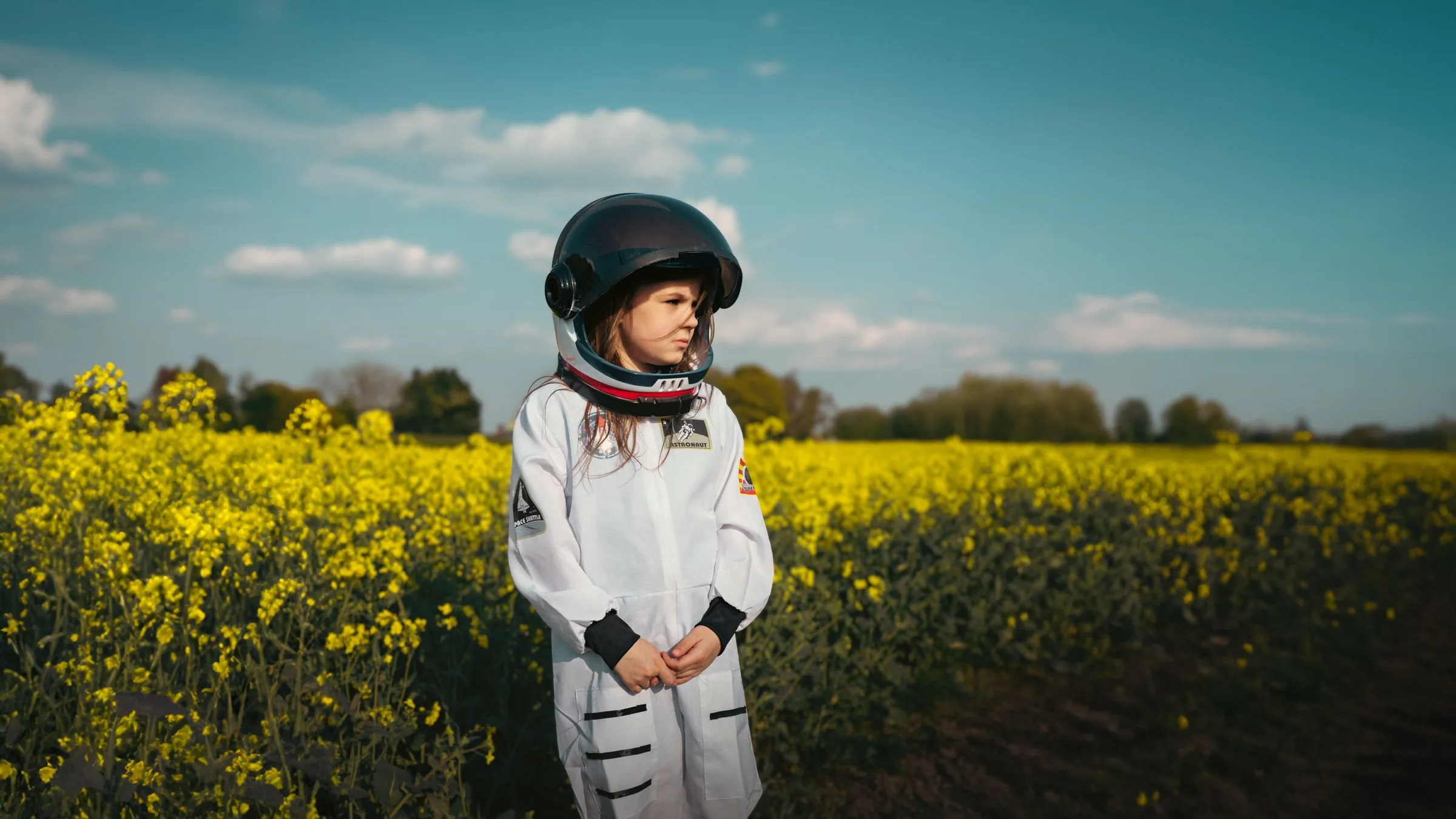
We begin whole.
No one teaches a three-year-old how to love, how to be curious, or how to play. We arrive knowing. A cardboard box is a spaceship. A stick is a wand. A blanket over two chairs is a castle, with a dragon to defeat before dinner.
We love without condition, learn without agenda, and play without purpose. These three longings are given to us at birth, and they are what a life is for. We call them the ends.
Just as the double helix of DNA runs our biology, love, learning, and play wind together into a triple helix of human flourishing.

Love
We connect through love. Loneliness is its signal, as hunger is the signal for food.
More on love

Then we go out to win the means.
Growing up asks more of us, and rightly. A life needs money, shelter, and food. It needs an education, a craft, a place in the world. So we set out to earn them: the degree, the career, the company, the name.
These are the means, and they are good. Markets, science, and technology may be the greatest set of tools people have ever made. We want them at full strength.
A means is something we want for what it makes possible. An end is something we want for itself. Ask why we want money and the honest answer points past it: to security, to freedom, to time with the people we love. Ask why we want to love, to learn, or to play, and the question runs out.

Means serve. Ends are what they serve.
Somewhere on the way up, the order flips.
Nobody chooses it. We learn it.
We all need to be loved, respected, and accepted. So we watch the people we admire and copy what they prize. Year by year a socialized self settles over the authentic one, and it comes carrying stories about what a person is worth. Like the fish that asks, “What’s water?”, we swim in them without noticing.

- “I have to choose between money and happiness.”
A false choice. Money in its place pays for a good life.
- “I am my job.”
Work is something we do. It can carry love, learning, and play. It cannot stand in for them.
- “Learning only counts if it pays.”
Learning is an end. We want it for itself.
- “Life is a fight that only the fittest survive.”
A misreading of Darwin. Cooperation built nearly everything we have.
And the world keeps tilting it
Ladders with no top rung.
There is always more wealth, another title, a higher rank. Competition keeps us climbing. Comparison tells us we are behind.
More tools than we can judge.
The means multiply faster than our sense of what they are for.
Attention in pieces.
Love, learning, and play ask for a whole person. We arrive in fragments.
Autopilot.
The mind saves effort by repeating yesterday. Unexamined, we go on serving goals we never chose.
We start to measure the means. Then we set our goals by them. Little by little the servants become the masters, and the self that longs for love, learning, and play goes hungry.
That is the means–ends inversion.
The same means, in order and inverted
Money
In orderpays for the life we want
Invertedbecomes the score
Work
In orderbuilds something worth building
Invertedbecomes who we are
Education
In ordergrows a mind
Invertedcollects credentials
Technology
In orderextends what people can do
Invertedfarms their attention
Status
In orderfollows work done well
Invertedbecomes the work
“Perfection of means and confusion of goals seem—in my opinion—to characterize our age.”
We reach the top, and it is not there.
The cruelty of the inversion is that it works. The promotion comes. The number is hit. And the arrival we were promised does not arrive, because a means was never built to be one. So we reach for the next rung.
There is always a next rung.

“I think everybody should get rich and famous and everything they ever dreamed of so they can see that that’s not the answer.”
The apartment that shrank
Our founder, Akhil Gupta, tells this one on himself. In 1997 he bought an apartment on Manhattan’s Upper West Side overlooking Central Park, more than a boy from Old Delhi had ever dreamed of. Then a close friend moved to Fifth Avenue, into a place twice the size. Akhil went to see it, came home, and found he no longer liked his own. Nothing in the apartment had changed.

“A man wants to earn money in order to be happy, and his whole effort and the best of a life are devoted to the earning of that money. Happiness is forgotten; the means are taken for the end.”
The same flip, at every scale
An institution: the sales goal that took over
Sales targets are a good means. They tell a bank whether customers want what it offers. At Wells Fargo, from 2002 to 2016, staff under pressure to hit them opened millions of accounts that customers never asked for. In 2020 the bank agreed to pay $3 billion. A number meant to show service had become the thing served.
A society: what growth cannot measure
In 1934 the economist Simon Kuznets handed the US Senate the first estimates of national income, the groundwork for GDP, with a warning: “The welfare of a nation can, therefore, scarcely be inferred from a measurement of national income.” Growth is a good means. It pays for schools, roads, and hospitals. It became the target most nations steer by.
The number went up. Over the same years, people’s own rating of their lives did not follow it.
GDP per person
United States, thousands of 2021 dollars
20112024
How people rate their own lives
United States, 0 to 10
Data: World Bank; World Happiness Report, via Our World in Data
“Yet the gross national product does not allow for the health of our children, the quality of their education or the joy of their play. … it measures everything in short, except that which makes life worthwhile.”

Then someone wakes up.
The inversion runs while we sleep through our own lives. It ends the moment we see it.

A memo to himself
In December 1868, at thirty-three, Andrew Carnegie sat in the St. Nicholas Hotel in New York and wrote a memo to himself. “The amassing of wealth,” he warned, “is one of the worst species of idolatry.” He had caught it. He went on building his steel business for three more decades, sold it in 1901, and gave away some ninety percent of his fortune. It paid for more than 2,500 public libraries. The fortune had been put to work for learning.
Akhil caught it too, standing in his own living room. He still lives in that apartment.
We call the waking living consciously: choosing, again and again, what our means are for, and handing the reins back to the authentic self.

Waking up does not mean walking away.
None of this asks us to want less. No cabin in the woods is required. Build the company. Earn the degree. Make the money, and enjoy what it buys: the long table, the good wine, the trip across the world. Money is no enemy and nice things are no problem. The trouble was only ever the order.
So we reject the old bargain that says we must choose between money and happiness. It is a false belief. Ambition in its right order has more to aim at, never less.
“Do not let money be a constraint in your life to meet your needs, but never let it become such a value in your life that you judge yourself and others by how much money you or they have.”
Four ways to keep the order
Ask why
Take any goal and ask why until the answer stops.I want to earn more.Why? So my family is secure.Why? So we have unhurried time together.Why? Because I love them.The last answer is the end. Everything above it is a means.Read your calendar
The calendar and the bank statement show what we actually serve. Check that the hours and the money go where the ends are.
Give money its place
Let money never stand between us and what we need, and never make it the measure of ourselves or anyone else.
Keep all three
Love, learning, and play belong together, three strands of one helix. Good work can hold all three.
And then look what we can do.
With love, learning, and play back on top, every means we gathered goes to work for them at full strength. We travel. We sing. We do science and make art. We invent the future.
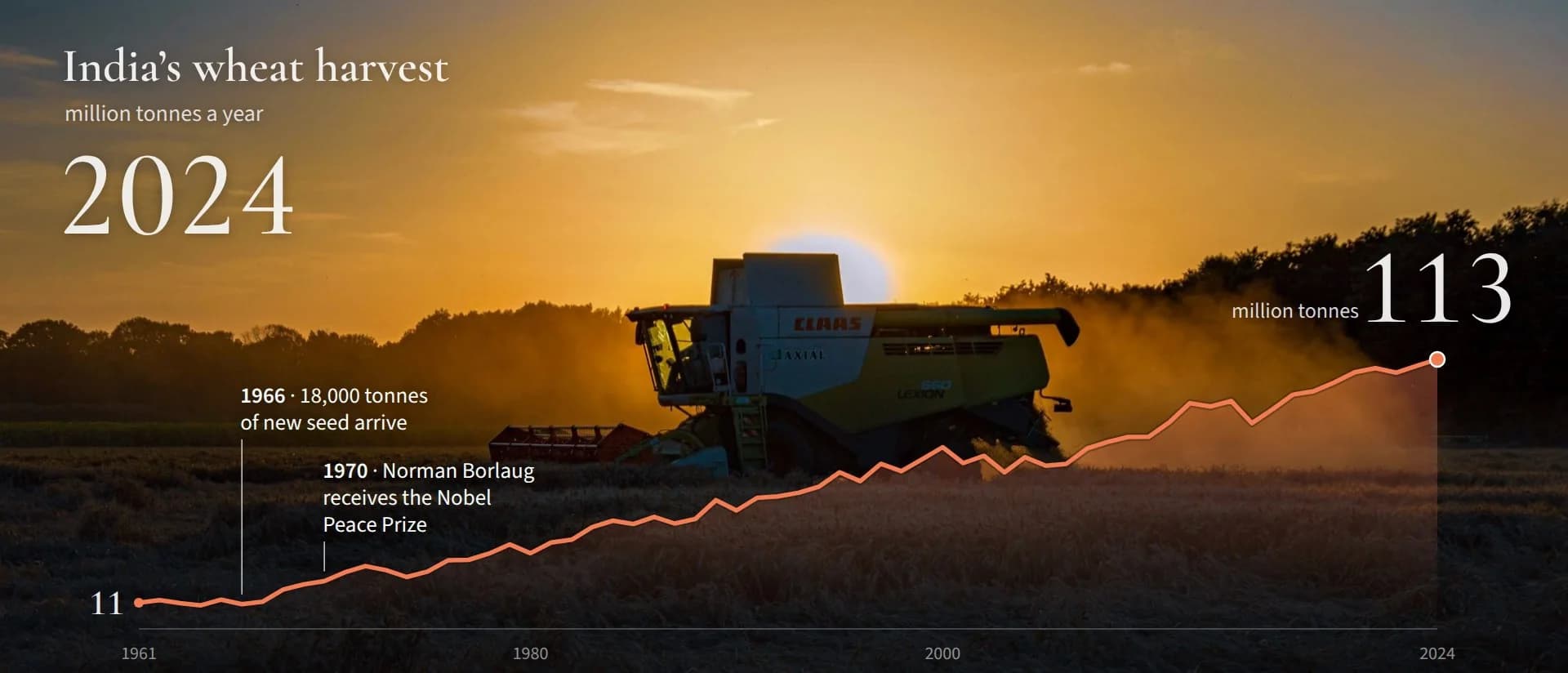
Data: Our World in Data (FAO)
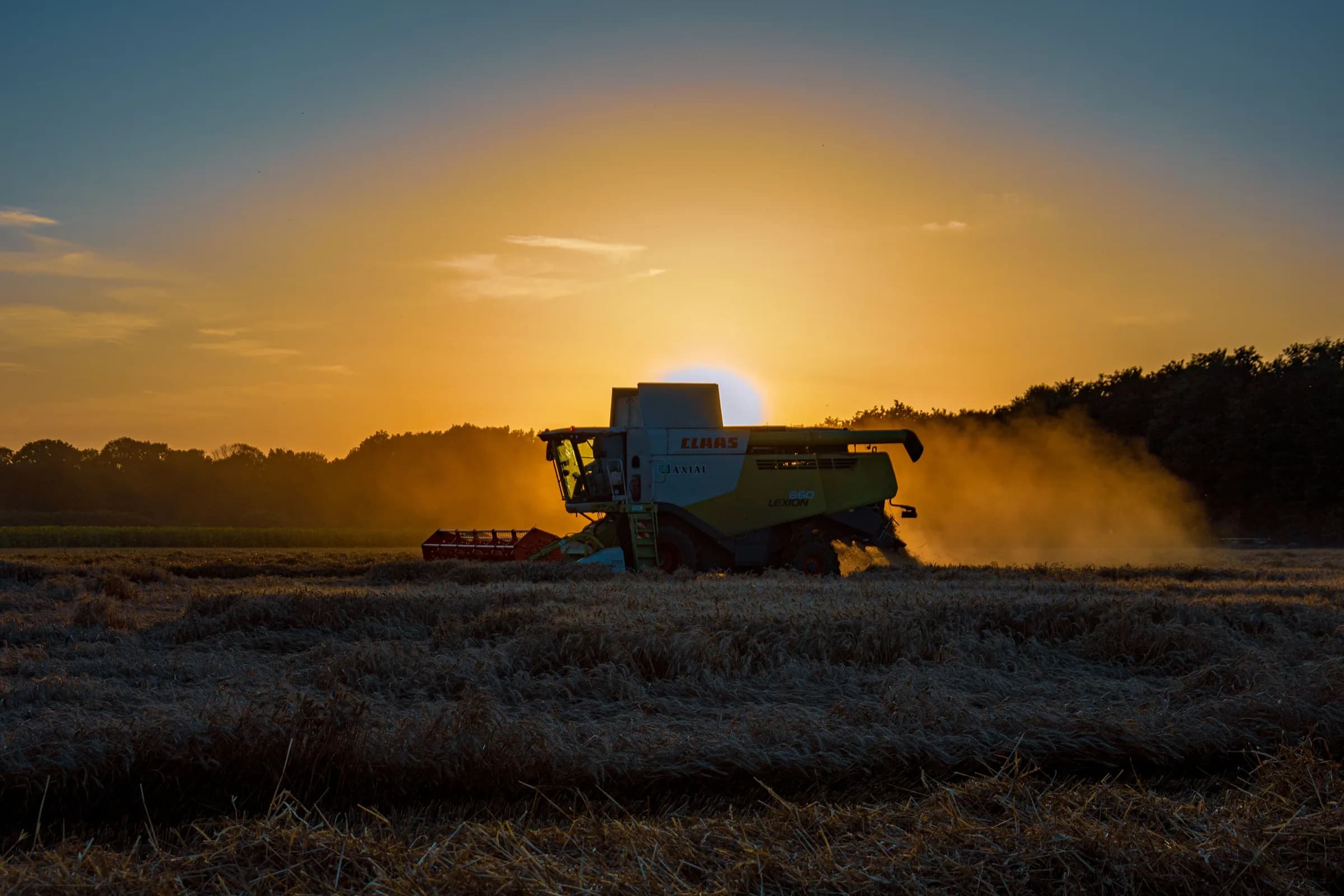
Data: Our World in Data (FAO)
Science, set to feeding people
From the 1940s the plant scientist Norman Borlaug bred wheat in Mexico: high-yielding varieties that shrugged off disease. In India the geneticist M. S. Swaminathan saw what the seeds could do. India imported 18,000 tonnes of them in 1966. Within six years its wheat harvest had more than doubled.
Borlaug received the Nobel Peace Prize in 1970. The work is credited with saving as many as a billion lives. Science, money, and decades of labor were the means, each at full strength. The end was people with enough to eat.

“If you desire peace, cultivate justice, but at the same time cultivate the fields to produce more bread; otherwise there will be no peace.”

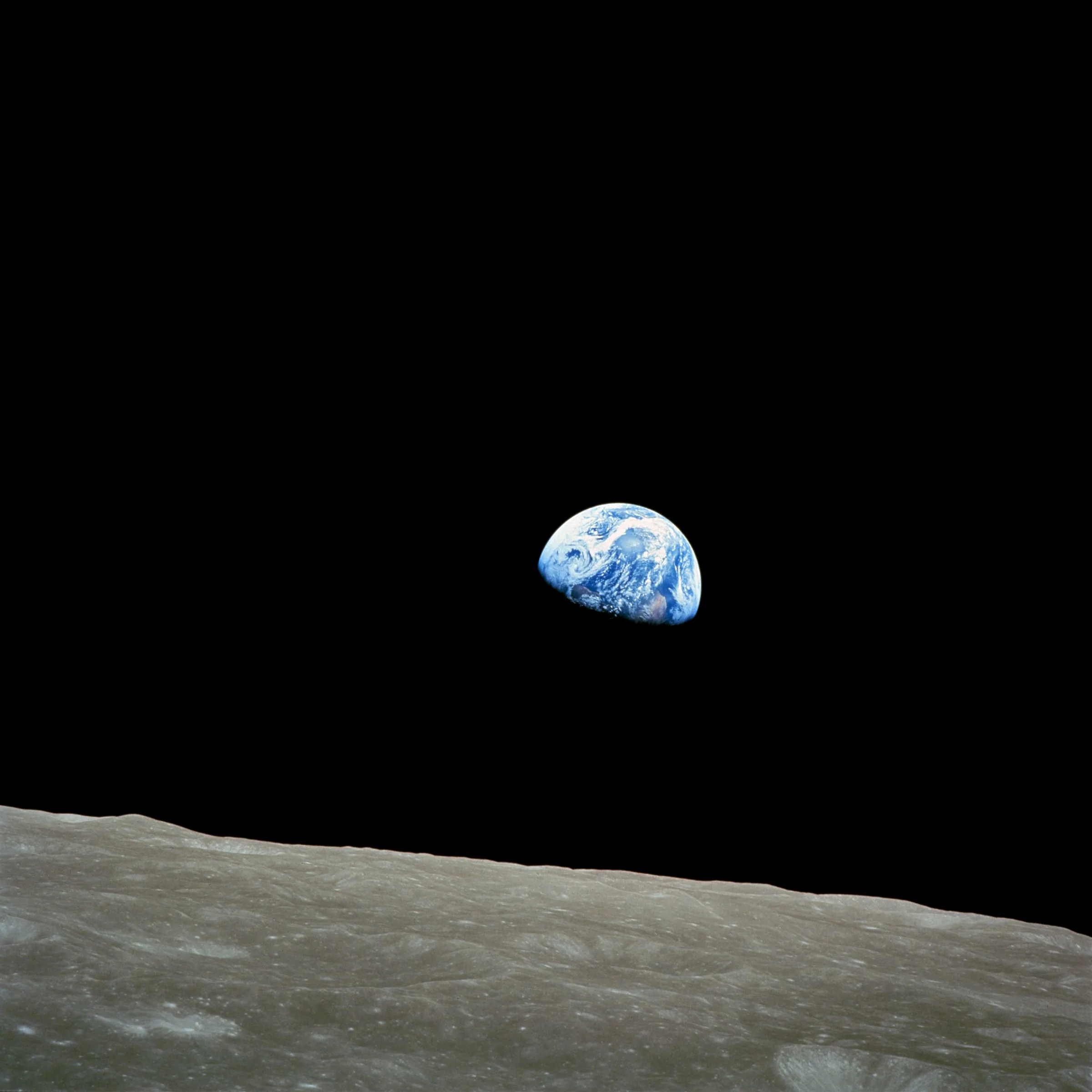
The world, and everyone in it
On December 24, 1968, the crew of Apollo 8 became the first people to orbit the Moon. It took rockets, fortunes, and years of training to get them there. Coming around from the far side, Bill Anders saw the Earth rise over the lunar horizon and photographed it.
“We came all this way to explore the Moon, and the most important thing is that we discovered the Earth.”


Most of us will travel closer to the ground, and the same order holds. Earn well, and spend some of it on seeing the world: old cities and new ones, the tables where other people eat, the strangers who turn out to be our brothers and sisters.
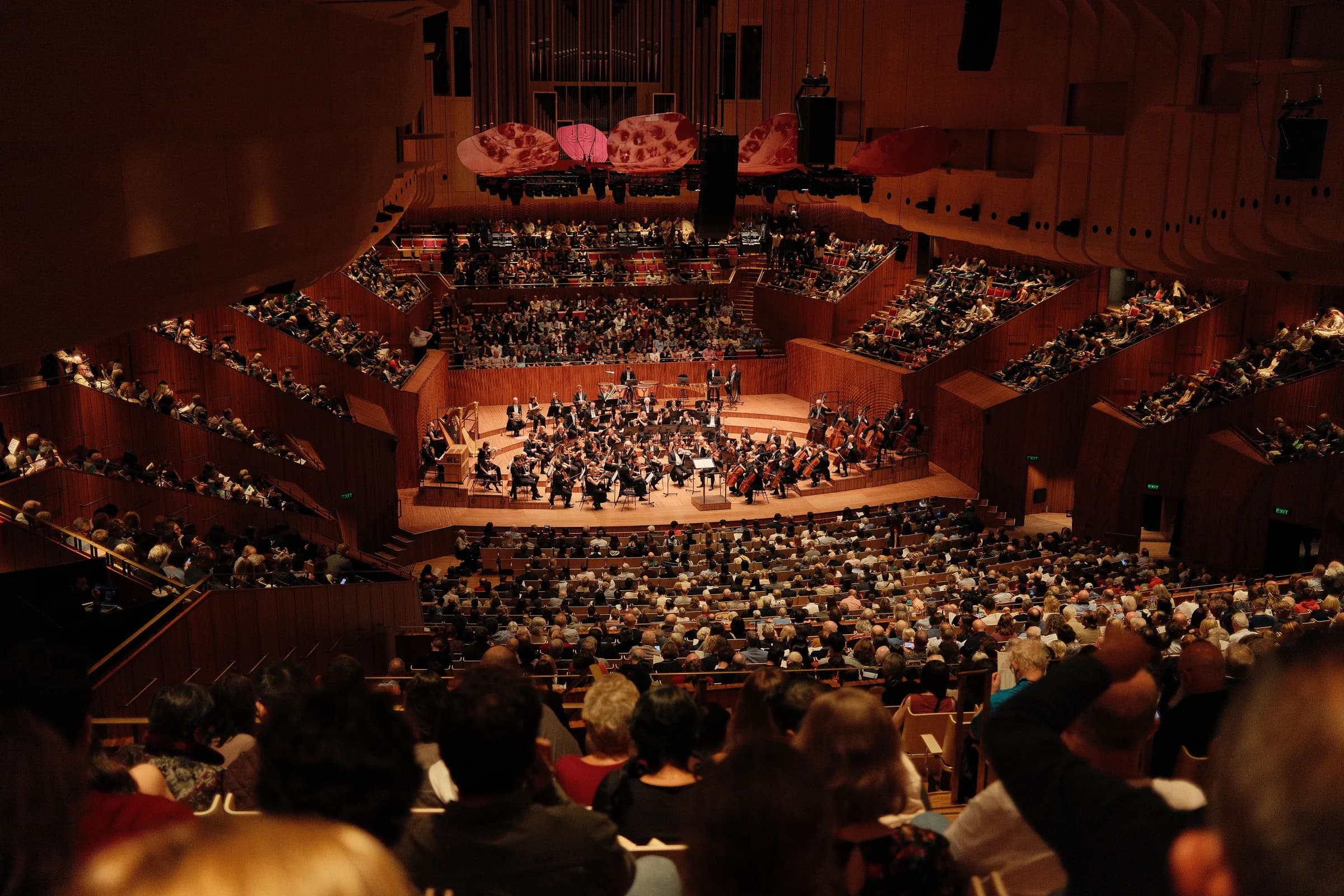
An art that delights
Years of scales, drills, and rehearsal are means. The end is the evening they make possible: a hall gone quiet, then on its feet. In 1944 the Carnatic singer M. S. Subbulakshmi began giving her concerts to public causes. Halls overflowed, and open amphitheaters held tens of thousands who paid four annas each, “so as to deny no one the joy of her songs,” as the Ramon Magsaysay Award Foundation recorded in 1974.
Her mastery was the means. The delight was the point, and it was hers as much as anyone’s.

What a civilization does with the order right
Since 1800, life expectancy around the world has more than doubled, from 29 years to 73. Far fewer children die young. Nearly nine in ten adults can read. This is what powerful means do when they answer to human lives.
Life expectancy
World, years at birth
1800stoday
Children dying before age five
World, % of children
Adults who can read
World, % of adults
People in extreme poverty
World, % of people
Data: Our World in Data
The oldest wisdom kept the order
None of this is new. The world’s traditions put wealth and power in their place long ago, and kept them there.
Explore religious literacy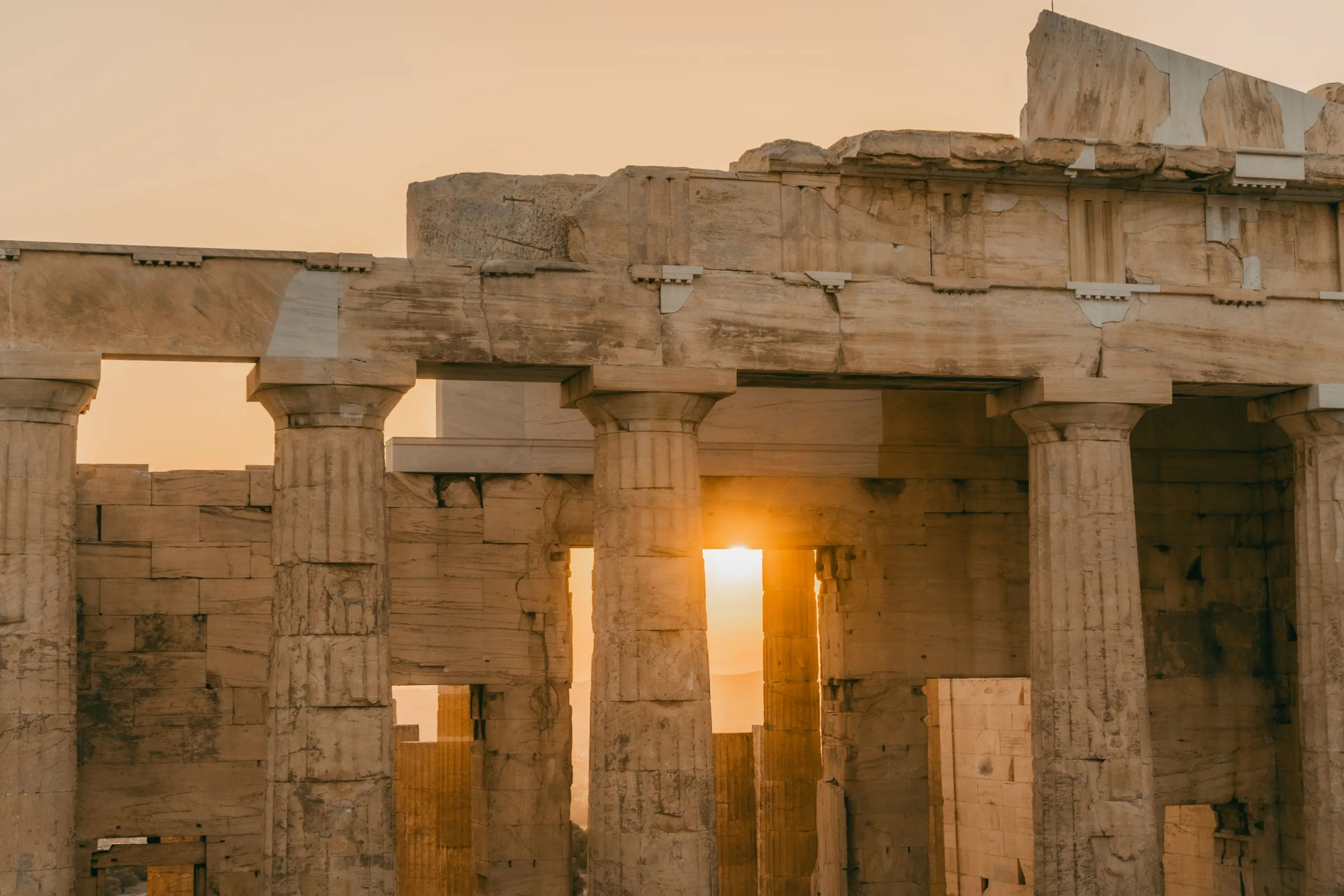
The Upanishads
Prize discernment between means and ends, and warn against mistaking money and power for prosperity.
The Hindu tradition
Builds a whole structure to keep the order: four aims of a life, and four stages to pursue them in.
The Buddha
A middle way between indulgence and denial. Clinging to the means is what causes the suffering.
Keynes, 1930
“We shall once more value ends above means and prefer the good to the useful.”
Four aims, four stages
The tradition names four aims of a life. Dharma, right conduct, is the frame for everything. Artha, wealth, and kama, pleasure, are honored within it. Moksha, liberation, is the end the other three serve. Wealth and pleasure are welcome, and they are means.
It also names four stages: student, householder, forest dweller, renunciate. The pursuit of wealth belongs to one of them, the householder years. Earn fully then, and keep it in its place. The whole structure is a set of checks and balances against the means becoming ends.
Brahmacharya
student
Grihastha
householder
artha belongs here
Vanaprastha
forest dweller
Sannyasa
renunciate
Ancient wisdom knew. Modern science keeps confirming it.
The ends we name, love, learning, and play, were named long before us. What is new is that the laboratory now agrees.
Love
c. 350 BCE
Aristotle, Nicomachean Ethics
“Without friends no one would choose to live, though he had all other goods.”
since 1938
The Harvard Study of Adult Development
For more than 85 years, the longest study of adult life ever run has followed the same lives. Its finding: warm relationships are the strongest predictor of health and happiness in old age.

Learn
c. 350 BCE
Aristotle, Metaphysics
“All men by nature desire to know.”
2014
Neuroscience
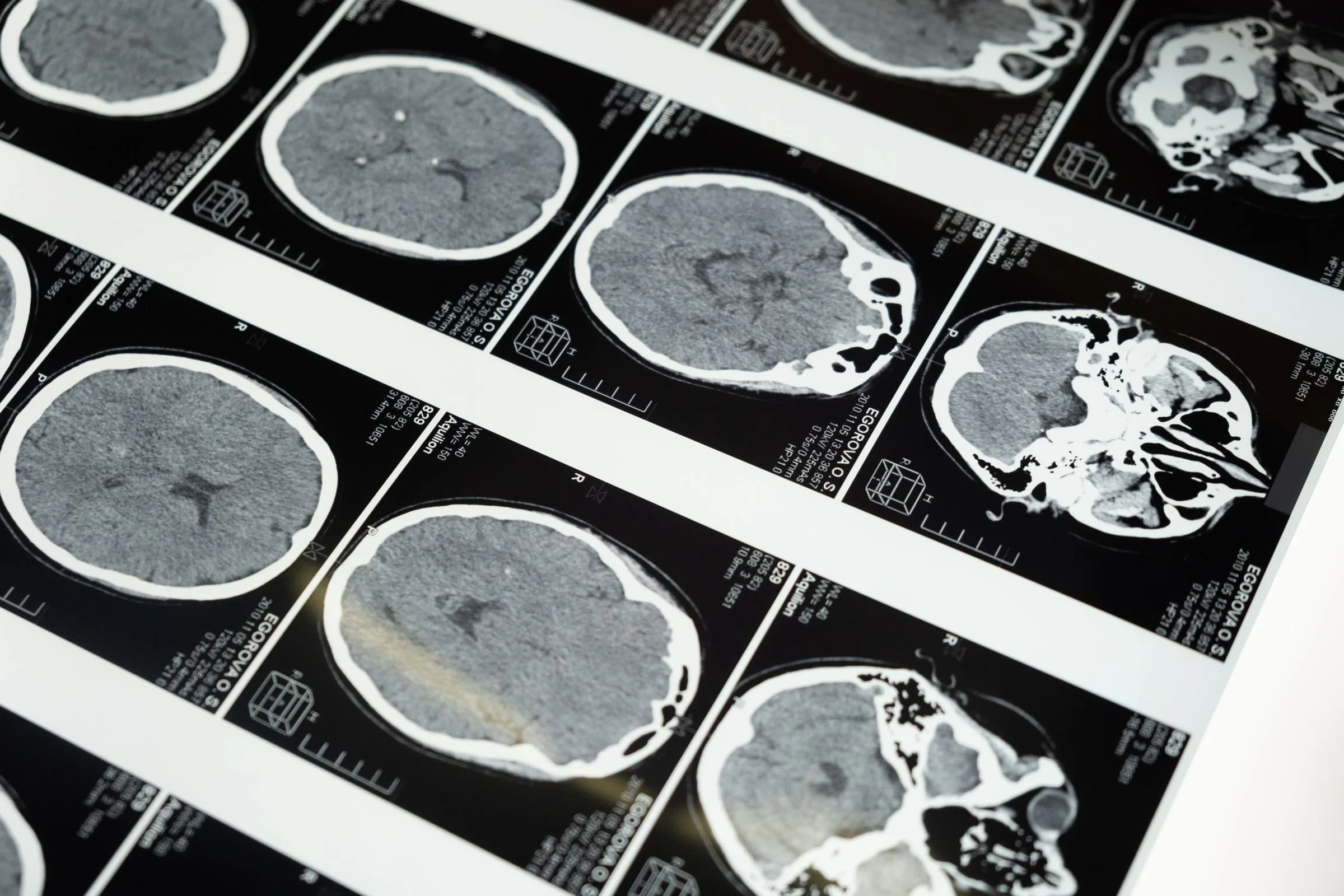
When curiosity is aroused, the brain’s reward circuit switches on and memory improves, even for things we were not trying to learn.
Play
c. 350 BCE
Plato, Laws
Man is “God’s plaything, and that is the best part of him.” Life, he wrote, should be spent playing the noblest games.
1998
Affective neuroscience
Play is one of the brain’s primary emotional systems, built into every mammal. Rats tickled in the laboratory chirp in what looks very much like laughter.

Setting the order right is how people have done their greatest work, and how a single life grows large.

We come home to what we knew.
The child in the cardboard spaceship had it right. The difference is that now we choose it, with everything we have learned and everything we have earned behind us.
Keep every means. Remember what each one is for.
To flourish is to love, to learn, and to play.
Questions people ask
No. Ambition and wealth are good means. The question is what they serve. Ambition in the service of love, learning, and play is part of a flourishing life. Ambition that has become its own goal is the inversion.
No. It means wanting the means for what they can do. Plant science set to work for the hungry is credited with saving as many as a billion lives. In the right order, ambition has more to aim at.
Yes. A company that pursues quarterly profit as its final goal, and no longer as a way to sustain its purpose, has inverted means and ends.
Success is a means. When it has become the goal itself, reaching it leaves nothing further to serve. Put to work for love, learning, or play, it keeps its meaning.
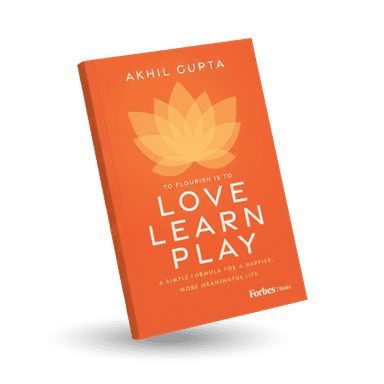
Love • Learn • Play
The formula for a meaningful life.