The life you’re
saving for

Nora knew what she was saving for.
Until she forgot.

A story drawn from the ideas in
Love, Learn, Play by Akhil Gupta.
Nora was saving for a good life.
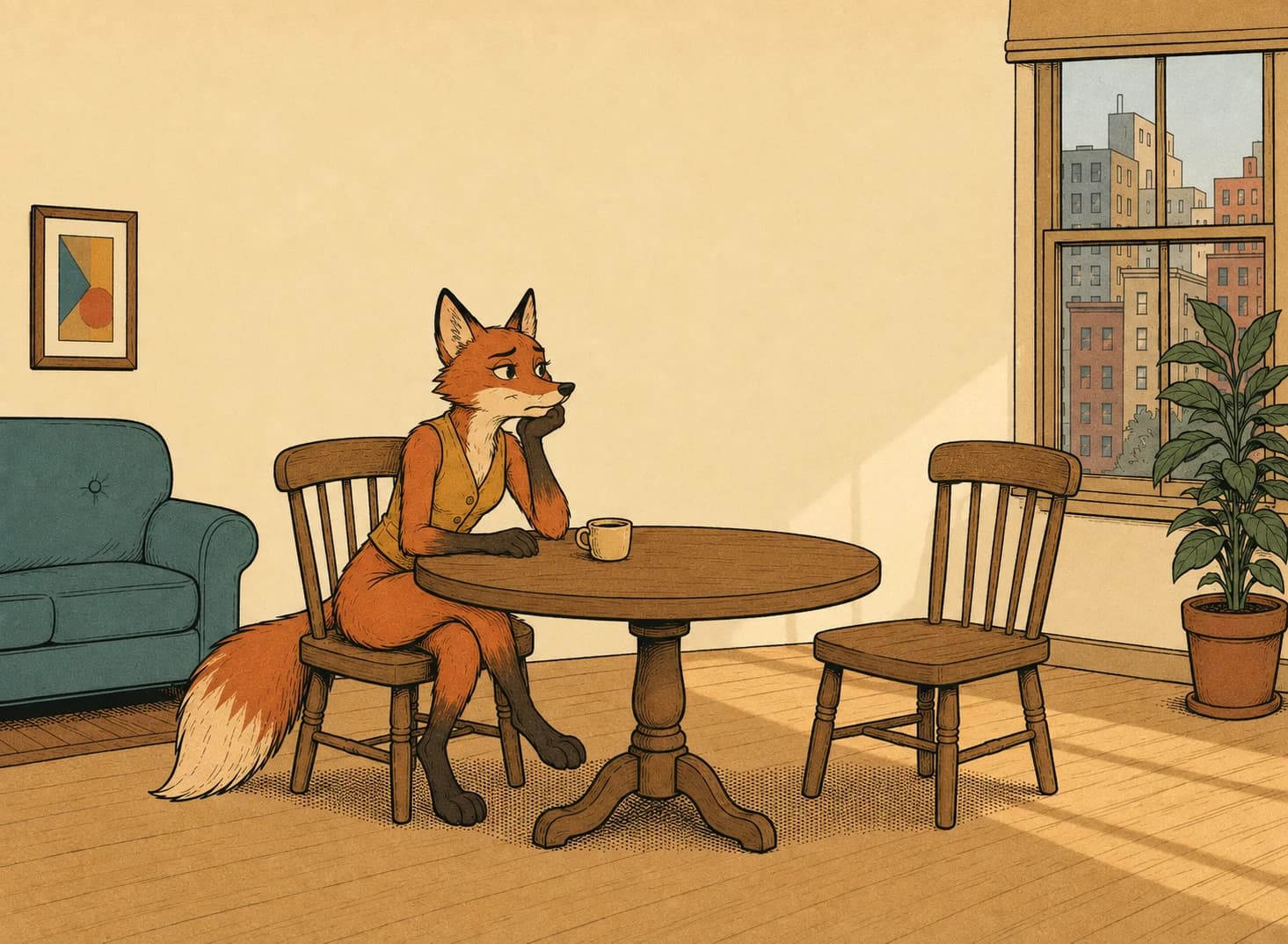
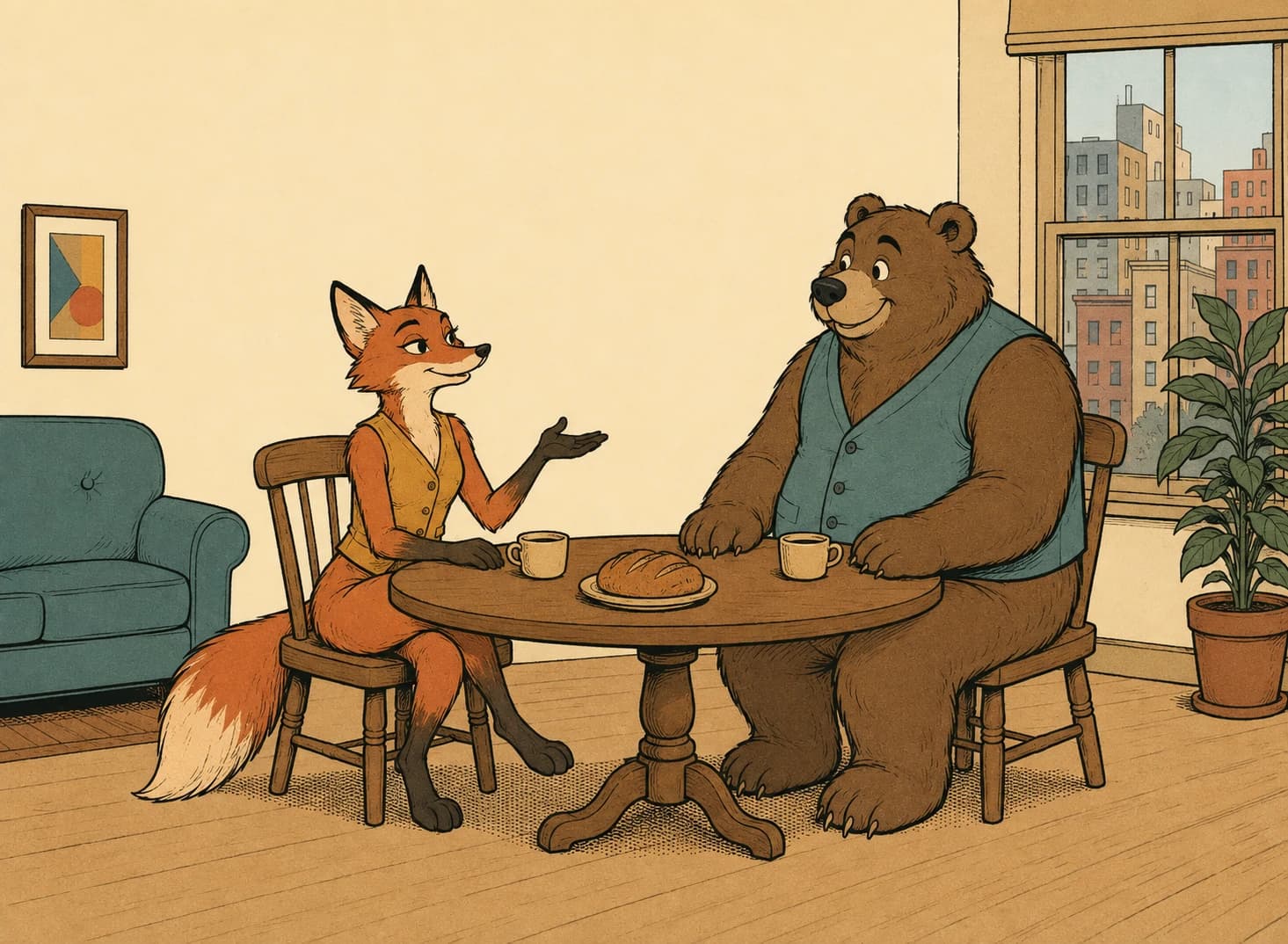
Nora, a fox, and Jo, a bear, sit at a little table in her apartment. A plant reaches toward the window; there is room for a friend.Nora says: Dinner here next Friday?
Then she visited Jo’s new place.
Nora looks around Jo’s spacious, sunlit apartment. Admiration turns into comparison.Jo says: Come in! Nora thinks: Now THIS is a proper home.
Her apartment hadn’t changed.
Back in the same apartment, shadows press around Nora and the familiar table. The room is unchanged; her judgment of it is different.Nora thinks: I can’t invite everyone here.
Jo called about Friday. Again.
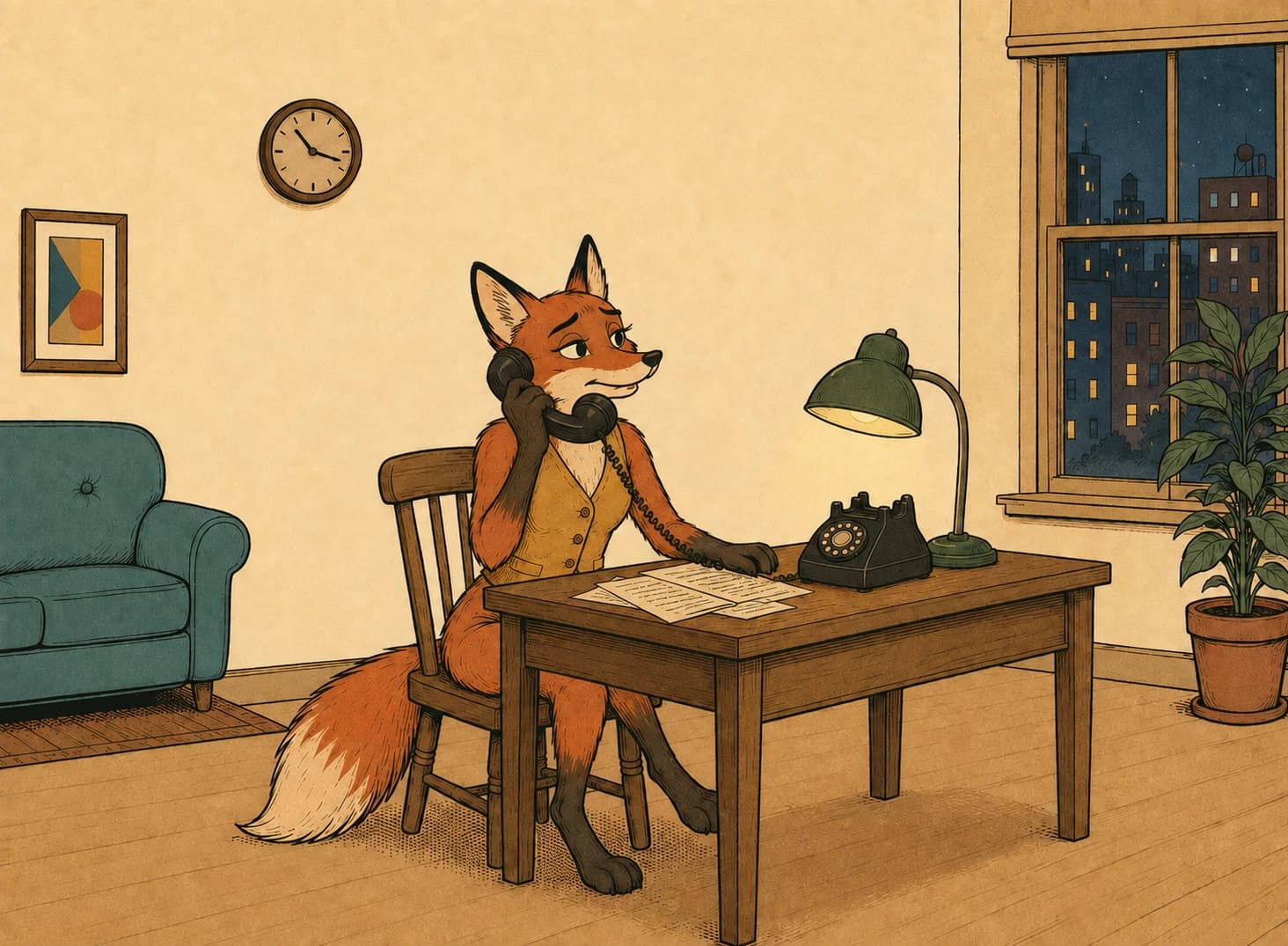
Nora answers Jo on the telephone while working late beneath a clock. Papers cover the desk; another dinner is postponed.Nora says: After the next raise. Promise.
The numbers grew. The evenings emptied.
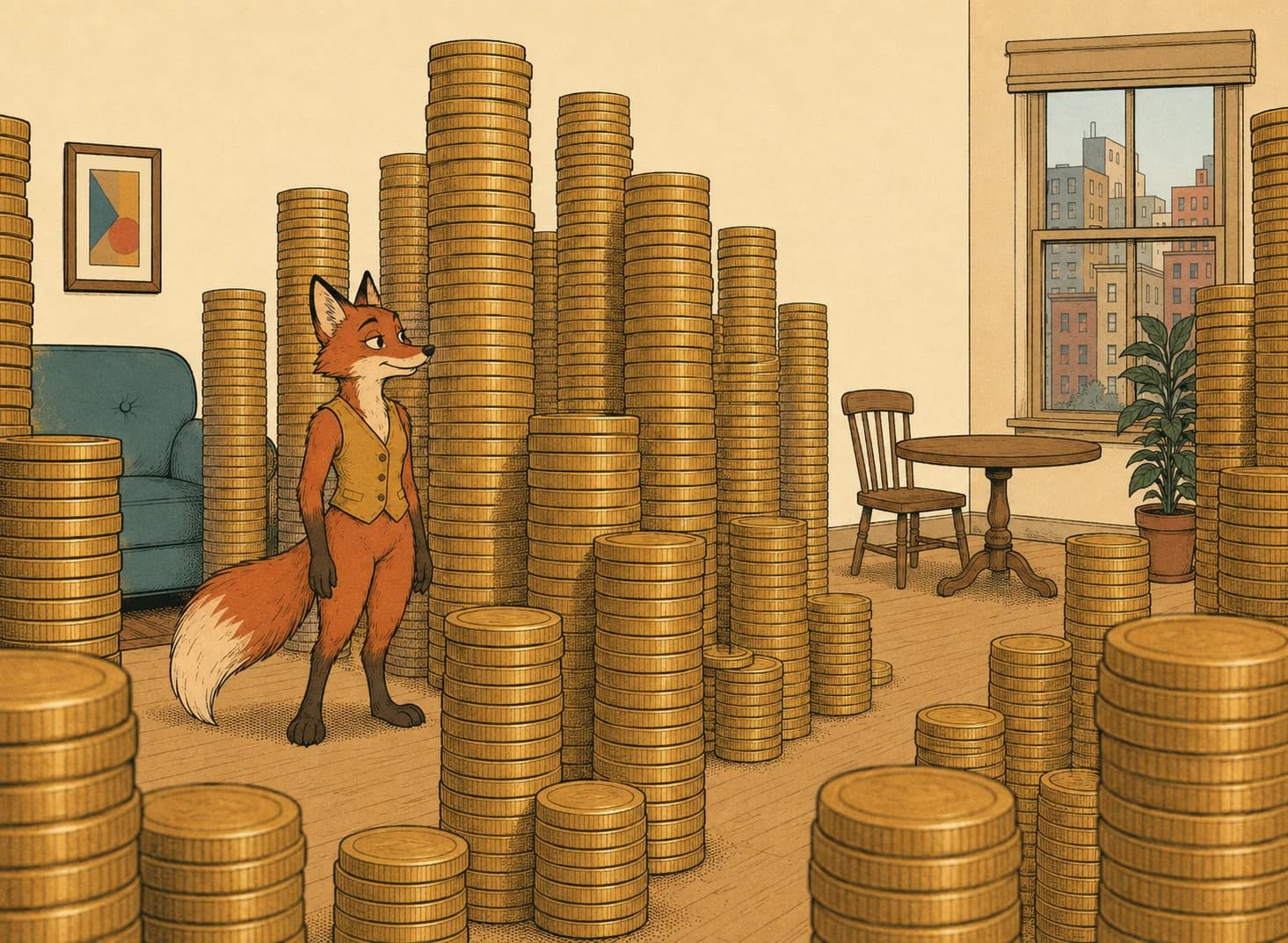
Towering stacks of coins dwarf Nora and separate her from an empty chair. The means to a fuller life have crowded out that life.
Until one evening, Jo came over.
Jo and Nora meet at the apartment door. Each has been assuming something about the other; now they finally ask and listen.Jo says: Have I upset you? Nora says: No! I thought I needed a better place to invite you.
For once, she stayed with the question.
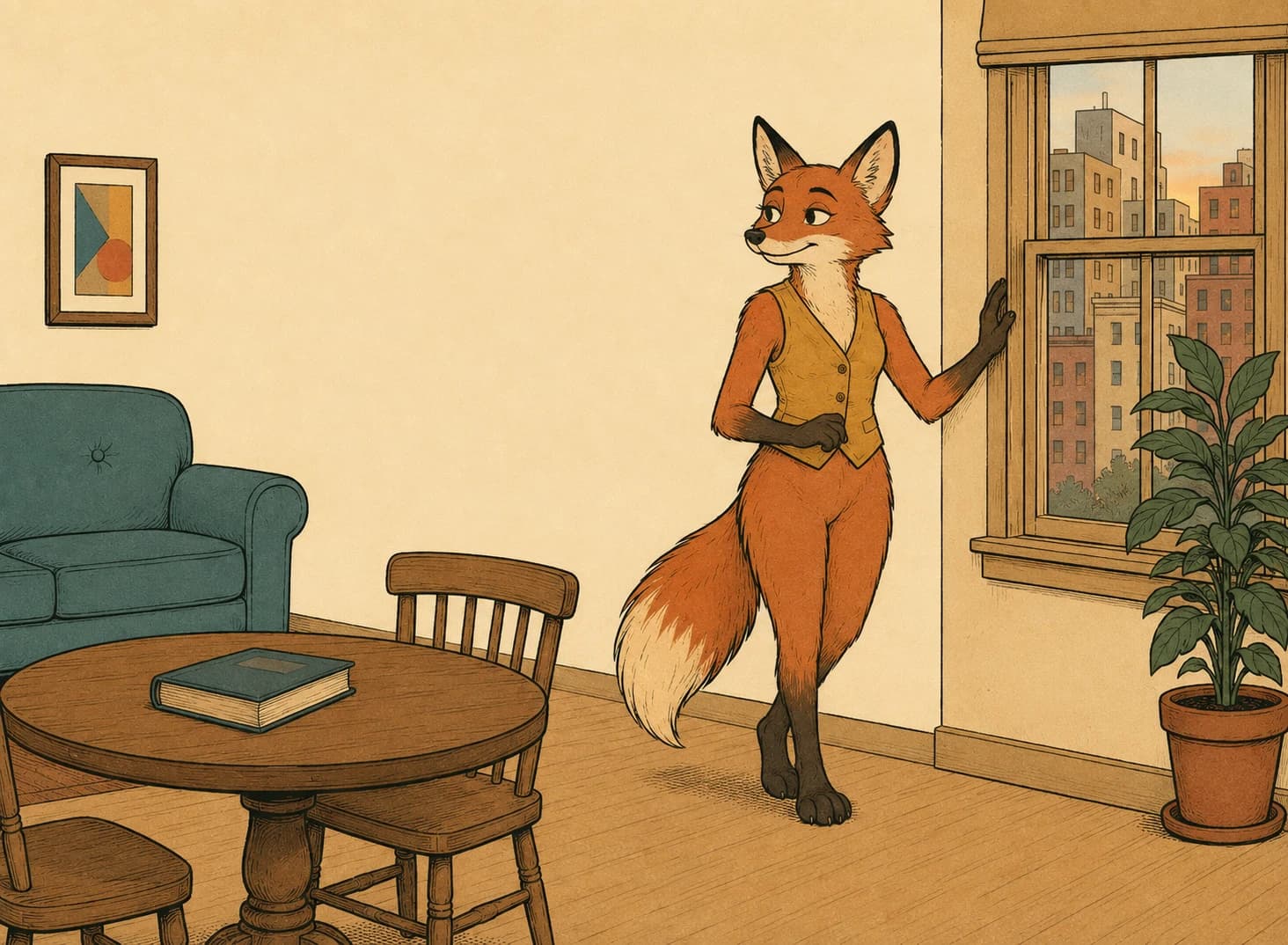
Nora pauses by the window and looks back into her room. An unused cookbook reminds her of what she wanted to make possible.Nora thinks: What was all this supposed to make room for?
They started with what was already there.
Nora stirs a pan of onions while Jo holds its handle. They cook together, learning a recipe and laughing over a small mishap at the stove.Nora says: Show me how you make it? Jo says: First, we rescue the onions.
Same room. A little more life in it.
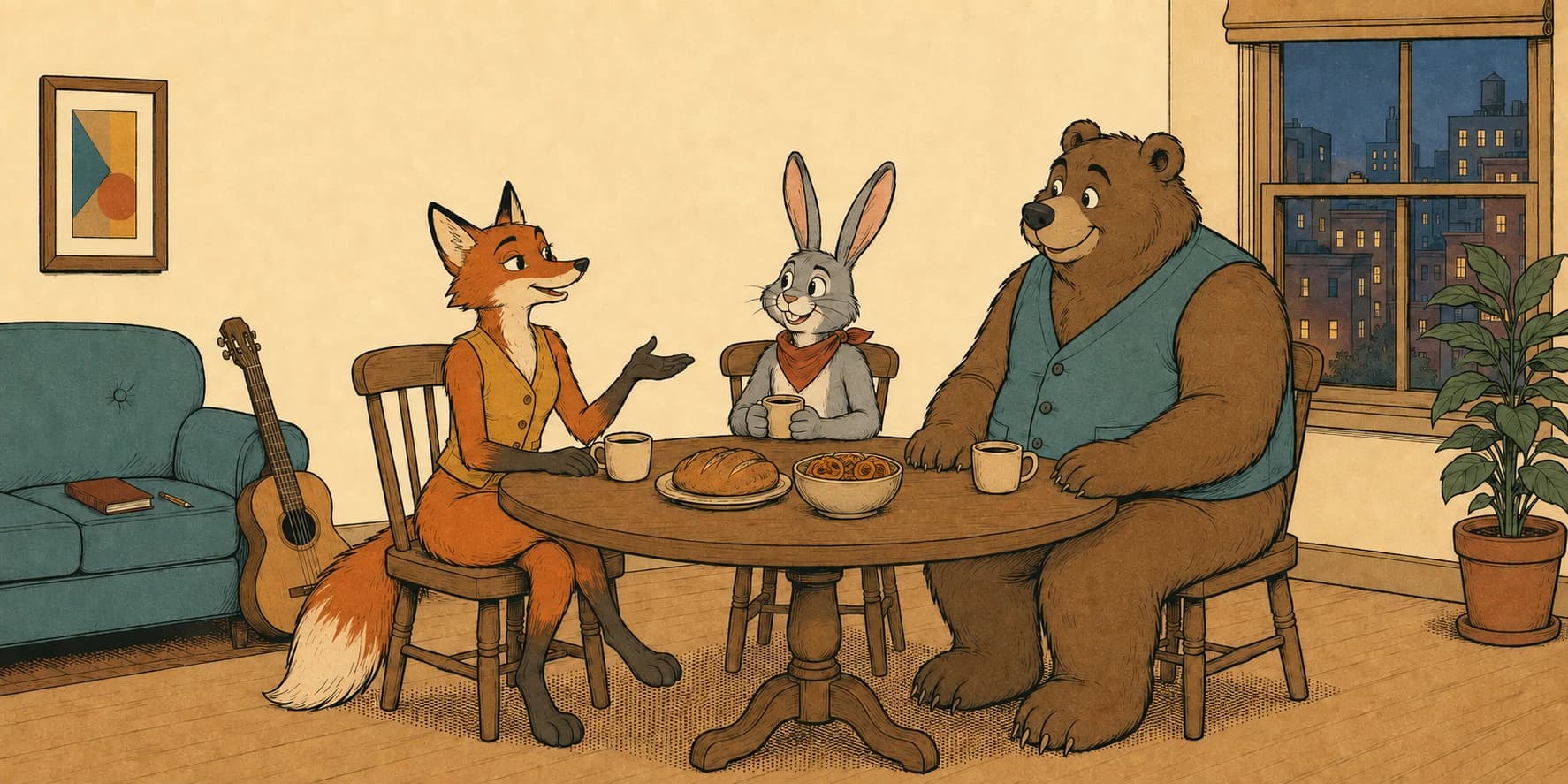
Nora, Jo, and a rabbit friend gather at the original apartment table. The plant, window and furniture remain; a modest savings ledger sits to one side. Saving continues, with company, learning and play present again.Nora says: Same time next week? Jo says: Your place.

What changed for Nora?

The characters are fictional. The pattern comes from Love, Learn, Play—including Gupta’s account of the apartment that felt too small only after he visited a friend’s larger one.

Means–ends inversion

Saving had a purpose. Then the number took over, crowding out the company and experiences it was supposed to support.

“Gradually, the means crowd out our ends.”

Chapter 1, pp. 27–28

False narratives

Nora started treating “a bigger home makes me worth visiting” as a fact. Jo had a different story. Neither had checked it.

“After all, my apartment satisfied all my needs for an abundant life.”

Chapter 2, p. 68

Living consciously

An honest question interrupted both stories. Nora listened, reconsidered what mattered, and made room for it in an ordinary evening.

“This involves challenging our assumptions and recognizing that everyone is on their own unique journey…”

Chapter 3, pp. 91–92