
Are You Chasing the Wrong Things? The Means-Ends Inversion Explained
When the means crowd out the ends, we trade what matters most for what merely measures. The means-ends inversion is one of the most pervasive traps in modern life.
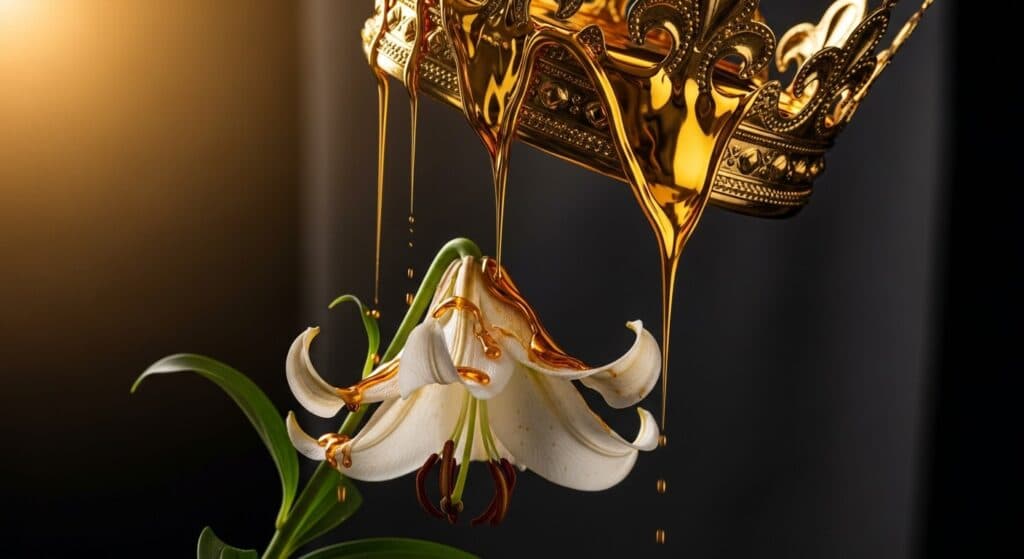
- There is an old, familiar story we tell about King Midas. Given a single wish, he asks that everything he touches turn to gold. His wish is granted. But what appears to be a triumph quickly reveals itself as a tragedy. His food turns to inedible metal. His drink hardens before he can swallow it. When he reaches out to embrace his beloved daughter, she too becomes a golden statue. He had successfully acquired the ultimate instrument of wealth, but in doing so, he destroyed the very things that made his life worth living.
- We often tell this story as a simple cautionary tale for children. But we must ask ourselves: have we truly absorbed its lesson? Modern society is filled with extraordinary people who have accumulated extraordinary means—and who are, in many cases, quietly miserable.
- Albert Einstein famously diagnosed our modern condition when he wrote: “Perfection of means and confusion of goals seem—in my opinion—to characterize our age.”
- This confusion is the root of an immense amount of modern suffering. We call this phenomenon the Means-Ends Inversion.
The Problem: The Diagnosis of MEI
- The Means-Ends Inversion (MEI) describes what happens when we confuse the instruments of living with the purpose of living. Money, career success, fame, status, and material possessions are all means. But when we treat them as ends in themselves, we lose sight of what the good life actually requires.
- The philosopher Albert Camus captured this tragic pattern: “A man wants to earn money in order to be happy, and his whole effort and the best of his life are devoted to earning money. Happiness is forgotten; the means are taken for the ends.”
- We see how means crowd out ends every day:
- Personal Wealth: A professional works eighty-hour weeks to provide a superior life for their family, but the means of wealth accumulation completely consumes their time and energy.
- Physical Appearance: A person begins exercising to feel healthier but becomes obsessed with achieving an impossible standard of beauty.
- Corporate Profit: A company aims to build a great product but prioritizes short-term stock prices.
- Media and Information: A news organization wants to inform the public but prioritizes sensationalism over nuance.

The Concepts: Distinguishing Intrinsic from Extrinsic
An end has intrinsic value. It is pursued for its own sake. A means has extrinsic value. It is merely a vehicle. When we ask “Why do I want money?” the honest answer always points toward something else.
The economist John Maynard Keynes advised us “to value ends above means and prefer the good to the useful.” Yet nearly a century later, we are still struggling to heed his advice.
The East-West Synthesis: Ancient Systems of Value
The ancient Hindu tradition mapped this challenge through the four Purusharthas: Dharma (righteous conduct), Artha (prosperity), Kama (pleasure), and Moksha (liberation). Artha and Kama are means, to be pursued within the ethical framework of Dharma and in service of Moksha.
Practical Steps: How to Recognize and Reverse MEI
- The Why Audit: Write down your top three goals. Ask “Why?” until you reach the absolute bottom.
- Examine Your Trade-offs: Look at your calendar and bank statements. Are you sacrificing time with family, health, or growth for incremental gains in wealth or status?
- Define Enough: MEI thrives on the illusion of scarcity. When we do not define what enough looks like, we remain on the treadmill forever.
Conclusion
Success, wealth, and influence are powerful, worthy tools. But they make terrible masters. When we reorder our lives, placing our deepest human longings—to love, to learn, and to play—at the highest pinnacle, the hollowness begins to fill. We step off the endless treadmill and finally begin to live.
Frequently Asked Questions
Is it wrong to be ambitious or want to be wealthy? Not at all. The question is what your ambition serves. Ambition directed toward genuine human flourishing is profoundly healthy.
Can organizations suffer from MEI? Absolutely. When a company pursues quarterly profit as its absolute end rather than as a means to sustain its purpose, it has committed organizational MEI.
Why does achieving a major goal often feel hollow? Because success, by itself, is a means. It becomes meaningful only when it serves something deeper—connection, growth, purpose, or joy.
Recommended Reading
Love • Learn • Play
The formula for a meaningful life. Discover how engaging your deepest longings to love, learn, and play leads to lasting well-being.