

Philosophers Reunite through LLP: Professor Charles Taliaferro and Christophe Porot on the UEF Podcast!
“It is the egoless mindset of LLP that can enable us to become more and be more.”
A conversation with Charles Taliaferro
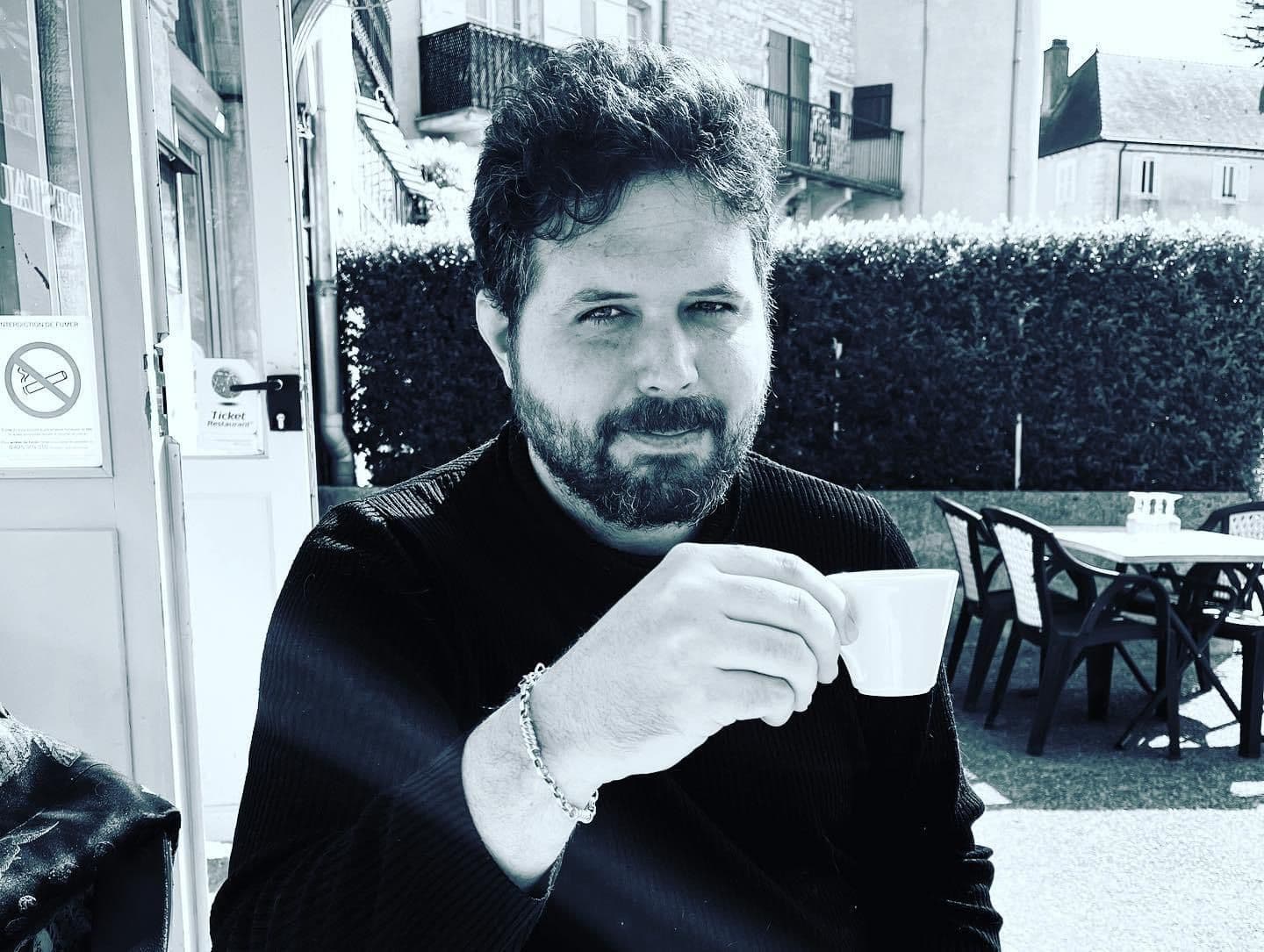
Hosted by Christophe Porot
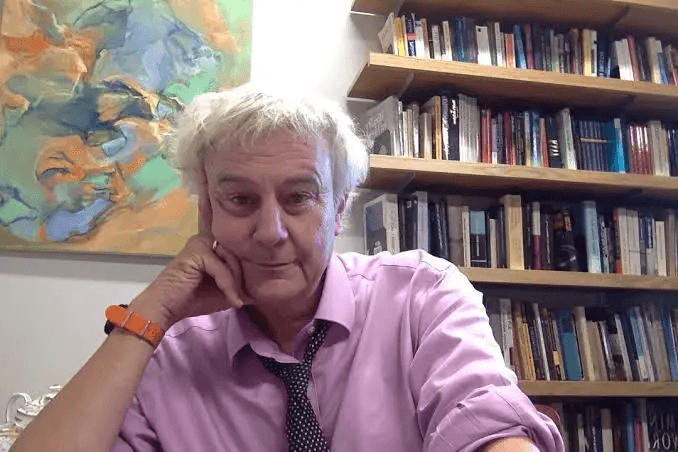
I’ll be honest. Charles Taliaferro is a personal hero of mine; a world renowned philosopher with over 40 published books, an exemplary human being, and a man who can articulate the values of loving, learning, and playing with depth and personal resonance. As I sat down to discuss LLP with Professor Taliaferro, I was surprised by the twists of thought he effortlessly expressed. But I shouldn’t have been. Professor Taliaferro has been a mentor to me since my undergraduate years, and has been a pivotal part of everything I’ve been able to do. When the chips were down, and I thought I was out for the count, his support helped resurrect my dreams and my ability to flourish.
In our winding conversation, stretching from well considered analyses of love and forgiveness to an exploration of how Philosophy in Prison can reflect LLP, I learned a lot. One of those lessons is simple: it is the egoless mindset of LLP that can enable us to become more and be more. Here are 4 surprising ways to flourish intellectually and personally, from Professor Taliaferro:
Full interview
The complete conversation
Inquiry 01
Philosophy in Prison
Charles Taliaferro reminded me that many great thinkers, from Bertrand Russel to Max Weil, have composed some of their most precious works in prison. But Taliaferro’s awareness that the mind can be free while the body is detained extends into practical action. He worked with a prisoner to help him publish an article about philosophy in prison. An article that ultimately concluded that philosophy can be done in prison, with enough care and attention. Sometimes when we are confined physically, we are able to explore the full depth of our cognition. It is the last of the human freedoms, and explains why LLP is a mindset, not merely a sequence of coordinated activities, but a way of approaching whichever activities you have already undertaken. The LLP mindset, expressed through philosophical play where you love what you do and are learning along the way, remains available to us even behind bars.
Can philosophy be done in prison?
Charles Taliaferro
“really, have spite. For somebody, that's what drives you. And some great philosophers have recommended… Bertrand Russell recommended, find the secret to living long, and he lived into his 90s, and he said, find something you hate, and then hated it with everything you have. Well, you know. if you look more closely at Russell, he hated nuclear proliferation, because he loved peace, he was a pacifist. in jail for it, actually. Yep.”
Christophe Porot
“It was apparently a quite nice experience for him, something that we could return to, that his time in jail, apparently wrote quite the… quite a bit, is what I've heard about that, and And it reminds me of… just, sorry, this is a detour, but, Vax Vay, the brother of Simone Veh, you know? He came up with one of his best mathematical formulas while he was in prison, and apparently at the end of his life, is along the theme of play and everything and learn, he was asked if he had any regrets. And he said, yeah, that I didn't spend more time in prison.”
Charles Taliaferro
“Oh! Well, I worked with a prisoner quite a bit for over a two-year period in the early 2020s, and actually got him published online in a journal called Religions, and it was Practicing philosophy in prison. what is it like? Can you do it? And he… his answer was, yes. And you mentioned we could have added Cervantes, Boethius.”
Christophe Porot
“Indeed.”
Charles Taliaferro
“Other, you know… and then there are, of course, people like Hitler, who wrote Mein Kampf, you know, in prison. So there are opposites. Maybe the exception proves the rule, who knows?”
Video
00:37:17–00:39:20
Can philosophy be done in prison?
Inquiry 02
Great scholarship requires play without ego
There are so many ways that scholarship requires play. One of the elements that prevents brilliant folks from becoming great scholars is their unwillingness to play without ego. You see, when someone confronts our ideas or our personal musings as perhaps flawed, many people take that as an attack on their ego and fight against the possibility of being proven wrong, sometimes to the detriment of their progress. But that’s not the only way play without ego enables great scholarship.
In complicated cases, like studying genocides or wars, Taliaferro discovered something curious in his colleagues. He discovered that those scholars doing the most heavy and serious work actually played more than the rest. This is precisely because the play allows for some reflective distance between the somber content of the work, and the process of pursuing justice and scholarship. It is in the mindset of play that we can take a stone and make it light. We can take a horrible burden upon our shoulders, and make it carryable. We can confront the abyss and not be scared.
if we are in a competitive game, to lose well, than to win badly.
Peership of inquiry
Christophe Porot
“Mmm.”
Charles Taliaferro
“That's… that's my view. the more… and you see this in any number of sports, with soccer, you know, with the World Cup, or football, as we might call it, just where some people are playing with… great joy of the game, and they don't hog the ball for themselves. They're working cohesively in a team. They're… they're… in this case, these men's sports in the World Cup, they're like a band of brothers. That's the team that wins. And I think, the more you can… I'd say for you and I, for example, as professor and student at one time, is I feel like you are a complete equal, and we are, in peership. And for, listeners or people viewing this, Christophe and I have, co-authored, more than 2 or 3 publications. And to be able to move from a, professor-student relationship where, yeah. I… I do know the works of… Play-Doh more than…”
Christophe Porot
“Fair enough.”
Charles Taliaferro
“But I'm getting… my goal is to get peership of inquiry, where a student is in a position where she or he can say, Professor Tolliver, have you thought of this in your Meeting of the Euthyphro? And for me to be able to… Realize… not faking it, but actually… actually have some joy in being taught by a student on how to re-read a text, or re-envision, Something.”
Christophe Porot
“Hmm.”
Video
00:23:47–00:25:42
Peership of inquiry
Making objection playful
Charles Taliaferro
“Because, you know, I think the worst situation, the condition that I fear the most would be self-deception, and not being able to notice when there's a good objection, or I'm… I'm not being very, bright on this or that point. And I think the more you can make that A form that's playful and that is enjoyable.”
Video
00:29:41–00:30:13
Making objection playful
Being corrected
Charles Taliaferro
“Well, I'll give… I'll… I'll relate two moments in my life that were… really defining. One was a negative one, and one was overwhelmingly positive. The negative one was at a huge meeting of the American Philosophical Association, and Richard Rorty was coming to the The stand, and the topic was skepticism. And he had just 3 words to say. He said, skepticism is boring. banged on the podium, and then he sat down. That was an example of what I never want to do. And I was turning to my colleagues, I think I was still in grad school, and said. I think skepticism is pretty interesting. Yeah, why should I… why should… this doesn't seem very boring to me. And the other case would be my mentor, who was my dissertation advisor, Roderick Chisholm. And this was a big, big, big meeting, and he was being criticized by a former student. And after this, Pretty serious critique. He got up. And went to the podium and said. You're absolutely right. My views on these particular points need to be reformulated. And, that's well done, and then he sat down.”
Video
00:47:41–00:49:14
Being corrected
Leave the ego at the door
Charles Taliaferro
“Whereas, it strikes me as healthier, to, To cult… to cultivate a kind of, self-renunciation. That is, when I… we go into a classroom or seminar room, I… Try to leave at the door. an e… the ego. Like, this… I'm gonna be the best professor ever, or, You know, this is… this class is going to be enviable. And… and just… Doesn't matter. And if I fail, and I have failed from time to time, like, whether it's presenting an argument, I fail to be really clear, or consider certain objections, whatnot, or I'm unfair to a student in assessing their points of view. One of the things that I've learned is it's so important at the earliest possible point is to admit one is wrong. when that becomes evident to you. And, it's… far more… Gracious, to… if we are in a competitive game, to lose well, than to win badly.”
Video
00:22:28–00:23:47
Leave the ego at the door
Play and serious work
Charles Taliaferro
“the better. And I've seen this, actually. in conferences on some of the worst topics you can take up. So, in Holocaust studies, I went to a conference in Canada on, mass killings, and so on. And I came back, and I mentioned to colleagues, I said, well, they were all… everybody was in such a good mood, there was so much laughter, and they were talking about the Rwanda massacres and things.”
Christophe Porot
“Oh, wow.”
Charles Taliaferro
“And my colleague said, well, of course they were laughing, they were Canadians. A little bit of a stereotype there. But, they were talking about real suffering. Yeah. And… but doing it in a way… no, they weren't laughing about the Holocaust and so on, but, but they were… They were intent on, digging into these difficult and even almost unspeakable crimes. Actually, I met a student there, she was a graduate student, when she became a lawyer, an international lawyer, and actually professor. And she would have her students I do real work on… hunting down war criminals so that she had access to this enormous data from Rwanda. And so they could be in Virginia, and have access to these files, and actually identify persons of interest that may have been implicated in, say, this or that village massacre. But she did… with, in a way that was mentoring. It was clear that she had a kind of, if you will, love for her students, her love for justice, and, that was also during the time of Truths and Reconciliation Committee, where You know, a lot of weight was put on Providing opportunities for the victimizer to identify, usually himself. So, again, Not treating it as a game, but almost, calling on the kinds of skills you would need in a… in a well-played game. Like.”
Christophe Porot
“Yeah. Being able to think on your feet, versatility, being able to draw on different areas of knowledge that you may not think are related. Yeah. But that also seems like it really… this notion of play It can be very serious in the way that you just described. Because it creates a reflective distance between you and the thing you're discussing, in a certain way, to keep humor… it's kind of a reminder that despite the heaviness of the subject at hand. We're here, we're safe together, we can laugh, we're gonna come… like, the play would seem to give you the strength to get through such a heavy topic, where if it was treated with the full seriousness in terms of attitude that it could be, as opposed to seriousness in terms of work. it might be the type of conference you go once and you never go again to a conference on the same subject. And then you actually decrease how much you can contribute to the well-being of the world, because you run out of the capacity to keep going.”
Video
00:30:14–00:33:55
Play and serious work
Inquiry 03
Nobody owes you forgiveness, it is a gift
Taliaferro has spent many years exploring the concept of forgiveness. It is clearly a form of love, and a love enabling activity, yet he warns that it shouldn’t be perceived as obligatory. No one owes you forgiveness if you’ve wronged them. If you receive forgiveness, it is a gift. Likewise, if you give forgiveness, it is a freely chosen gift to the other. In the process of working out how to forgive and love better, we also must understand who we are and how to learn about ourselves and others.
One of the philosophical puzzles that arises in conversations about forgiveness is whether the offender is actually the same person as the one being forgiven. Derek Parfit famously argued that we are not the same person over time. The guy who did something wrong on Tuesday is not identical to the guy grocery shopping ten days later. While some find this theory, which Taliaferro calls self division, persuasive others acknowledge that such a theory renders forgiveness impossible. If I am not the person who committed the relevant act, how can I be forgiven for my mistake? Another theory, self separation, allows for us to think of ourselves as growing and transforming but within a continuity of the same self. It may be that we’ve changed so radically that we’ve changed our names, as Taliaferro himself did when he transitioned from a user of psychedelics to a non user. Yet even with the possibility of radical change, we remain us. Forgiveness remains intelligible as a gift.
Forgiveness and reconciliation
Charles Taliaferro
“Yeah, absolutely. So for me, you know, forgiveness, reconciliation, are, are actually gifts, rather than, obligations. That is, it seems to me that if I've, betrayed somebody, let's say a good friend, I've betrayed, her confidence, or confidentiality, or something like that. I think that confession is important, renunciation of… what, in this case, I have done. And then offering, you know, an occasion for renewal of the friendship. But the person I've injured. I believe, anyway, is not thereby obligated to forgive me and to continue the friendship.”
Video
00:06:28–00:07:25
Forgiveness and reconciliation
Inquiry 04
We must unlearn to learn
In one of my favorite moments of a profoundly enjoyable conversation, Taliaferro referenced his theory of why unlearning is so critical to learning. He started with discussing the notion of a clearing where things can be disclosed. Like an open field we can walk into and freely roam, so too there must be a clearing for us to explore and learn about truth. Otherwise, we are imprisoned to the societally or evolutionarily imposed theories that make it harder for us to flourish.
To illustrate the point, Taliaferro discussed the way that many think life is a game. And, not only is it a game, it is a game we must win. Because to not win would make us a loser. While this equation sounds simple, it highlights a false narrative that has caused endless harm. Namely, the notion that we are worthless if we are not winners in a materialistic society. Taliaferro rejects this, believes we must unlearn it, and perhaps suggests that if indeed this is a game, it is far more noble to lose with grace that win without dignity. He flips the narrative.
A clearing for truth
Charles Taliaferro
“Well, I think, on this point, I think… I think of, Heidegger's notion of truth, which is the Greek from Alathea, and the way he describes it is, the truth about a person or self, you need a clearing where things can be disclosed. And so, I think… what I've learned in my role as a professor for 40 years, and in life, outside of the classroom, is providing occasions where there can be speaking the truth, you know,”
Video
00:17:58–00:18:46
A clearing for truth
Conclusion
Love, learning, and play beyond scholarship
I’ve heard that gratitude is an inarticulate emotion because all you have to muster up, the most accurate expression of your mental state, is as simple as a “thank you” or maybe “thank you sincerely” or “very much.” Yet it is precisely in this inarticulate, loving state, that I find myself. Not only because I am so grateful to Professor Taliaferro for his years of mentoring and guidance, but to you, the reader, for joining me on this journey of love, learning, and play. As a scholar myself, these lessons resonated with extra potency. I must embrace play to think critically and well on deep subjects, I must sustain my passion for learning by unlearning falsehoods, and I must, as Taliaferro’s father said to him on his death bed, “love, love, love.” Yet I believe this conversation is relevant to all, not just scholars.
What this discussion revealed to me, beyond scholarship, is that in general life can be enhanced with the LLP mindset. Wherever you are, whatever you are doing, however misguided your society is, the path to growth comes through reaching towards a life abundant with loving, learning, and playing. It is through learning that you can overcome the hurdles of bad ideas that lead us into bad places, it is through loving and understanding love that we can enrich our sense of life, and it is through play that we acquire the strength to not only endure but excel in our pursuits.